 Mexicali BiennialMexicali Biennial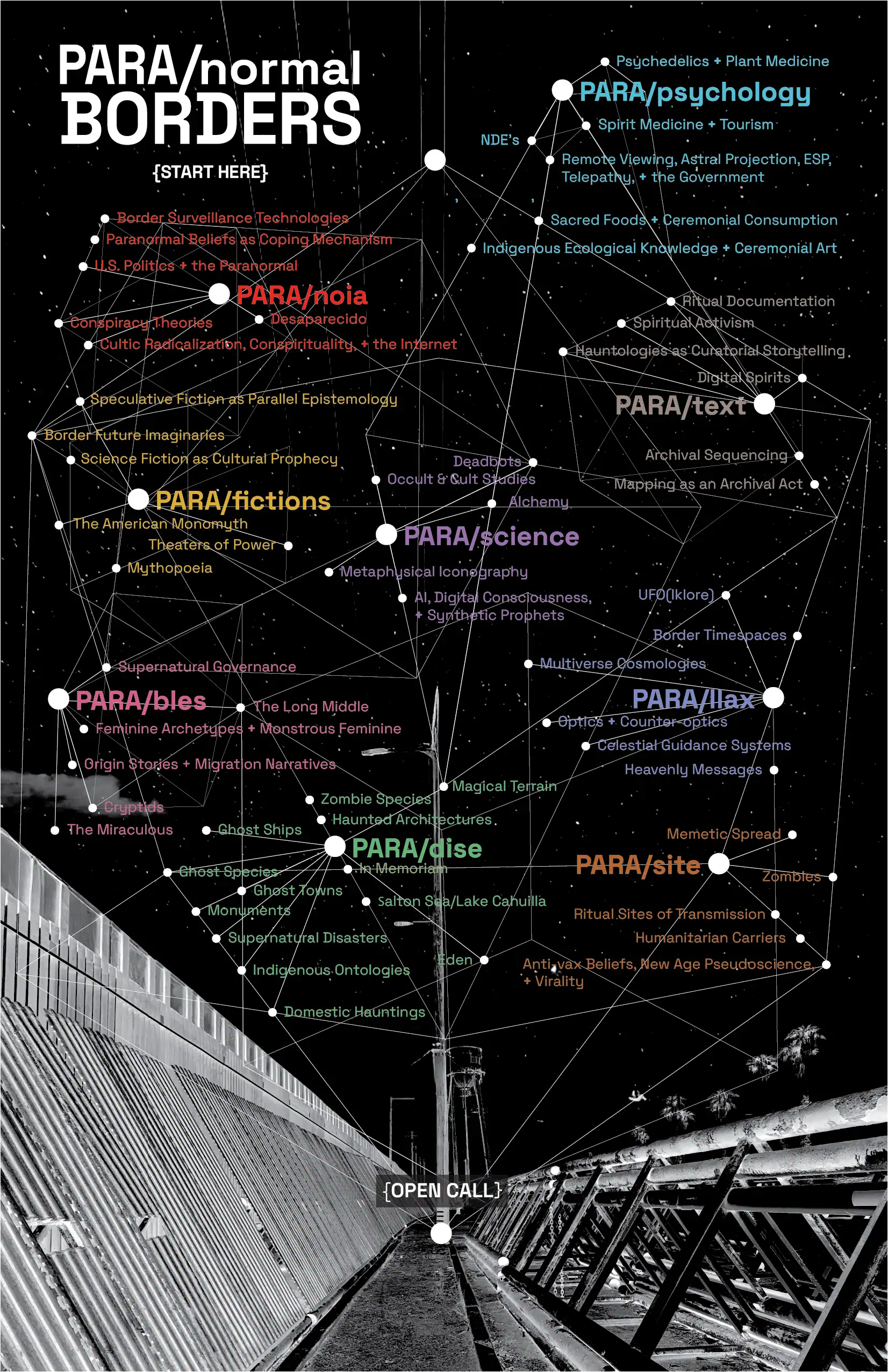
The U.S. federal government is rapidly investing in emergent technologies to surveil migrants, residents, and citizens alike. What began as physical border monitoring has expanded beyond drones, surveillance towers, and ground sensors to include software systems that analyze social media activity, phone and text communications, biometric identifiers, and large-scale behavioral data.
This expansion coincides with an intensification of physical surveillance infrastructure along the U.S.–Mexico border. Small aerial drones now conduct routine patrols over border regions, extending surveillance into remote and previously inaccessible terrain. Autonomous surveillance towers equipped with radar, thermal imaging, and high-resolution cameras maintain constant observation across vast stretches of land, while ground-based sensors in the landscape detect footsteps, vehicle movement, and vibrations. At official ports of entry, biometric systems collect facial and iris data from travelers, further integrating the physical body into immigration enforcement databases. Recent reporting has underscored how these material interventions increasingly function as tools of deterrence themselves, including proposals to modify the border wall’s surface and thermal properties—such as painting it black to increase heat exposure—as part of an expanded enforcement strategy.
Palantir has become indispensable to these efforts. The data analytics firm was recently awarded a $30 million federal contract to develop ImmigrationOS, a platform that aggregates information from passport records, Social Security files, IRS tax data, and license-plate reader databases to assist agents in identifying and prioritizing individuals for deportation. ImmigrationOS relies on algorithmic risk assessment to determine which cases should be pursued first, raising critical questions about how such systems define “risk.” Investigative reporting in 2016 demonstrated that automated law-enforcement decision tools routinely replicate existing racial bias, disproportionately labeling Black defendants as high-risk compared to white defendants—a pattern that is likely to reemerge in immigration enforcement contexts.
Immigration and Customs Enforcement has also dramatically expanded its use of digital surveillance tools capable of extracting the full contents of personal smartphones, scraping social media histories, mapping location data purchased from data brokers, and intercepting cellular communications. These tools have been used against not only undocumented immigrants, but asylum seekers, visa holders, permanent residents, and U.S. citizens alike. In this way, immigration enforcement functions as a testing ground for surveillance technologies that are increasingly normalized and redeployed across the broader population.
This expansion, however, is not confined to the borderlands, as CBP’s jurisdiction extends 100 miles into the interior of the United States from any land or maritime border, where two-thirds of the U.S. population resides. CBP operates a nationwide surveillance program that analyzes license-plate reader data to track millions of drivers, flagging supposedly suspicious travel patterns deep into the interior of the United States, and subjecting these drivers to traffic stops, interviews, and searches. Through this, the border (meta)physically expands beyond the fixed geographic line.
The ease with which personal data is harvested, analyzed, and sold—coupled with advances in AI technologies—has helped establish a contemporary panoptic system in which constitutional protections erode under the weight of physical and digital surveillance regimes. Within this system, individuals’ purported potential for criminality is continuously assessed and assigned by automated processes accountable to neither their subjects nor meaningful public oversight.
Case Study: Electronic Disturbance Theater 3.0, Social Echologies: Scene 3 (from Three Echologies: An Á/Area//Aria X Play)
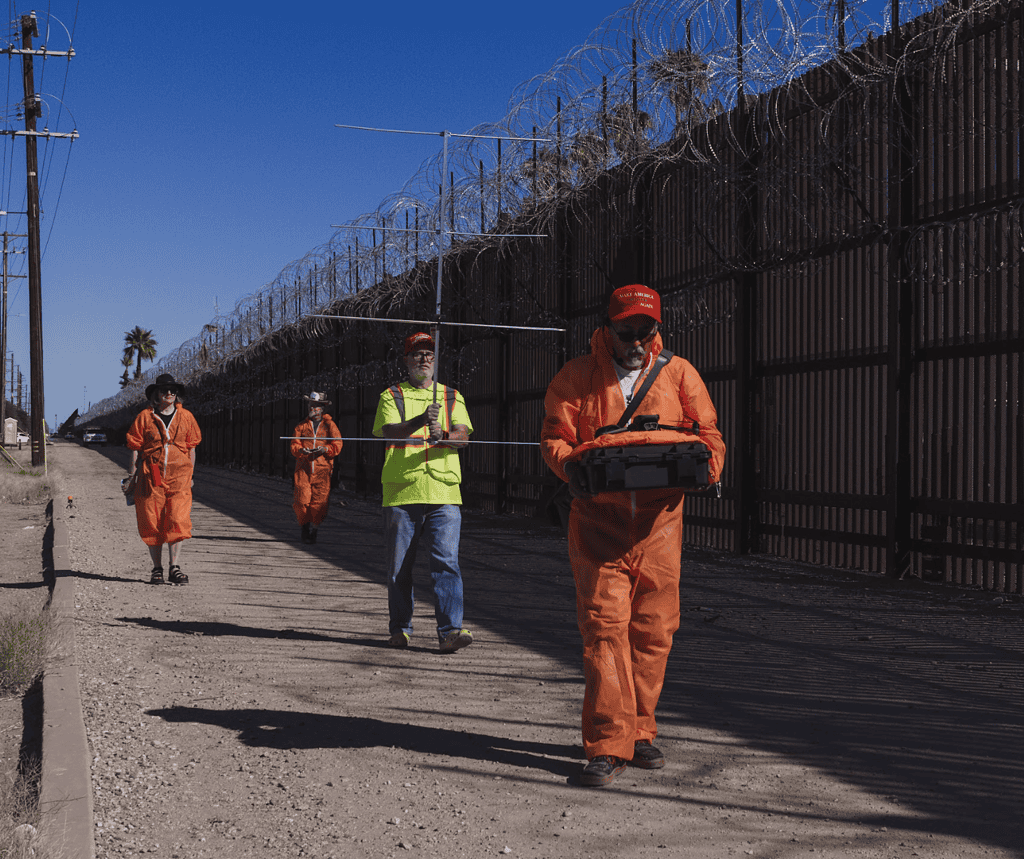
Electronic Disturbance Theater 3.0 (E.D.T.) staged a performance-happening at the Calexico–Mexicali border wall titled Social Echologies: Scene 3 (from Three Echologies: An Á/Area//Aria X Play). The artist collective had staged the two scenes that preceded this one in San Diego and Mexico City, respectively. Wearing red “MAKE AMERICA GREATER MEXICO AGAIN” hats and orange hazmat suits, half of the collective was positioned on the Calexico side of the border, the other half in Mexicali, a configuration that resembled past Biennial performances. Two performers spoke into microphones connected to bluetooth speakers suspended from two remote-controlled miniature drones, the performers’ voices variously in/audible against the dynamic sounds of queuing cars, vendadores, and a street busker along the Mexicali side. The drones were “palindrones,” rasquache replicas of Predator drones, the remotely piloted aircraft used by the U.S. Air Force for reconnaissance and combat in wars around the world. The performance was transmitted through two antennae, one on each side of the border, creating an interface between the play’s local broadcast on radio and the “a(e) ria(l)” disturbance of the palindrones searching out, chasing, and “singing” this scene of the play to U.S. Homeland Security. This “echolocating” sound gesture summoned subaltern knowledge of past, present, and future farmworkers, migrant laborers, and Zapatistas in an area reconfigured as “X.” During the performance, neither palindrone breached the border, but the one on the U.S. side mysteriously crashed, or was shot down, as U.S. border patrol and Mexicali police lurked behind the scenes.
E.D.T.’s use of palindrones stages an inversion of surveillance technologies, appropriating and subverting the very means of aerial sensing, signal transmission, and target recognition by which Homeland Security maintains the border and identifies targets for detention and removal. The slogan emblazoned on the collective’s hats refers to U.S. land seizure from Mexico in the nineteenth century, while also confronting the colonial logics that continue to underwrite U.S. interventionism. The performance-happening assumes heightened significance amidst renewed federal claims that military incursions into Mexico are necessary to disempower cartel networks, reinscribing the United States’ self-proclaimed role as the police force of the Western Hemisphere. Against this backdrop, the performance’s transmission operates as an active interference within hegemonic media narratives that normalize and justify such interventionist policies and operations.
Resources for further study:
"Ana Muñiz: The Specter of Surveillance in the Borderlands". Paranormal Borders Podcast, March 28, 2025. https://mexicalibiennial.org/ana-muniz-the-specter-of-surveillance-in-the-borderlands/
The discussion centers on how the border has become increasingly militarized and surveilled following NAFTA and 9/11 through the implementation of digital surveillance systems. Criminologist Ana Muñiz analyzes the ways in which these digital, disembodied mechanisms of control become embodied through their facilitating of cross-border flows of capital while simultaneously restricting physical migration. Muñiz also describes racialized state violence as a form of haunting, wherein the threat of incarceration and deportation constantly lurks in the shadows of the mind.
Muñiz, Ana. Borderland Circuitry: Immigration Surveillance in the United States and Beyond. Durham, NC: Duke University Press, 2021.
Image: Electronic Disturbance Theater 3.0, Social Echologies: Scene 3 (from Three Echologies: An Á/Area//Aria X Play), 2023. Drone and poetry border activation. MexiCali Biennial: Land of Milk & Honey.

Paranormal belief plays an often overlooked adaptive role in human psychological and cultural life. Beliefs help individuals and communities navigate uncertainty, maintain emotional equilibrium, and construct meaning in environments where traditional systems of support have eroded. Research in the psychology of religion shows that humans are naturally inclined to interpret unusual experiences through supernatural frames because such interpretations offer comfort, coherence, and agency. When confronted with the unpredictable—loss, trauma, ecological disaster, or social isolation—the paranormal allows people to transform chaos into story and fear into symbolism.
The theory of bounded affinity suggests that humans across cultures share a natural affinity for encounters with the “super-empirical”—visions, intuitions, apparitions, synchronicities, altered states—but that organized religions create boundaries determining which of these experiences are accepted as legitimate (miracles, divine intervention, prophecy) and which are dismissed as illegitimate (ghosts, telepathy, hauntings, UFO encounters, psychic perception). Religious and paranormal encounters arise from the same fundamental human capacities for awe, intuition, and engagement with the “super-empirical.” The difference lies not in the experiences themselves, but in how institutions draw boundaries around what is considered sacred or legitimate. This means the paranormal acts as a culturally flexible spirituality, allowing people to access meaning beyond the constraints of traditional religion. In borderlands—where Catholicism, Indigenous cosmologies, folk practices, and modern mysticism intersect—these boundaries become especially porous, enabling hybrid forms of belief that support emotional resilience and communal identity.
In a time marked by loneliness, disconnection, and declining institutional trust, paranormal belief can provide belonging, narrative structure, and a sense of participation in something larger than oneself. Rather than a symptom of fear, it can be a creative, restorative practice—a way to re-enchant the world, reconnect with community, and assert purpose in places where the normal has failed to offer stability or care. Through this lens, the paranormal becomes not a fringe phenomenon, but a vital human strategy for adaptation and survival.
Case Study: Ismael Castro, El Lupón
In El Lupón, Mexicali-based artist Ismael Castro fabricates a border saint whose presence emerges not from institutional canonization but from collective need. Lupón exists through an altar along the border, a circulating statuette held by devotees, a prayer, a corrido, a dance, and a growing body of oral stories. As a saint of migrants, Lupón offers protection, accompaniment, and meaning where legal systems, religious institutions, and state protections repeatedly fail.
Crucially, Lupón occupies the porous space between religion, folklore, and the paranormal. He draws on Catholic saint traditions while refusing ecclesiastical legitimacy, aligning instead with folk spirituality and border myth-making. This hybridity exemplifies how paranormal belief operates as a flexible spiritual technology—one that allows individuals to generate meaning without requiring institutional validation. In this way, El Lupón is not simply an artwork or myth, but a coping infrastructure: a shared narrative that absorbs fear, redistributes hope, and reclaims agency in a borderland where the normal has long ceased to provide care.
El Lupón was part of the inaugural MexiCali Biennial in 2006 in which Ismael Castro painted a temporary mural and built an altar to the figure on the wall of Chavez Studios in East L.A. Learn more about Lupón HERE.
Image: Ismael Castro, El Lupón. Mural

American culture is steeped in an inherited colonial worldview that sees catastrophe as imminent, purity as necessary, and moral vigilance as a civic duty. This remnant of Puritan Doomsdayism framed the world as a battlefield between good and evil, purity and contamination—an apocalyptic mindset that has migrated seamlessly into the modern cultural landscape. One need only recall the recent social-media chaos surrounding the falsely predicted Rapture of 2025, a supposed cleansing of the Earth that turned TikTok into a frantic arena of earnest believers and rapid-fire parody. In this section, we draw from a new wave of writers, journalists, and podcasts that connect these cultish patterns of thought to contemporary political unrest.
These modern movements exemplify connections to this older theological ideology:
The MAHA (Make America Healthy Again) initiative echoes Puritan fears of bodily and moral corruption, turning health into a spiritualized marker of virtue.
Christian nationalism revives the Puritan belief in America as a divine project under siege, weaponizing apocalyptic language to justify exclusion and control.
White supremacy mirrors Puritan anxieties about “degeneration” and “racial purity,” projecting a mythic past that must be defended at all costs.
ICE raids in the 100-mile border zone enact a form of Puritan surveillance—the belief that the state must be ever-watchful, righteous, and unrestrained when confronting perceived impurity or threat. The disappearance of migrants echoes the Puritan notion that certain bodies can be morally erased for the preservation of the “elect.”
QAnon extends Puritan Doomsdayism into the digital age, casting political conflict as an apocalyptic struggle between hidden evil and a chosen remnant. Its prophecies, secret knowledge, and salvation narratives revive Puritan fears of corruption and spiritual warfare, transforming conspiracy into a modern form of religious purity politics.
The Seven Mountains Mandate carries Puritan ideas of divine national destiny into the present, framing political power as a form of spiritual warfare. Its call for Christian control over government, media, and education revives Puritan purity politics and apocalyptic fears, reinforcing Christian nationalism as a contemporary expression of colonial theology. These concepts also surface—though in a more secular manner—within the structure and goals of Project 2025.
This haunted political atmosphere conveys a metaphysics of precarity that blurs theological, political, and paranormal fears. It offers a genealogy of the politics of fear as a distinctly American supernatural logic.
Case Study: Ed Gomez, Four Horsemen
In January 2025, Ed Gomez exhibited a collection of work titled Sacred Disruption
for the PARA/normal Borders Lab. This show—a minor survey of Gomez’s broader art practice—highlighted themes of the sacred and the universal through imagery of space exploration, extraterrestrial presence, and apocalyptic myth. Shown here is a painting from Gomez’s Horsemen series, which consists of four life-size works, each offering a contemporary interpretation of the Four Horsemen from the Book of Revelation.
Sacred Disruption curator Armando Pulido notes that the “figures recall recent collective action against police brutality, forced deportations, exploitative labor practices, and international struggles against oppressive surveillance states. Though some of these figures appear benign, Gómez invites us to question just who might be at the helm of the Pale Horse’s destructive forces—and whether there is any chance to correct the course of accelerated collapse and confrontation.”
Image: Ed Gomez, Four Horseman #1 Conquest, 2015. Oil on Canvas.
“For disappearance is a state-sponsored method for producing ghosts, whose haunting effects trace the borders of a society’s unconscious. It is a form of power, or maleficent magic, that is specifically designed to break down the distinctions between visibility and invisibility, certainty and doubt, life and death that we normally use to sustain an ongoing and more or less dependable existence.” - Avery F. Gordon
In Ghostly Matters: Haunting and the Sociological Imagination, sociologist Avery F. Gordon writes about desaparecido (disappearance) as a kind of ghost-making—a deliberate act by those in power to create shadows where people once stood. To disappear someone is not only to remove a body; it is to carve a hole in the social world, a wound that refuses to heal. The vanished hover at the edges of everyday life: in the empty chair at dinner, the phone that never rings, the name whispered with uncertainty. Their absence becomes a presence. A haunting.
This logic was clear in Latin America’s darkest decades, when military regimes in Argentina and Chile perfected the art of erasing people without a trace. Men, women, students, union organizers were taken suddenly, without witnesses, without acknowledgment. Families searched morgues, police stations, hospitals, churches, and military bases, often encountering nothing but denial. The uncertainty was the point. You cannot mourn what the state refuses to admit is gone. Instead, you live inside the ache, the not-knowing, the sense that at any moment another person could simply—vanish.
Disappearance becomes a message: We can reach anyone.
It becomes a lesson: Stay in line.
It becomes a haunting: The state is everywhere, even where you cannot see it.
Today, this same logic echoes across the U.S. ICE agents appear without warning—outside a grocery store, during a routine traffic stop, at a bus station, inside a courtyard, at dawn on the doorstep. Someone is taken, often without explanation, often without the ability to contact family. People do not know if their loved one is in a county jail, a private detention center, a transport van, or already across the border. Mothers call hotlines. Fathers search detention databases that never list the right names. Children go to school not knowing if their parents will be home when they return.
This uncertainty does the state’s work.
Fear flows through neighborhoods long after the agents leave.
Absence haunts.
Case Study: María José Crespo, Screen Memories
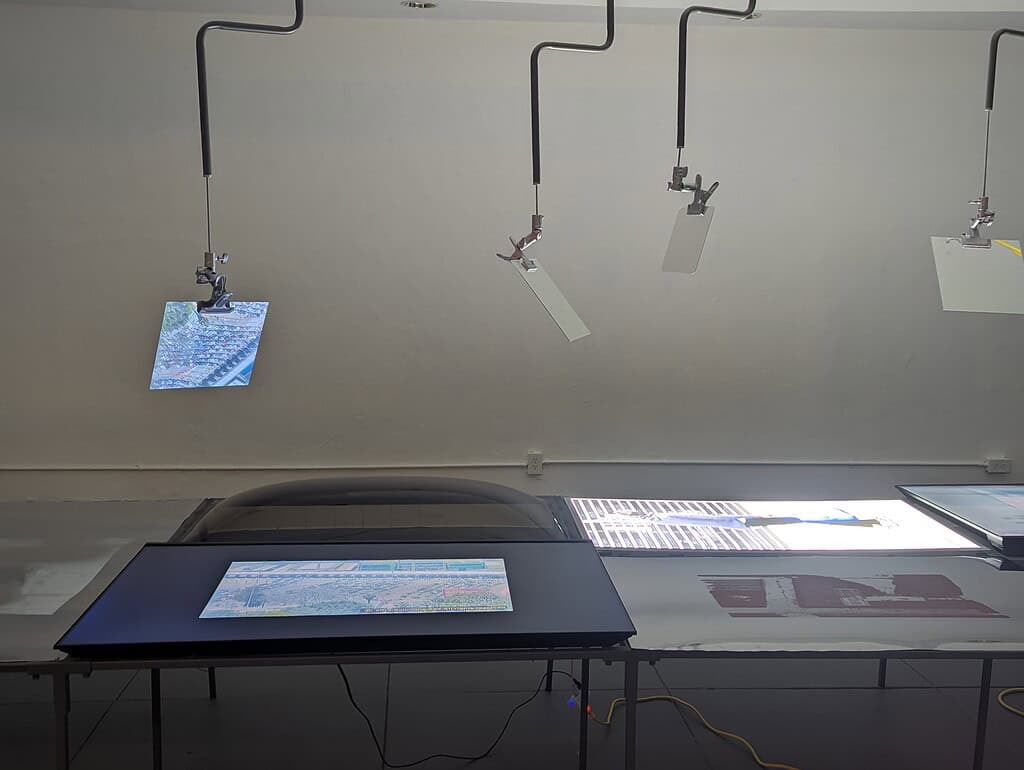
María José Crespo’s Screen Memories offers a powerful counter-map to disappearance. In the installation, ghosts lead the viewer into a speculative data center—an imagined archive built from fragments that are normally hidden, discarded, or denied. Drawing on years of footage collected from a Police WhatsApp group, Crespo layers rearview images of Tijuana’s alleys onto teleprompter glass, creating a spectral interface where official and informal archives collide. Here, the city becomes a haunted zone saturated with hypervisibility and systemic forgetting, shaped by visas, biometric checkpoints, and technologies of control that cannot fully contain what they seek to regulate. In Screen Memories, ghosts—understood as social figures—move through fractured timelines and failed surveillance systems, reanimating the traces of those who have slipped beyond the frame. This exhibition was part of the PARA/normal Borders Lab and was curated by Rosela del Bosque. Curatorial text and documentation can be found HERE.
For Further Research:
"Ana Muñiz: The Specter of Surveillance in the Borderlands". Paranormal Borders Podcast, March 28, 2025. https://mexicalibiennial.org/ana-muniz-the-specter-of-surveillance-in-the-borderlands/
The discussion centers on how the border has become increasingly militarized and surveilled following NAFTA and 9/11 through the implementation of digital surveillance systems. Criminologist Ana Muñiz analyzes the ways in which these digital, disembodied mechanisms of control become embodied through their facilitating of cross-border flows of capital while simultaneously restricting physical migration. Muñiz also describes racialized state violence as a form of haunting, wherein the threat of incarceration and deportation constantly lurks in the shadows of the mind.
Image: María José Crespo. Screen Memories, 2025. Mixed media sculpture.
Conspiracy theories and paranormal beliefs often appear to belong to separate worlds—one political, the other supernatural—but research increasingly shows that they share a deep psychological and cultural architecture. Both arise in moments of uncertainty, and institutional distrust. Both provide alternative systems of meaning when official narratives feel incomplete or inaccessible. And both thrive in liminal spaces—geographical, emotional, and epistemological—where people stand at the edge of the known world.
Studies describing Rabbit Hole Syndrome highlight how conspiracy belief develops not through sudden conversion but through gradual immersion: accidental curiosity becomes recursive engagement, which eventually becomes an all-encompassing worldview. This process mirrors the way people descend into paranormal interpretive worlds, where each uncanny event, synchronicity, or anomaly deepens the sense that there is “more” beneath the surface. Conspiracy and paranormal thinking both offer what researchers describe as self-sealing realities: systems where each new piece of information reinforces, rather than destabilizes, belief.
Such systems flourish when trust in institutions falters. Research on conspiracy beliefs and science rejection reveals that communities often turn toward conspiratorial or supernatural explanations when scientific or governmental authority feels opaque, contradictory, or hostile. Science’s inherent uncertainty—its revisions, debates, and disclaimers—can mirror the instability experienced in marginalized communities, especially those living within the 100-mile border zone where the law itself becomes flexible, exceptional, and unpredictable. Here, both paranormal sightings and government conspiracies become ways of explaining a world where the rules shift without warning.
Beyond distrust, conspiracy beliefs also fulfill psychological needs. Studies on the psychological benefits of conspiracy theories show that these narratives restore a sense of meaning, identity, and personal significance. They provide the thrill of hidden knowledge and the ego-protection of believing one is part of a perceptive minority. Paranormal belief performs similar functions: it offers forms of wonder, connection, and self-worth that resist rational reduction. The difference lies primarily in emotional tone—paranormal beliefs often offer enchantment, while conspiratorial beliefs more often cultivate fear and distrust.
Historical trauma provides another layer. Research shows that conspiracy theories can function as adaptive responses to collective wounds: colonization, displacement, war, racial violence, and systemic erasure. Border communities, shaped by centuries of geopolitical rupture, policing, and forced movement, often experience these ruptures somatically and spiritually. Paranormal encounters—ghosts, apparitions, curses, desert lights, unexplained presences—become ways of narrating histories that official archives refuse. Conspiracies emerge from the same wound: explanations that name the forces otherwise left invisible.
Network analysis further confirms the overlap: paranormal belief and conspiracy belief share cognitive traits such as magical thinking, pattern-seeking, and heightened sensitivity to anomalies. Yet their emotional outcomes diverge. Paranormal belief can enhance wellbeing when tied to healthy self-esteem and meaning-making; conspiracy belief is more often linked to negative affect, distrust, and dissatisfaction. In the borderlands, these two systems interweave, creating a distinct epistemology of survival—one where supernatural encounters and political suspicion operate as parallel strategies for interpreting an unstable world.
Together, these findings reveal that conspiracy and paranormal belief are not aberrations but adaptive cultural tools. In the borderlands—where state power is diffuse, histories are ruptured, and reality feels intrinsically porous—they become parallel forms of knowledge, offering coherence in a landscape defined by uncertainty.
Case Study: Ed Gómez, WTF / WMD / LOL
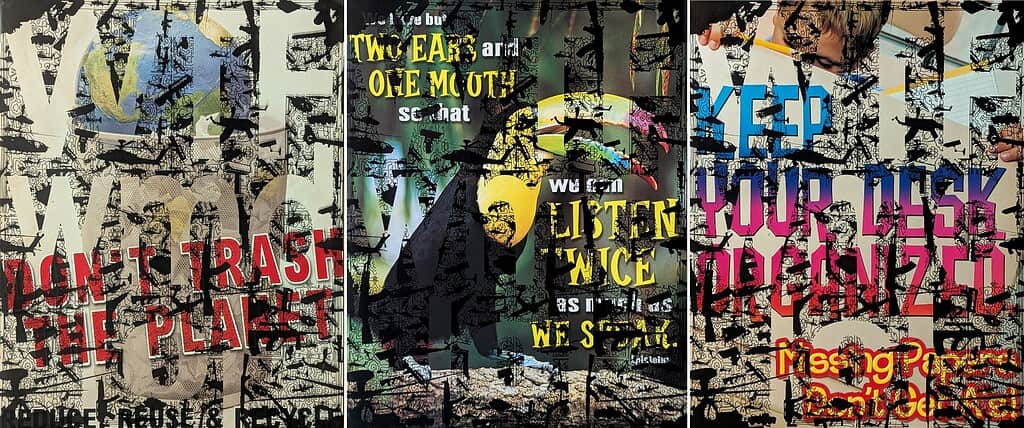
In this body of work, Ed Gómez examines how conspiracy thinking is cultivated not through fringe belief, but through everyday systems of education, media, and visual repetition. Beginning in 2010, Gómez repurposed mass-produced educational posters—objects designed to deliver simplified facts, moral lessons, and motivational slogans to young audiences. Rather than encouraging inquiry, these posters model rote absorption, training viewers to accept information quickly and uncritically.
Gómez disrupts this logic by layering modular screenprinted forms onto the posters and encoding them with the acronyms “WTF,” “WMD,” and “LOL.” These signals mirror the language of contemporary media culture, where meaning is reduced to shorthand and emotional reaction. “WMD,” in particular, references the Weapons of Mass Destruction narrative used to justify the U.S. invasion of Iraq—an emblem of how misinformation, fear, and authority converge. The recurring presence of Apache helicopters reinforces the visual language of militarized power and surveillance.
The work operates as a slow-reveal system: its critique emerges only through sustained attention. In doing so, Gómez exposes how conspiratorial logic and state propaganda share a common architecture—both rely on repetition and emotional conditioning. Positioned within a mass of images and messages, the posters visualize how paranoia, compliance, and belief are manufactured, normalized, and embedded into everyday life.
This work was part of Sacred Disruption at MXCL BNL LAB for the PARA/normal Borders Lab. A photo essay of the exhibition with a curatorial overview by Armando Pulido can be found HERE.
Find a comprehensive list of academic studies that support the mirroring of conspiracy theories and paranormal beliefs on the downloadable PARA/normal Borders Overview.
Image: Ed Gomez. WMD, WTF, LOL, 2010. Offset print on educational posters
Conspirituality describes the convergence of New Age spiritualism with conspiracy-driven political ideology. The recent emergence of automated algorithms on social media sites has generated a massive increase in this phenomenon, especially as the creators of these sites reward accounts that drive engagement through controversy. Coined by scholars Charlotte Ward and David Voas, the term helps explain how online communities blend wellness culture, apocalyptic prophecy, and distrust of institutions into a coherent worldview that attracts large digital audiences. Narratives about corrupt global elites, once confined to fringe online forums, have become mainstream, as seen in the ascent of QAnon after the 2016 U.S. presidential election.
As healthcare and housing prices soar in the U.S., further entrenching existing structures of economic inequality, legitimate frustration with the ability of political and corporate elites to evade taxation, regulation, and criminal prosecution provides fertile ground for skepticism and disillusionment. Bad-faith actors, however, often redirect this widespread distrust toward marginalized groups through myths like the white supremacist “great replacement” theory, or toward government-backed scientific institutions like the U.S. Centers for Disease Control and Prevention. These conspiratorial narratives align closely with white Christian nationalist movements and echo older historical precedents. Scholars such as Jules Evans have traced parallels between today’s far-right spiritual currents and earlier esoteric and anti-scientific movements, including those that flourished in Nazi Germany. Contemporary figures, such as U.S. Secretary of Health and Human Services RFK Jr., have further amplified this blend of alternative medicine, patriarchal spiritual rhetoric, and anti-institutional sentiment under the slogan "Make America Healthy Again."
The rapid spread of misinformation within this digital ecosystem intensifies existing distrust in governmental and scientific institutions, granting conspiratorial influencers both legitimacy and mass visibility. Journalist Anne Applebaum describes this broader cultural shift as New Obscurantism: a climate of fear, suspicion, and anti-intellectualism that erodes democratic discourse. In this environment, evidence-based debate becomes increasingly difficult, allowing charismatic actors to deepen public polarization and weaken collective trust in institutions, and in one another.
Case Study: Julio Romero, Silicon Valley XX, Silicon Valley XIV, and Gracias por leer
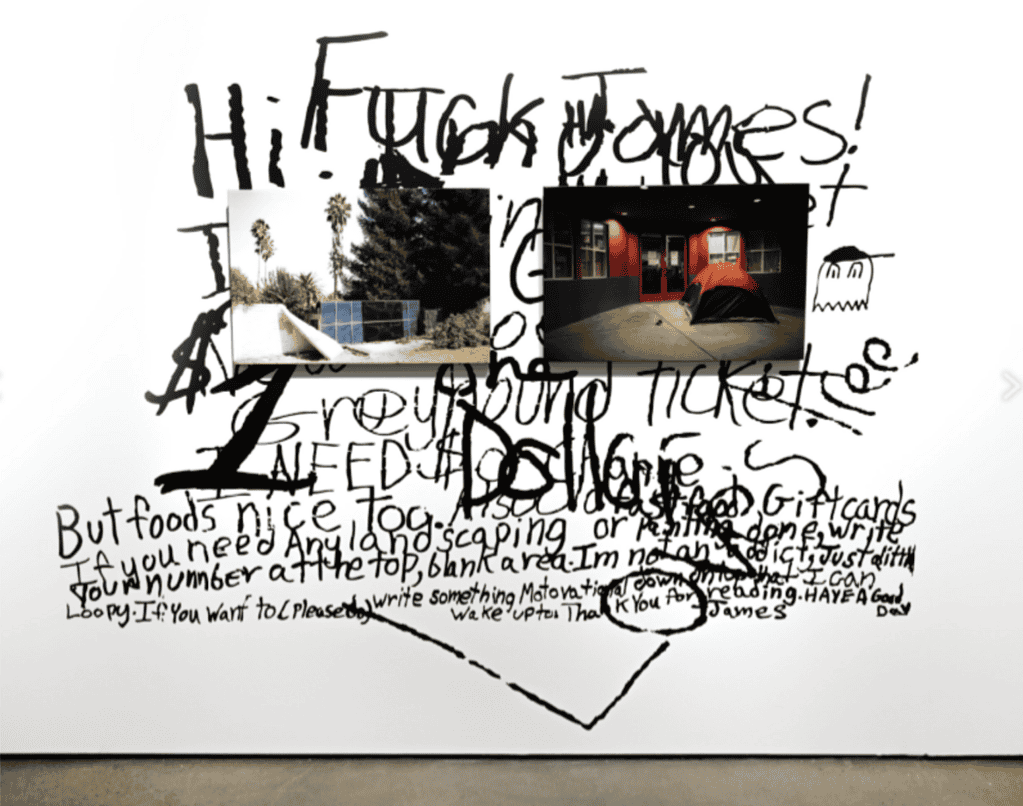
Julio Romero's multimedia installation is composed of two digital photographs, Silicon Valley XX (2015) and Silicon Valley XIV (2014), set against Gracias por leer (2015), which consists of black text scribbled onto the gallery wall. While Silicon Valley XX depicts a site of urban refuse amidst a sunny sky and rows of palm trees, Silicon Valley XIV captures a tent—likely a makeshift domicile belonging to an unhoused person—in front of the closed entrance to a building at night. The ironic inclusion of "Silicon Valley" in the title of both photographs refers to the unprecedented accumulation of capital in tech industries occurring alongside a cost of living crisis in California that threatens economic precarity for members of the working class. For Gracias por leer, Romero frantically scribbled pleas for work, declarations of his sobriety, and a request for a Greyhound bus ticket, all of which are ubiquitous on signs held up at traffic stops and intersections by those experiencing homelessness.
Ironically, social media sites become the primary spaces in which disillusioned and disenfranchised members of the proletariat share their existential fears regarding the encroachment of tech and AI into all facets of life, as well as the conspiracy theories that provide alternative means of quelling economic and spiritual anxieties.
This work was exhibited as part of the MexiCali Biennial's 2018-19 program CALAFIA: Manifesting the Terrestrial Paradise exhibition at the Robert and Frances Fullerton Museum of Art in San Bernardino, CA. Find more HERE.
Image: Julio Romero, Silicon Valley XX and Silicon Valley XIV, 2015. Archival pigment encapsulated in resin. Thank You For Reading, 2015. Site-specific installation using text obtained from found objects.
A state of fear and suspicion - the shadow side of knowledge.
PARA/noia identifies conspiracy and supernatural belief as cultural symptoms that address intersecting existential fears. These largely stem from the erosion of material well-being, an unprecedented rise in the cost of living, the degradation of social trust, political corruption, militarization of borders, and rapid technological innovation. As political and economic institutions fail to address these vulnerabilities and as social media algorithms accelerate social atomization and political polarization, individuals increasingly seek out alternative frameworks of explanation — often conspiracy theories or supernatural beliefs — to make sense of their worlds, to regain a sense of control over their lives, and to alleviate anxiety.
At the same time, however, PARA/noia also differentiates between belief as a tactic of coping and belief as a means of exerting control. The research included here demonstrates that conspiracy thinking arises from repetitive exposure to ideas that then calcify into closed belief systems. These belief systems allow the individual to dismiss evidence that opposes their perspectives and to redirect the frustration stemming from the resultant cognitive dissonance towards marginalized and scapegoated communities.
The algorithmic architectures of social media enable this tendency by placing users in rhetorical echo chambers that further solidify belief through exposure to more misinformation and like-minded others. In the current political climate, disinformation brokers, far-right movement leaders, and the state are weaponizing this distrust to normalize and legitimate authoritarian rule.
PARA/noia (para: beyond; noos: mind) explores how fear becomes knowledge, who profits from the cultivation of distrust, and whether subversive ideological frameworks can be used to cultivate collective meaning rather than enforce control.
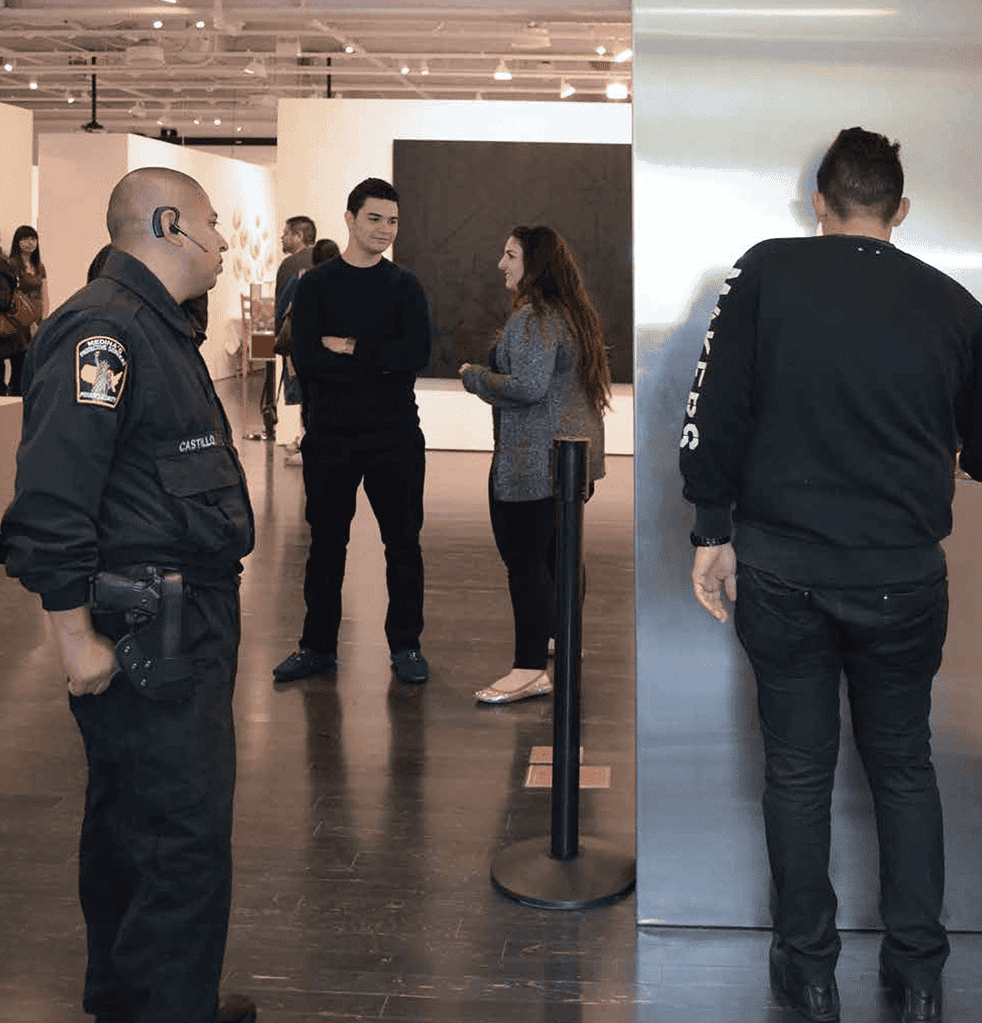
Image: Sergio Bromberg, Checkpoint with stainless steel, 2012. Stainless steel, electrical cords, retina scanner. MexiCali Biennial 2013: Cannibalism in the New World at Vincent Price Art Museum.
Mind beyond itself; consciousness crossing physical boundaries.
The PARA/psychology section examines states of consciousness that appear to exceed or destabilize conventional boundaries of perception, embodiment, and selfhood, drawing from interdisciplinary research in (para)psychology, neuroscience, and cultural studies. This framework approaches phenomena such as trance, dissociation, near-death experiences, and other forms of anomalous perception as empirically observed experiential patterns that recur across cultural and historical contexts. Clinical and experimental research suggests that altered states—whether induced by ritual practice, physiological stress, sensory deprivation, focused attention, or collective ceremony—can generate consistent perceptual, cognitive, and emotional effects, including shifts in spatial awareness, time perception, memory integration, and self–other boundaries.
Within this framework, artistic practices engaging dreamwork, trance, and visionary experience are understood as modes of inquiry that translate interior, often ineffable states into material form, opening portals to worlds both within and beyond the self. At the same time, PARA/psychology critically attends to the institutional histories through which such states have been classified, extracted, or pathologized. More recently, these industries have demonstrated an interest in integrating Indigenous knowledge systems into existing healthcare infrastructures; however, such efforts frequently replicate extractive dynamics, incorporating techniques while subverting the authority of Indigenous healers and detaching spiritual practices from the cosmologies and communities that sustain them. In response, collaborative models led by Indigenous communities emphasize consent, reciprocity, and self-determination, ensuring that integration occurs through partnership rather than extraction, and that spiritual authority, cultural continuity, and decision-making power remain with Indigenous practitioners.
Accordingly, this node acknowledges the limits and controversies of parapsychological research, emphasizing methodological rigor and skepticism while remaining attentive to how altered states challenge dominant epistemologies of consciousness. It foregrounds Indigenous spirit medicine and cosmologies as enduring frameworks for understanding mind, body, land, and relationality. PARA/psychology thus explores how consciousness is shaped by uncertainty, trauma, imagination, and power, and how integrating Indigenous-led approaches into broader healthcare and research practices can support cultural continuity, ethical care, and collective well-being without reproducing histories of colonial extraction.
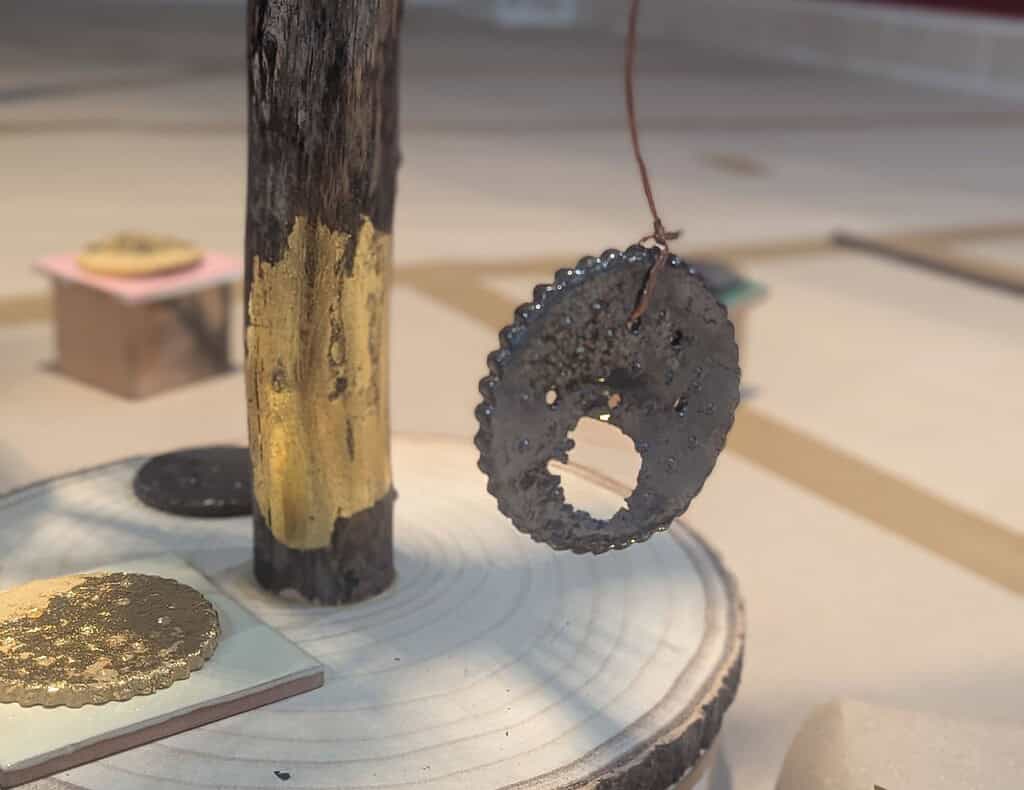
Image: Guillermo Estrada, Almendroides, 2025. Glazed ceramic. Part of Almendroides, Almendroides, Aliens & Indígenas
Throughout the Americas, Indigenous practices for maintaining health and attaining emotional well-being often rely on the ceremonial use of sacred plants sourced directly from the land. These ritualized, often communal practices stand in marked contrast to the widespread reliance of psychiatric medications that typify clinical mental-health care.
Find a brief overview of the most common psychoactive plants employed in ceremonial and medicinal contexts throughout North, Central, and South America on the downloadable PARA/normal Borders Research and Curatorial Overview.
Case Study: Amina Cruz, Sueños
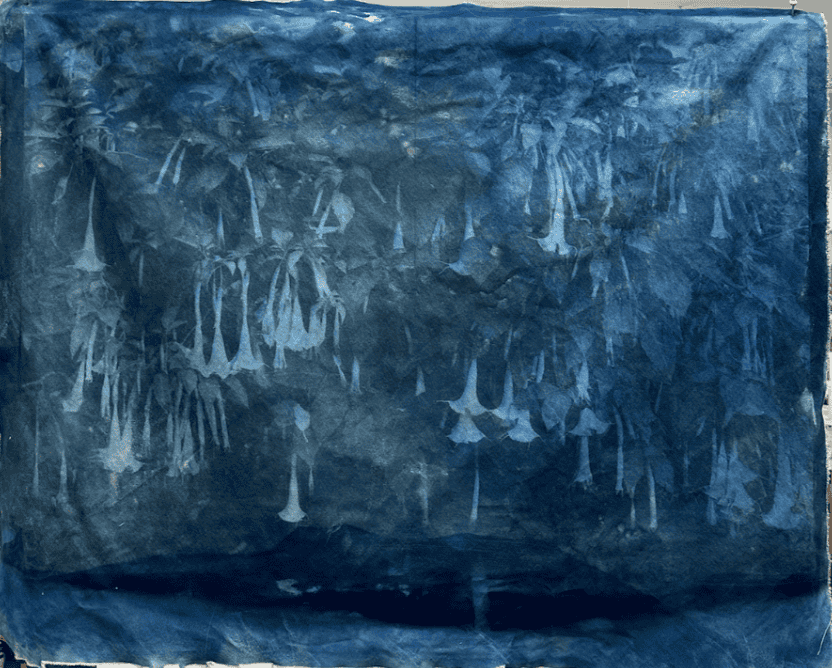
Amina Cruz's cyanotype Sueños (2025) depicts a cascading canopy of angel's trumpet flowers bathed in a sea of murky blue. The dizzying, dreamlike scene mimics the hallucinogenic effects of ingesting the plant. To produce her ethereal cyanotypes, Cruz repeatedly stains her photographs with tea, coffee, and other organic materials. This languid, painstaking undertaking constitutes a ritualized act of spiritual communion in and of itself. Through this alchemical process of staining and obscuration, Amina untethers her photographs from their real-world subjects, creating portals to worlds both eerily familiar and uncanny.
This work was included as part of the exhibition Alma Entre Dos Mundos at the MXCL BNL LAB in Whittier, CA. Find more HERE.
Amina also joined the PARA/normal Borders Podcast to discuss the alchemic process through which she produces her surreal photographs using organic matter. Watch HERE.
Image: Amina Cruz, Sueños, 2025. Cyanotype, tea, and coffee on canvas
Within recent years, the clinical health community’s interest in psychedelics as means of treating various mental illnesses has driven increased research into the integration of spirit medicines into existing healthcare infrastructures. Spirit medicines are typically derived from psychoactive plants, and are imbued with distinct cultural and spiritual meanings. As medical institutions and wellness retreats frame these psychoactive plants as therapeutic tools or personal wellness aids, they sever spirit medicines from the Indigenous governance systems that regulate their use. These industries, furthermore, tend to undercompensate Indigenous healers and educators who provide access to these spirit medicines, if they are consulted in any capacity whatsoever, thereby undermining collective Indigenous practices of stewardship.
Across the Americas, Indigenous and Latine communities rely on community-based healers, such as curanderos and santeros, to provide a holistic form of healthcare which integrates physical, psychological, and spiritual health. Because these healers operate within existing networks of trust and shared social responsibility, the care that they provide is embedded within everyday social life, unlike the contemporary clinical healthcare industry’s reliance on specialized expertise. Some Indigenous academics and health professionals are spearheading collaborative initiatives that seek to integrate spirit medicines into existing healthcare infrastructures without replicating colonial dynamics of extraction, more closely resembling the integrative healthcare provided by community healers. Research into folk illnesses, such as susto, and plant-based treatments demonstrate that these practices are grounded in empirically observable effects, even as they remain articulated through cultural frameworks distinct from settler-colonial medicine.
However, tourism to psychedelic retreats has driven the rapid commercialization of spirit medicines, eroding trust among local Indigenous stakeholders and making it more difficult to implement community-based initiatives of cultural heritage conservation and sustainable tourism development. The exploitative means by which most psychedelic retreats employ Indigenous practitioners and spirit medicines replicate colonial relationships of sociocultural and economic subjugation through appropriation. Ethical engagement with Indigenous systems of collective knowledge within the medical and tourism industries demands reparative frameworks that recognize Indigenous self-determination and decision-making authority while resisting extractivist models of cultural exchange.
Case Study: Fernando Corona, FIELD TRIP
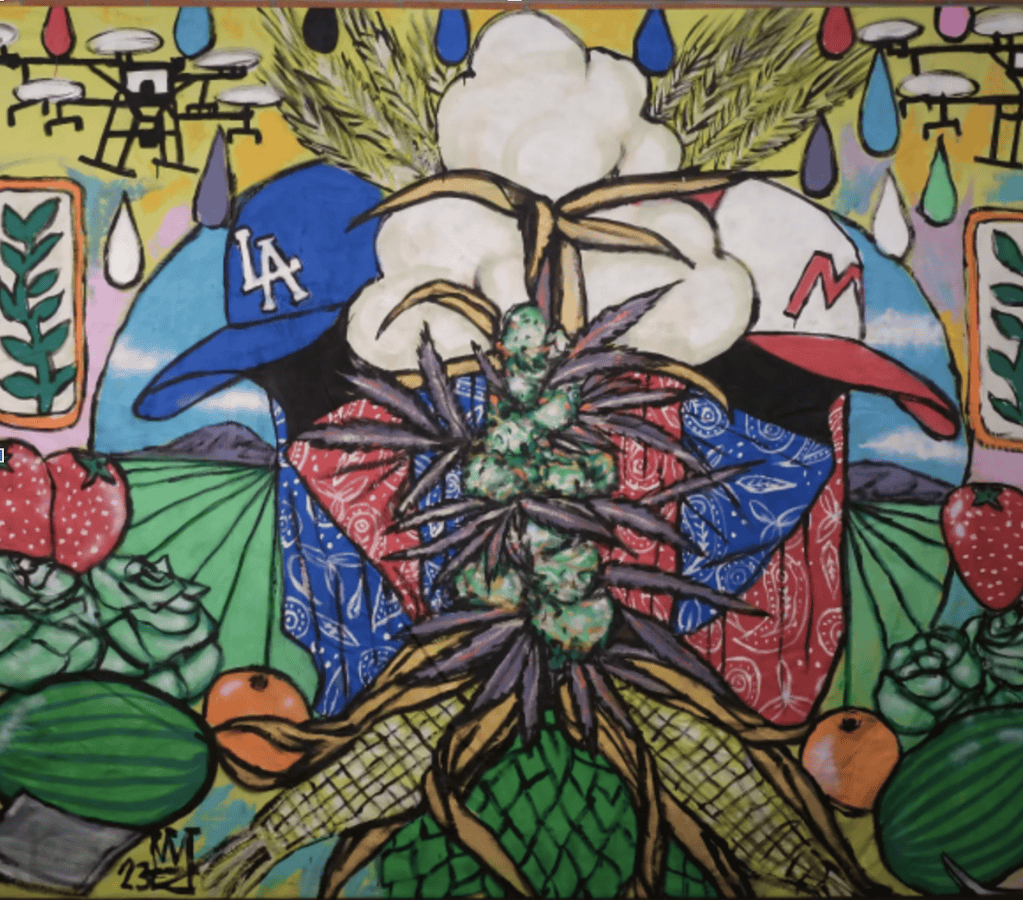
Fernando Corona's FIELD TRIP (2023) is a kaleidoscopic, psychedelic celebration of agricultural labor and ancestral knowledge systems, as much as it is an indictment of borders and the regimes of surveillance and militarism that sustain them. A cannabis plant occupies the center of the composition, with ears of corn emerging from below, and cotton rising above. Corona's inclusion of the three crops vital to Californian agricultural production references the milpa—an Indigenous agricultural practice originating within Maya communities, wherein farmers grow corn, beans, and squash together to form a self-sustaining biodiverse miniature ecosystem. Corona's inclusion of corn here is almost ironic—whereas the Maya grew various corn species, the corn occupying the center of Corona's composition has been genetically modified to prioritize efficiency and high yields. Unlike the standardized, mechanized process of monocultural agriculture that extracts from the land, the milpa is sustained through communal practice and reciprocity with the environment. The drones hovering above the fields symbolize the surveillance regimes that facilitate rapid agricultural production through suppression of workers' autonomy and protection of corporate knowledge.
FIELD TRIP was part of Land of Milk & Honey and was exhibited at The Cheech.
Image: Fernando Corona, FIELD TRIP, 2023. Acrylic on canvas, portable mural

Informed by research in psychology, neuroscience, and consciousness studies, this site turns to Near-Death Experiences (NDEs) and deathbed visions as accounts of threshold perception—experiences that unfold at the border between life and death. While their interpretation remains speculative and resistant to empirical verification, NDEs recur with remarkable consistency across clinical studies and cultural contexts, forming what can be understood as shared phenomenological scripts of liminality.
Subjects in NDE research commonly report a subset of recurring experiences: shifts in visual perspective or out-of-body perception; movement through tunnels or passageways; encounters with intense light or luminous spaces; sensations of serenity, clarity, or release from bodily pain; encounters with nonmaterial beings; panoramic life review; the realization of one’s own death; or the ability to witness scenes occurring beyond the physical body. These experiences often arise during cardiac arrest or other life-threatening events that produce extreme physical or psychological trauma, placing the subject in a state of suspended embodiment.
Rather than interpreting NDEs as evidence of a singular metaphysical truth, PARA/normal Borders approaches them as experiences of crossing without arrival. NDEs occupy a condition of prolonged “almost”—a moment in which consciousness appears to detach from the body without fully departing the world. Like borders, purgatorial states, and detention zones, NDEs are defined by delay, uncertainty, and the reorganization of perception under constraint.
Although numerous theories attempt to explain NDEs neurologically or psychologically, none fully account for the frequency, coherence, or cross-cultural resonance of these reports. While the reality or cause of NDEs remains indeterminate within current scientific paradigms, their persistence points to a deeper question at the center of this project: how perception, identity, and time behave when the boundary between states of being is approached but not crossed. In this sense, NDEs reveal not what lies beyond life, but how consciousness itself is transformed at the border of existence. See also: PARA/bles > The Long Middle
Please refer to Fred Blanco and EJ Massey's episodes of the PARA/normal Border Podcast for near-death experience personal testimonies.
To watch Fred, click HERE.
To watch EJ, click HERE.
Image: Still from Joules of Bizzczar Wormhole Grace Jones The Pretenders and PARA/normal Borders Podcast: EJ Massey, A.K.A. The Legendary Blythe Bizzczar: Music and Madness. In this episode, Massey gives a first-hand account of his near-death experience.

This node synthesizes declassified intelligence research and psychological studies on whether it is possible for human subjects to perceive and describe places, objects, or images without directly observing them with their physical senses. Most of these studies were performed during the Cold War. Their purpose was not to demonstrate psychic phenomena, but to see if human subjects could accurately describe remote or hidden locations, objects, and images without looking at them directly.
In remote viewing and extrasensory perception studies, subjects were often asked to sketch or describe hidden targets while remaining conscious and motionless. According to multiple studies, some descriptions seemed to loosely correspond to details of the targets at rates greater than chance. These descriptions often featured indistinct spatial relationships, shifts in scale or perspective, visual details, and a feeling of intuitively “knowing” rather than rationally determining. Subjects note that these experiences often felt daydream-like, fragmented, and difficult to explain.
However, these findings were largely irreplicable, and when protocols became more rigorous, the results frequently grew weaker or vanished. Moreover, it was hard to distinguish significant correspondences from coincidence, interpretation, and unconscious suggestion. After decades of research, the results were deemed unreliable, and most government remote viewing research was halted.
While the research failed to show that humans could perceive more than they directly sensed, it demonstrates how challenging it is to quantify subjective experience, as well as how badly we want to understand mental function beyond the bounds of direct perception. It serves as an archival record of institutional efforts to systematize and rationalize processes—imagination, perception, and intuition—that defy rational systemization.
Case Study: Kim Zumpfe, Astral Projections: Yaanga and the not yet
In Astral Projections: Yaanga and the not yet (2019), Kim Zumpfe constructs an installation that examines how perception operates under conditions of destabilized physical and cognitive orientation. Through this, Zumpfe stages a tension between interior subjectivity and external constraint. Partially destroyed architectural elements, locally sourced organic materials, and mediated video imagery produce an environment in which viewers must navigate incomplete visual information and shifting spatial cues. For Zumpfe, perception is shaped as much by absence, obstruction, and inference as by direct sensory input.
This emphasis on perceptual limitation parallels the concerns of Cold War-era remote viewing research, which sought to determine whether subjects could access information regarding a perceptible object without being able to physically perceive it. While those experiments attempted to systematize perception under controlled conditions, Zumpfe’s work situates viewers within the uncertainty such efforts revealed. Moreover, the installation does not suggest the possibility of transcending geopolitical borders or physical embodiment, but explores the psychological and metaphysical means of coping with the limitations that physical restriction and individual embodiment pose, and invites the audience to ponder means of circumventing and subverting these restrictions. In this way, Yaanga and the not yet reflects on the same unresolved question that underpinned remote viewing research: how individuals navigate the gap between what can be sensed, what is inferred, and what ultimately remains inaccessible.
Zumpfe’s Astral Projections: Yaanga and the not yet was part of CALAFIA: Manifesting the Terrestrial Paradise
Image: Kim Zumpfe, Astral Projection: Yaanga and the not yet (2019) Mixed media. MexiCali Biennial CALAFIA: Manifesting the Terrestrial Paradise at the Armory Center for the Arts
Across Indigenous cultures throughout the Americas, ceremonial art serves as a means of maintaining relationships with deities, ancestors, and nonhuman beings. Artmaking often functions as a form of prayer, direct spiritual communion, and offering in and of itself, as creative labor is inseparable from cosmological order. Within these traditions, Indigenous plant knowledge operates as an embodied epistemology: plants are not raw materials or tools, but collaborators and teachers that guide perception, ethics, and artistic process.
Within Wixárika (Huichol) communities of northwestern Mexico’s Sierra Madre Occidental, this relational knowledge is articulated through the ceremonial deer hunt and the pilgrimage to Wirikuta, the ancestral desert where peyote (hikuri) grows. In Wixárika cosmology, the deer, peyote, and maize form a sacred triad, each reflecting the others across different states of being. The ritual pursuit of the deer is not a hunt in the extractive sense, but a reenactment of origin—a journey that requires fasting, prayer, artistic preparation, and collective discipline. Peyote ingestion during ceremony opens altered perceptual states that allow participants to traverse spiritual thresholds, communicate with ancestors, and receive visions that are later translated into yarn paintings, beadwork, songs, and ritual objects.
Case Study: Isidro Pérez García, Tuleño Guide’s Penacho #1: Michoacán
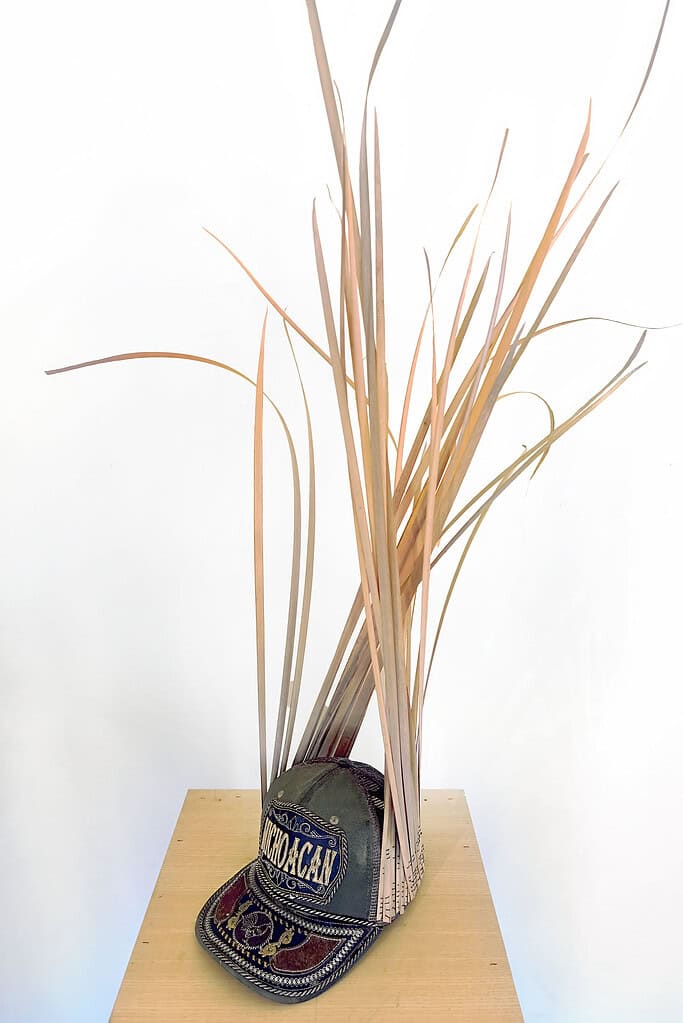
Isidro Pérez García’s penacho series demonstrates how Indigenous plant knowledge and ceremonial practice can be reactivated within mass-produced commercial objects. Here, the baseball cap is a readymade imbued with geopolitical significance, as it is a ubiquitous symbol of globalized production, cultural circulation, and national branding. Pérez García transforms the baseball cap into a site of epistemic negotiation, where ancestral knowledge systems and artistic practices subvert the uniformity of mass-produced objects and confront the commodification of national identity.
In Tuleño Guide’s Penacho #1: Michoacán (2023), the artist affixed long strands of tule to the sides of a snapback baseball cap emblazoned with the word “Michoacán.” The method of tule weaving that Pérez García frequently employs in his work originates from the aforementioned Mexican state, and the strands that sprout from the sides of the baseball cap evoke featherwork found on ceremonial penachos. In this way, Pérez García subverts signifiers of Mexican national identity to question the means by which corporations and nation-states position the nation's resources, its culture, and its people for consumption. The ancient, communal, human-oriented practice of tule weaving is juxtaposed against the contemporary, mechanized, and automated practice of goods production, reorienting the baseball cap as a contested object through which Indigenous knowledge resists extraction and erasure.
Recommended:
“Isidro Pérez García: Terreno Familiar | Familiar Terrain.” Mexicali Biennial Podcast. Mexicali Biennial, 2025. https://mexicalibiennial.org/isidro-perez-garcia-terreno-familiar-familiar-terrain/
This podcast episode features artist Isidro Pérez García discussing his work Terreno Familiar | Familiar Terrain in relation to ancestral land, ecological memory, and the haunting presence of borderlands.
Image: Isidro Pérez García, Tuleño Guide’s Penacho #1: Michoacán, 2023. Tule (gathered from nature reserve), embroidered appliqué baseball cap (cotton & nylon), thread.
Across cultures, food has been used as a means of communing with the divine, the ancestral, and the everyday. Sacred foods and ceremonial consumption operate as powerful gateways through ritual practices that allow beliefs to move across political, spiritual, and temporal boundaries.
Food carries sacred meaning. The Eucharist transforms bread into the body of Christ, enacting a miracle of presence through consumption. Pan de Muerto bridges the living and the dead, offered during Día de los Muertos. Challah sanctifies time each week, braided into continuity and blessing, while manna—appearing without labor or explanation—functions as divine sustenance. Informal food economies—such as street vending, communal kitchens, and mobile food practices—extend these rituals into public space, transforming everyday acts of feeding into systems of care, cultural preservation, and survival at the margins of regulated economies. Ceremonial consumption also extends beyond food to substances such as tobacco and pulque, which are ingested not for intoxication but for ritual—used in prayer, healing, and to commune with ancestors.
Case Study: Isidro Peréz Garcia, Pulque vs. Chicha: A Chinga-la-Migra Meal
In the summer of 2025, artist Isidro Pérez García created an immersive dinner installation activated by sacred foods and ceremonial consumption as forms of collective resistance. Pulque vs. Chicha: A Chinga-la-Migra Meal centered on fermented beverages with deep ritual histories across the Américas. The gathering unfolded as a three-course, plant-forward meal served in a familial home in Santa Ana, California (Tongva land).
Within the PARA/normal Borders framework, the dinner functioned as a counter-border practice. At a moment marked by heightened immigration enforcement and everyday fear, the act of coming together to eat, drink, and celebrate became a refusal of disappearance. Pérez García framed the meal as a response to raids targeting undocumented communities—communities that have long sustained life, culture, and dignity through informal food economies and shared ritual. The ceremonial consumption of pulque and chicha operated as a defiant act, interrupting fear with presence, joy, and ancestral continuity.
As the second event in the PARA/normal Supper Club series, the gathering extended beyond nourishment into storytelling. Attendees exchanged paranormal encounters, urban legends, and personal histories, transforming the table into a liminal site where memory, survival, and the miraculous circulated together. In this way, the communal event demonstrated how sacred food and drink can operate as a powerful counterpoint to the violent political climate gripping the United States.
Find a non-exhaustive cross-cultural list of Sacred Foods & Ceremonial Consumption on the downloadable PARA/normal Borders Prospectus and Research Overview.
Image: Isidro Peréz Garcia, Pulque vs. Chicha: A Chinga-la-Migra Meal. Flyer and promotional print. PARA/normal Borders Supper Club #2. Ink on paper.
Documentation, archiving, collections, systems, and curatorial storytelling
PARA/text examines the systems that surround, shape, and mediate meaning—documentation, archives, footnotes, written histories, metadata, mapping, curatorial framing, and counter-records—through which knowledge is constructed, authorized, and remembered. The concept draws from literary theorist Gérard Genette, who coined the term paratext to describe the materials that exist “beside the text” (titles, prefaces, captions, institutional framing, images, notes) and that quietly govern how narratives are received, believed, and valued. PARA/text extends this thinking beyond literature into the political, haunted, and speculative terrains.
Topics in this section revolve around systems - databases, registries, permits, maps, missing-person lists, biometric systems, archives, and omissions. These systems decide what becomes visible, what is preserved, and what is allowed to disappear. Archives are never passive. They are haunted structures shaped by surveillance, colonial memory, spiritual practice, ecological rupture, and unresolved loss.
PARA/text foregrounds counter-archives and alternative memory systems—those built outside official institutions through ritual, community mapping, digital experimentation, and curation. It explores how ghosts and hauntologies operate as social records; how digital spirits and generative technologies produce new forms of afterlife; how murals, altars, ex-votos, and ceremonies function as epiphenomenal documents; how mapping becomes a palimpsestic archive; and how spiritual activism and curatorial storytelling intervene where state and academic archives fail.
Case Study: ALIEN (Taller California Press)
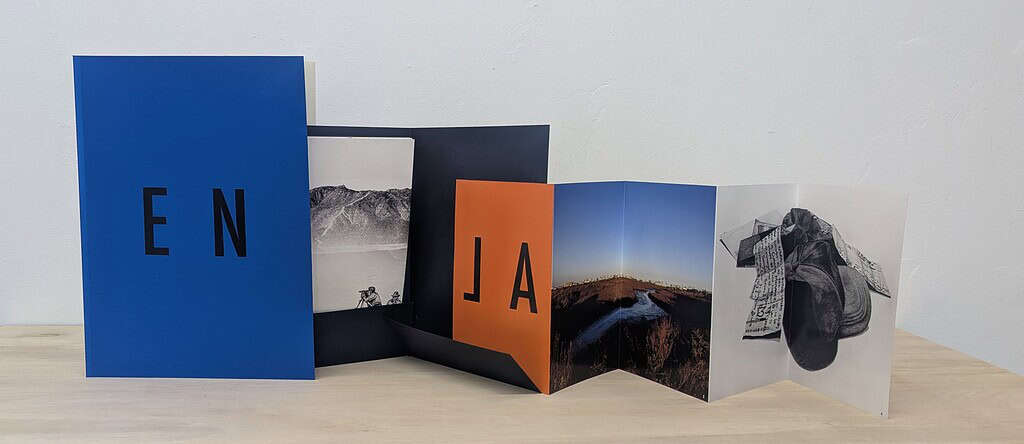
ALIEN began as an idea “in space,” emerging from the MexiCali Biennial’s PARA/normal Borders Lab as a speculative publishing project that both embodies and interrogates the concept of alienness within and beyond the U.S.–Mexico borderlands. Designed by Taller California with curator Armando Pulido the publication takes the form of a three-book architecture—interlocking yet separable volumes printed in offset, glow-in-the-dark, and Risograph processes. Artists Ed Gómez, Luis G. Hernandez, Lorena Gómez Mostajo, Omar Pimienta, and Jessica Sevilla each produced distinct image series that are pulled apart, recombined, and reorganized. In this way, ALIEN functions as a curatorial archive: a modular documentation system where meaning is produced through assembly, misalignment, and reconfiguration.
The publication situates the term “alien” within overlapping historical registers: from the Alien and Sedition Acts of 1798, which codified the legal dehumanization of non-citizens, to the science-fiction mythology of Alien (1979), which aestheticized fear of the unknown. Rather than treating “alienness” as extraterrestrial fantasy, the artists excavate terrestrial histories embedded in Baja California and the American Southwest—resource extraction, Indigenous knowledge systems, ecological transformation, and contemporary border enforcement. Through this lens, ALIEN reframes the archive itself as haunted: a site where legal language, pop culture, and material landscapes converge to produce enduring structures of othering.
Within PARA/text, ALIEN operates as a counter-record. Its fragmented structure mirrors the instability of border narratives and exposes how documents, laws, and visual regimes manufacture categories of belonging and exclusion. At the same time, the publication introduces play, glow, and speculative design as archival strategies—suggesting that documentation need not only preserve what has been, but can also prototype new modes of remembering. Here, the book becomes a living system: part archive, part artifact, part world-building device—where curatorial storytelling transforms the publication itself into an epiphenomenon of border histories, carrying both their violence and their potential for reimagining.
ALIEN is the subject of a group exhibition at MXCL BNL LAB titled Alien Excavations, January 31 - March 7, 2026.
ALIEN is available to purchase HERE.
Image: ALIEN book, Taller California and MexiCali Biennial.

Coined by Jacques Derrida, hauntology describes how the present is never fully present. It is always inhabited by unresolved pasts and unrealized futures. Hauntology names the condition in which histories that have been suppressed, denied, or prematurely ended continue to persist.
The ghosts remain.
Along the U.S.–Mexico border, ghosts take many forms. The borderlands are saturated with the afterlives of colonialism, forced displacement, racial violence, cartel terror, femicide, environmental collapse, and unmarked death. The disappeared persist through makeshift shrines, rumors, landscapes, and bureaucratic files. Surveillance towers occupy former ceremonial routes. Migrant trails overlap with ancient trade paths.
The ghosts remember.
Within PARA/normal Borders, hauntology becomes a curatorial method. Curatorial storytelling does not seek to “resolve” the ghost. Instead, it learns to listen. Exhibitions, archives, and public programs become spaces for activating memory, hosting unresolved narratives, and allowing suppressed histories to speak through objects, images, sounds, and bodies. Artists operate as mediums, translating traces into forms that can be felt.
The ghosts are heard.
In this way, curation becomes a practice of haunting. It constructs encounters with what lingers. It treats archives as living systems of return. To curate the border hauntologically is to recognize that every border story is already a ghost story, and that telling it responsibly means building structures where the unseen can remain present.
The ghosts are seen.
Case Study: Chantal Peñalosa Fong, Ghost Stories series
Chantal Peñalosa Fong’s research-based practice unfolds through subtle gestures and quiet interventions that attend to labor, waiting, and temporal suspension. Peñalosa Fong was invited to participate in PARA/normal Borders due to her ongoing Ghost Stories series, a body of work that excavates familial history and ancestral experience in relation to anti-Chinese violence and exclusionary policies of the early twentieth century. These histories—often marginalized within dominant border narratives—resurface in her work not as fixed documentation, but as spectral presences.
Drawing from archival photographs, documents, and personal records, Peñalosa Fong manipulates and reconfigures historical materials to foreground what has been erased, fragmented, or left unresolved. The resulting images operate hauntologically: figures fade, faces blur, and temporal continuity collapses. Rather than restoring the archive, her interventions expose its absences, allowing the past to appear as a series of haunted impressions rather than a stable record.
see also: PARA/noia>desaparecido
Recommended:
“Armando Pulido: Curating Stories.” Mexicali Biennial Podcast. Mexicali Biennial, 2025. https://mexicalibiennial.org/armando-pulido-curating-stories/
This episode features curator Armando Pulido discussing curatorial practice, narrative frameworks, and the politics of storytelling in the context of borderland art and the Mexicali Biennial.
A list of resources examining the ghosts produced by cartel violence and femicide and the stories of disappearance, resistance, and unresolved mourning that continue to haunt the social and psychic landscapes of the borderlands can be found on the downloadable PARA/normal Border Prospectus and Research Overview.
Image: Chantal Peñalosa Fong, Boats. Junks. Photocopies 2, 2023. Silkscreen on linen
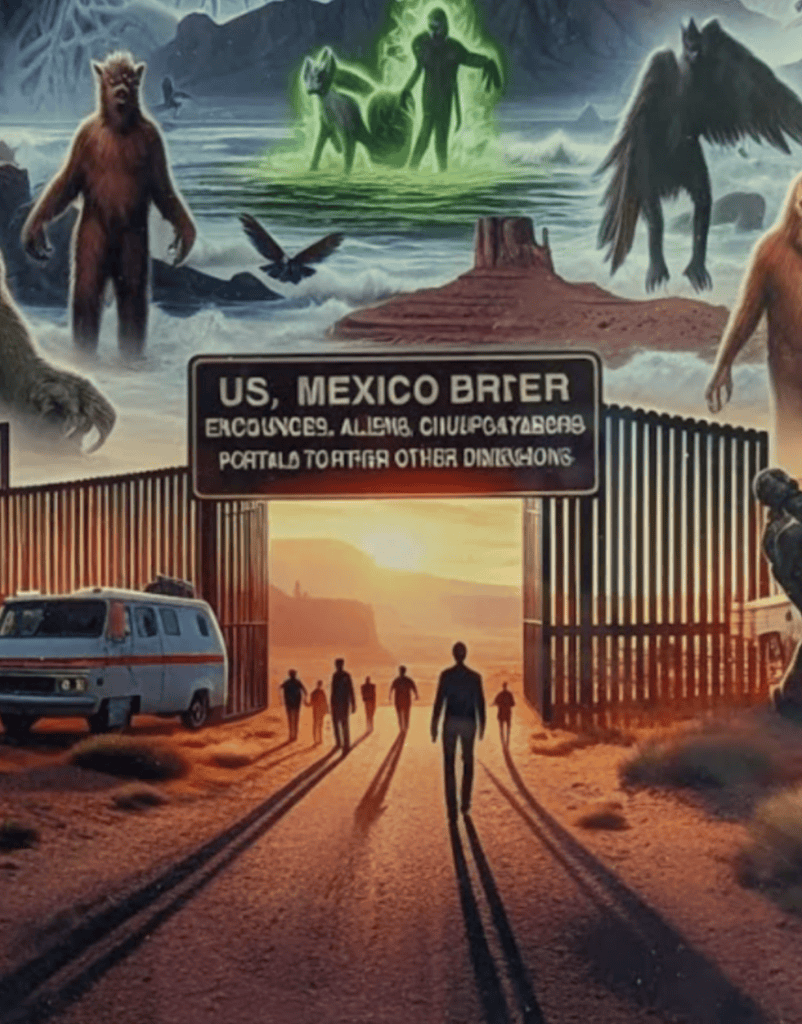
Generative ghosts are a form of digital afterlife created through artificial intelligence. Unlike “deadbots,” which are often assembled after someone has died from fragments of public data, generative ghosts are frequently built through intentional pre-death interviews, voice recordings, and curated digital archives, sometimes combined with years of social media activity. They are designed not only to resemble a person, but to continue them—to speak, respond, advise, remember, and even perform tasks after physical death.
Recent research describes a future in which people may leave behind AI agents capable of interacting with descendants, resolving disputes, sharing skills, or maintaining aspects of a person’s social and professional presence. These systems could teach grandchildren family recipes, preserve endangered languages, provide emotional support, or carry forward cultural knowledge. In this sense, generative ghosts are often framed as a form of technological reincarnation. More accurately, they function as reanimations—entities animated by data, trained on traces of a life, and capable of producing new speech beyond their human origin.
Scholars studying “AI afterlives” identify both potential benefits and serious risks. Generative ghosts may offer new modes of remembrance, storytelling, and continuity. They could support grieving families, safeguard testimony, and extend archives into interactive forms. At the same time, they raise profound ethical concerns: the disruption of healthy mourning, emotional dependency, privacy violations, hallucinated memories, posthumous identity theft, and the use of the dead as economic or political instruments. On a societal level, they challenge religious belief systems, destabilize notions of authorship and consent, and blur distinctions between the living, the dead, and the simulated.
Artists have already begun testing this terrain. Laurie Anderson’s AI project based on her late partner Lou Reed approaches generative ghosts not as resurrection, but as stylistic haunting—an exploration of how voice, memory, and creative residue persist through media. Her work foregrounds the instability of these systems: sometimes banal, sometimes uncanny, sometimes unexpectedly resonant.
Within PARA/normal Borders, generative ghosts reveal how haunting is becoming infrastructural. Memory is no longer only archived; it is activated. The dead no longer only linger; they operate. These entities occupy a new border zone - a digital purgatory that asks not only how we remember the dead, but who is permitted to speak for them, and to what ends.
A list of key companies currently providing digital afterlife services can be found on the PARA/normal Borders Prospectus and Research Overview in the "Digital Spirits" section.
see also: PARA/science>AI, Digital Consciousness, and Synthetic Prophets and PARA/science>Deadbots
Featured image: This image is part of a series titled PARA/normal Encounters at the Border, consisting of AI-generated images created using the prompt, “What paranormal entities can you encounter at the border between the U.S. and Mexico?” Created by Whittier, CA–based youth Violet Gomez, Sienna Gomez, and Olive Gomez, the project aims to provoke reflection on the metaphysical dimensions of the border. The series is currently installed in the restroom of the MXCL BNL LAB.
This imagery highlights hallucinations that occur within AI programs. Because generative ghosts are built from incomplete archives (texts, images, voice samples, social media traces, interviews), they are not reproductions of a person but probabilistic reconstructions. When they “hallucinate,” they will generate statements, memories, emotions, or advice that were never actually expressed by the deceased.
Epiphenomena are secondary, perceptible traces of forces that cannot be fully seen, contained, or measured. They are not the event itself, but what the event leaves behind: residues, gestures, distortions, marks, echoes. Epiphenomena appear when something crosses through a place, a body, a system, or a history. They are the atmospheric evidence of encounters with the unseen, the unresolved, or the unexplainable.
Within PARA/text, ritual documentation focuses on how communities record these traces. Murals, ex-votos, altars, shrines, and offerings function as living archives of epiphenomena. They do not document facts; they document encounters.
Murals can operate as public epiphenomena by marking sites of death or disappearance, territorial memory, spiritual protection, resistance, and collective mourning. The mural is not the event. It is the imprint of the event on the social atmosphere, a visual residue that insists something happened here.
Likewise, ex-votos are created after survival, crisis, healing, or miracle. They record encounters with danger, divine or paranormal intervention, and gratitude after rupture. Each ex-voto becomes a micro-archive of the miraculous: evidence of something that cannot be empirically proven but must be remembered.
Altars and shrines function as spatial epiphenomena. They emerge where institutions fail: where bodies were not recovered, where justice did not arrive, where grief required form, where belief needed grounding. Candles, photographs, shoes, rosaries, water bottles, toys, handwritten notes are not symbols. They are residues of lived relationships with absence and presence.
Ritual documentation recognizes these practices as curatorial acts. Altars are curated traces. Murals are public memory systems. Ex-votos are narrative data. Together, they reveal how communities archive what official systems cannot hold.
Case Study: Adrián Pereda Vidal, Sonic Meditations: Synthesizing the Supernatural
Adrián Pereda Vidal’s Sonic Meditations: Synthesizing the Supernatural transforms the MXCL BNL LAB into a site of ritual documentation. The installation consists of three distinct soundworks that play simultaneously, saturating the space with layered frequencies that shift as visitors move through the gallery. Rather than presenting a single narrative or image, the work creates an immersive field in which perception itself becomes the medium.
Sonic Meditations, which was curated by Sam Romo-White, is structured around epiphenomena: the subtle traces of something that cannot be directly seen. The artist draws from familiar paranormal experiences—an unexplained sound, a sudden silence, a feeling of presence—to propose sound as evidence rather than event. What visitors encounter are not representations of the supernatural, but its residues: vibrations, reverberations, and atmospheric disturbances that suggest an elsewhere without defining it.
As the soundworks modulate, synthesized graphics projected onto the gallery walls respond in real time, producing visual epiphenomena of the sonic environment. These shifting forms function as a secondary layer of documentation, translating invisible forces into perceptible traces. Pereda Vidal’s project demonstrates how ritual documentation can archive what resists capture. Here, the border between sound and space, presence and absence, becomes porous, and epiphenomena emerge as the primary record of an encounter with the unseen.
Image: Adrian Pereda Vidal, Sonic Meditations: Synthesizing the Supernatural, 2025. Projection and Audio
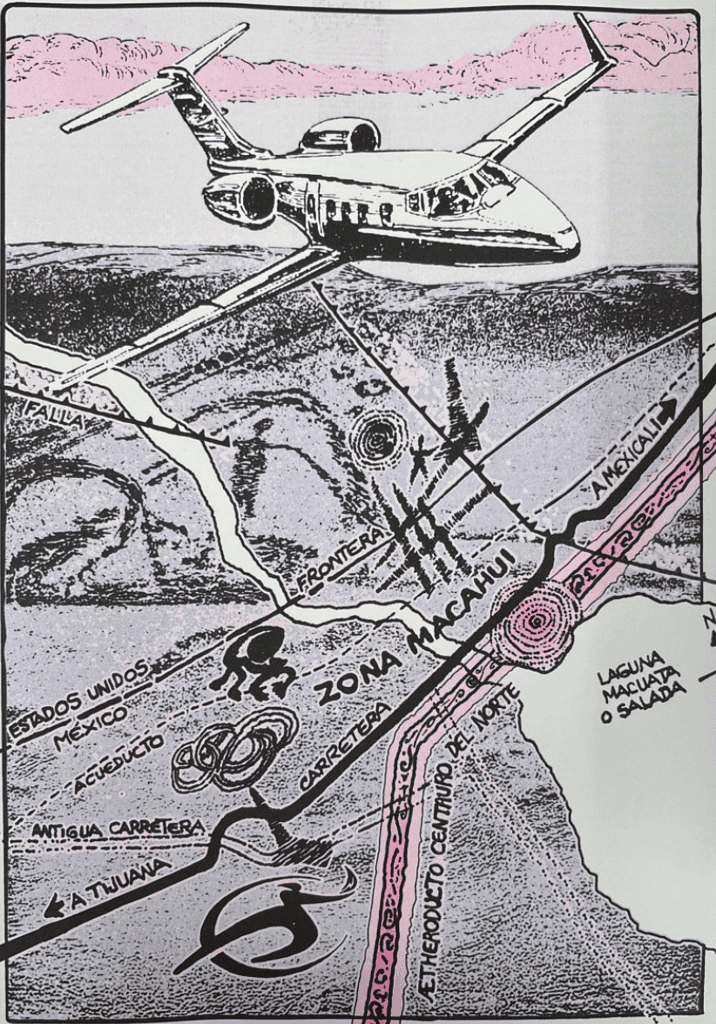
Mapping is often understood as a tool for orientation or control. It can also be approached as an archival act. Every map records more than geography; it documents movement, power, memory, and erasure. To map is to collect traces of how a place has been lived, crossed, renamed, governed, imagined, and resisted. In this sense, maps operate as living archives—storing not only what is visible, but what has been buried, displaced, or rendered illegible.
Like a surface written on, erased, and written over again, landscapes carry multiple inscriptions at once. Indigenous trade routes persist beneath colonial borders. Ancient waterways echo under canals and pipelines. Ceremonial grounds survive beneath military zones. Migrant paths run alongside highways. Each new map overlays earlier ones without fully erasing them. The past remains as residue, distortion, and haunting. When artists and curators map the borderlands, they are not producing new images of empty space, but activating layered records of historical, ecological, and spiritual presence.
As an archival practice, mapping gathers fragments: oral histories, satellite images, testimonies, ruins, sensor data, sacred sites, rumors, and routes. These materials form counter-archives that challenge official cartographies, which often present territory as neutral, stable, and singular. Counter-mapping instead foregrounds multiplicity. It charts what state maps omit: disappearance zones, informal crossings, ancestral geographies, ecological collapse, and speculative futures.
Case Study: Jessica Sevilla, Geometrías de La Duda (ALIEN book contribution)
Mexicali-based artist and researcher Jessica Sevilla works with mapping as a speculative and archival practice. After encountering issue No. 590 of La Duda (The Doubt)—which documented stone circles and geoglyphs found in 1977 at a site called Macahui, linked to ancient Lake Cahuilla—Sevilla began intervening the magazine’s images with her own photographs and drawings. These additions layer ancestral geometries with contemporary infrastructures such as aqueducts and gas pipelines, creating counter-maps where ancient waters, colonial extraction, and speculative futures coexist.
Rather than fixing territory, Sevilla treats mapping as a palimpsest: a living archive of doubt, memory, and more-than-human presence. Her work reveals how landscape holds overlapping histories that cannot be contained by scientific or political cartography alone.
This project is Sevilla’s contribution for ALIEN, a small-run artist book created by Taller California for the MexiCali Biennial.
About ALIEN:
ALIEN is a multi-part artist publication that brings together five artists to investigate the meaning of “alienness” within the U.S.–Mexico borderlands through three interlocking books produced with Taller California and MexiCali Biennial. Rather than looking to outer space, the artists turn toward the land itself, surfacing buried histories of extraction, migration, and Indigenous memory to reveal how colonial and imperial systems have rendered both people and environments “alien.” Accompanied by the exhibition Alien Excavations at the MXCL BNL LAB (January 31–March 7, 2026), the project reframes science fiction as a critical tool for confronting the past and imagining more just futures.
ALIEN is available for purchase HERE.
Image: Jessica Sevilla, Geometrías de La Duda (ALIEN book contribution). Risograph print.
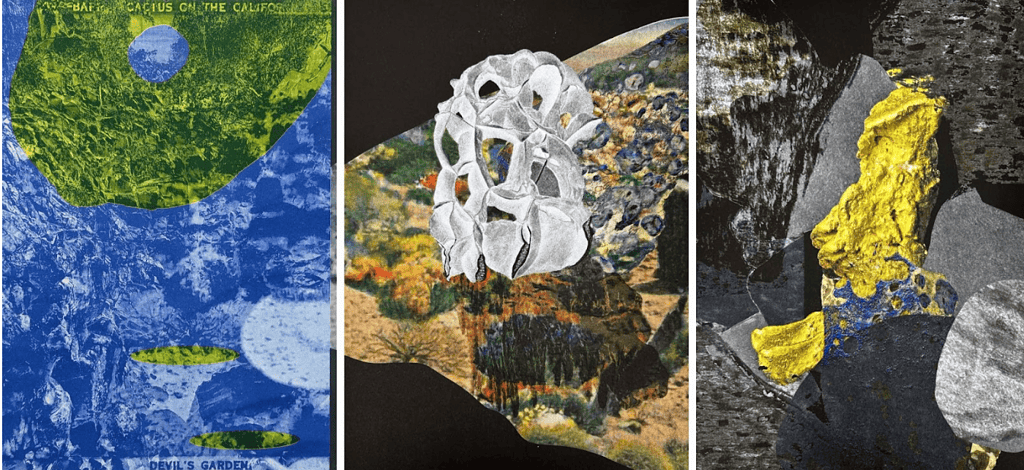
Archival sequencing refers to the curatorial and artistic practice of arranging documents, images, objects, and records in ways that produce new meaning. Rather than treating the archive as a neutral repository of facts, archival sequencing understands it as an active narrative system—one that shapes how histories are perceived, remembered, and believed. What is placed next to what, what is repeated, what is omitted, and what is allowed to glow all determine how the past is assembled in the present.
Within PARA/normal Borders, archival sequencing becomes a method for revealing how borders are not only enforced through walls and policies, but through images, rumors, scientific illustrations, maps, photographs, and bureaucratic traces. When artists reorganize these materials, they expose the archive’s instability.
Archival sequencing also allows the paranormal to enter documentation. A postcard becomes prophecy. An illustration becomes an omen. A photograph becomes a trace of something unfinished. Through deliberate montage and juxtaposition, artists transform records into epiphenomena—perceptible residues of events, forces, and systems that exceed what official histories can contain.
Case Study: Lorena Gomez Mostajo, Gold Rush
Lorena Gomez Mostajo’s Gold Rush operates as an act of archival sequencing, assembling a fragmented visual narrative around the brief nineteenth-century gold rush in Baja California and its long afterlife. The project moves between expedition photography, scientific illustrations of quartz formations, desert postcards, and the image of the “Boot of Cortez,” the largest gold nugget ever found in North America. Rather than reconstructing a linear history, Gomez Mostajo arranges these materials to echo one another across time—allowing rumor, extraction, speculation, and fantasy to circulate as parallel forces.
By sequencing archival fragments from different eras, Gold Rush exposes how imperial desire, scientific imagery, and commercial mythologies converge to shape territorial imagination. The glowing quartz, tinted landscapes, and isolated objects function less as evidence than as residues—epiphenomena of a larger extractive logic that continues to structure the borderlands. The archive becomes atmospheric, suggesting how the pursuit of wealth leaves behind not only economic traces, but visual and psychic ones.
Gold Rush is included in the publication ALIEN (Taller California Press), where the project participates in a broader interrogation of “alienness” as a category historically used to name both the unknown and the unwanted. Within the book’s nonlinear, three-volume architecture, Gomez Mostajo’s images extend the publication’s examination of how fear, desire, and otherness are embedded in visual systems—from colonial law to science fiction. In this context, Gold Rush positions extraction itself as an alien force: one that reorganizes land, bodies, and belief through speculative promise.
About ALIEN:
ALIEN is a multi-part artist publication that brings together five artists to investigate the meaning of “alienness” within the U.S.–Mexico borderlands through three interlocking books produced with Taller California and MexiCali Biennial. Rather than looking to outer space, the artists turn toward the land itself, surfacing buried histories of extraction, migration, and Indigenous memory to reveal how colonial and imperial systems have rendered both people and environments “alien.” Accompanied by the exhibition Alien Excavations at the MXCL BNL LAB (January 31–March 7, 2026), the project reframes science fiction as a critical tool for confronting the past and imagining more just futures.
ALIEN is available for purchase HERE.
See also: PARA/dise > Ghost Towns for more information on extraction in relation to PARA/normal Borders.
Image: Lorena Gomez Mostajo, from the Gold Rush series (ALIEN book). Risograph print.
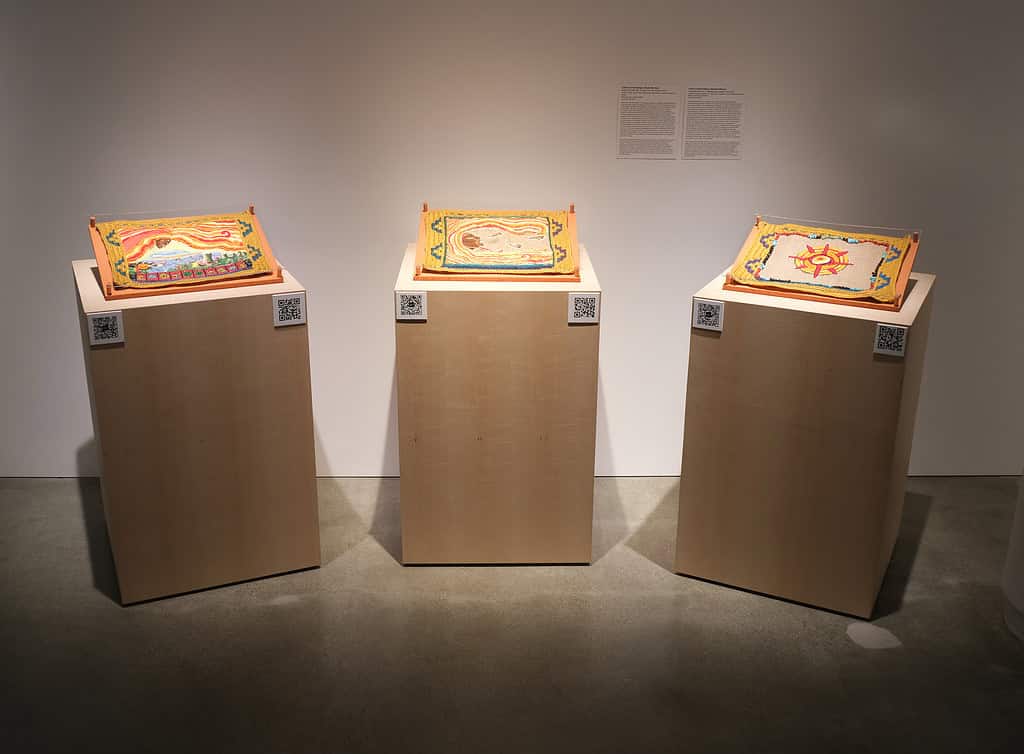
In an era increasingly defined by political interference in cultural expression, Spiritual Activism offers a curatorial strategy grounded in the transmission of meaning beyond the fraught boundaries of institutional control. Rooted in Gloria Anzaldúa’s conocimiento—a spiritual practice that bridges inner, personal work and outward, public action—this approach positions curation as a site where transformation, ethics, and imagination converge. Within PARA/normal Borders, the paranormal is not treated as spectacle, but as a culturally flexible spirituality that opens portals to insights suppressed by dominant epistemologies.
Spiritual Activism asks: what do we do with the knowledge we encounter? In curatorial practice, this knowledge becomes a tool for social change, activated through relationships of care, collective reflection, and ethical accountability. The accumulation of research—understood here as a creative act in itself—is filtered through conocimiento: a way of seeing that emerges from critical encounter, experiential wisdom, and personal reflection.
These strategies are especially urgent at a moment when cultural institutions are under pressure—politically, financially, and ideologically—to sanitize and restrict expression. Recent federal reviews and policy threats aimed at artifacts, exhibitions, and institutional autonomy risk silencing voices and narrowing public discourse. Artists have withdrawn work in protest of censorship; the resignation and dismissal of curators reveal not isolated incidents, but a broader assault on free expression and institutional independence.
Anzaldúa describes conocimiento as something achieved through creative acts—writing, art-making, healing, and teaching—that move individuals beyond binary, black-and-white thinking. In these “paranormal” times, Spiritual Activism reasserts the arts as essential infrastructure: not ancillary, but central to civic life, critical inquiry, and social resilience. As a curatorial strategy—and itself a creative act—it mobilizes the unseen and the felt, drawing on soft power to resist erasure, uphold free expression, and cultivate transformative experiences that extend far beyond the gallery walls.
Case Study: Liliana Conlisk Gallegos (Mystic Machete), Before the Sixth Sun: A Codex For Our Children
Before the Sixth Sun (BSS) is an homage to Indigenous codices, colorful pictographic books recording precious knowledge, as they came under threat following the onset of European colonialism and settlement in the sixteenth century. BSS retells the story of coloniality – the system of ideas and ways of thinking that remains following European invasion and violence against Indigenous lives and land – through an allusion to the relationship between native medicinal herbs and imported settler flora. As with Indigenous textile tradition and transfronteriza (transborder) knowledge production, BSS constructs a non-linear morphing genealogy of fragmentary versions of history.The burlap represents the bounty of Indigenous feminine and feminist forms of data storage and storytelling, alluding to the presence of “hidden” elements that are revealed through an augmented reality component of the artwork. Direct and unfiltered decolonial elements (roots) are not only shared “underground,” but also through the invisible wireless technology hidden in plain sight. This represents the codified futuristic nature of Chicano and Indigenous pedagogies. As a piece of hyper design, BSS mixes folk artistry with technology, exposing the artisan’s hand as a counter-story to mass production and capitalism in the uniqueness of presence, making the moment and the event more valuable than the object, and bringing materiality back to its connection to ritual and meaning.
Before the Sixth Sun enacts the principles of Spiritual Activism grounded in conocimiento—where knowledge emerges through lived experience, ethical responsibility, and collective memory. By activating Indigenous codex traditions through embroidery, plant knowledge, and augmented reality, the work treats research, making, and storytelling as interconnected acts of care and resistance. Its non-linear structure, emphasis on hidden transmission, and fusion of ancestral and digital forms embody a curatorial commitment to alternate epistemologies that challenge institutional norms shaped by colonial and capitalist logics.
A video experience of Before the Sixth Sun can be found HERE.
Image: Liliana Conlisk Gallegos (Mystic Machete), Before the Sixth Sun: A Codex For Our Children, 2022. Burlap, muslin, cotton, wool, silk, acrylic, embroidery, crochet, augmented reality. Music by Juan Carlos Portillo
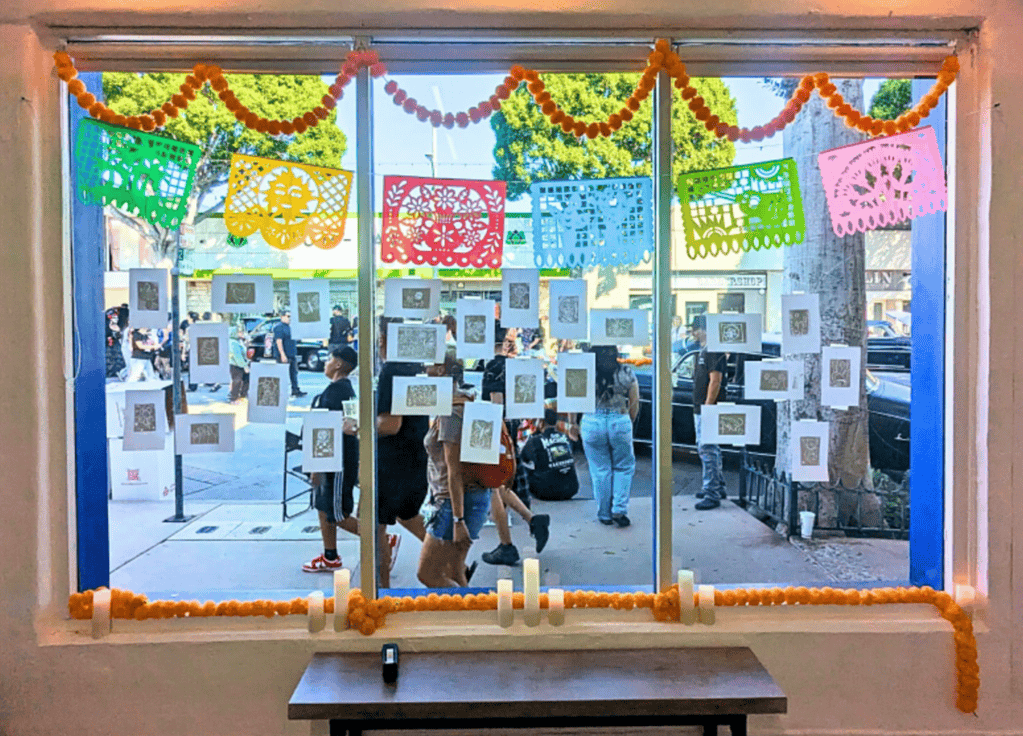
Moral, spiritual, and transformational narratives.
PARA/bles weaves together moral, spiritual, and mythic narratives that function as internal guides for navigating transformation. Across cultures, these stories operate as narrative technologies—frameworks that help individuals and communities endure rupture, adapt to uncertainty, and reassemble the self when external systems fail or withdraw care.
At the level of power, PARA/bles examines how institutions govern the supernatural. Religious authorities, states, and museums operate as metaphysical border agents, regulating which visions, miracles, spirits, and rituals are deemed legitimate and which are dismissed as superstition, folk belief, or irrational delusion. This form of governance mirrors territorial border control: it polices thresholds of belief and disciplines how encounters with the unseen are interpreted, circulated, and remembered. In tension with these regimes emerge alternative epistemologies—cultural traditions, Indigenous cosmologies, and lived experiences that resist centralized authority over meaning and assert relational, culturally grounded forms of knowledge as valid and subversive.
Through a decolonial lens, feminine archetypes and monstrous spirits are actively reinterpreted as figures of resistance, subverting patriarchal narratives that have historically demonized, silenced, or pathologized them. Their grief, betrayal, and rage are transmogrified into righteous anger directed against the very patriarchal, colonial, and racist systems that demand their rejection and abjection. Figures such as the Mexica goddesses Coatlicue and Coyolxāuhqui, alongside La Llorona and La Siguanaba, are reclaimed by artists as decolonial icons. These figures honor women’s lived struggles, acknowledge shared traumas inflicted by racism, colonialism, and sexism, and transform collective pain into activism, social justice, and cultural renewal. As Gloria Anzaldúa articulates, fragmentation precedes healing; the psychic and political labor of reintegration directly challenges systems of erasure, repositioning suppressed spiritualities as potent forces of resistance and empowerment.
Through the miraculous and the liminal, spiritual and embodied encounters articulate states of becoming rather than resolution. Creation stories, migration myths, and cryptids extend PARA/bles into modes of relational knowledge. From Aztlán to Tlacuache, from guardians to tricksters, these figures demonstrate that transformation often emerges through boundary-crossing—ethical, ecological, and cosmic—rather than through stability, containment, or closure.
Case Study: Los Muertos Art Workshop with Natalie Godinez
Led by artist Natalie Godinez, Los Muertos Art Workshop created a living case study in how ancestral memory, ritual practice, and collective artmaking can function as vehicles of cultural transmission. Held at MXCL BNL LAB, the workshop invited participants to engage in printmaking as a means of activating family legends, inherited stories, and personal remembrance.
Participants were guided in translating oral narratives and familial traditions into blockprint images, foregrounding the role of material process in mediating memory. Printmaking here functions as a ritual act: pressure, transfer, and impression mirror the ways stories are carried across generations, altered by time yet retaining traceable continuity. The invitation to incorporate individual prints into a communal altar installation further situates the workshop within traditions of collective devotion, where private grief and memory are transformed into shared presence.
Within the PARA/bles framework, this workshop exemplifies how moral and spiritual narratives operate as internal maps for navigating loss, migration, and identity. The altar becomes a threshold space—neither purely personal nor institutional—where the dead are not relegated to absence but remain relational participants in the present. By centering family legends rather than canonical histories, the workshop resists institutional gatekeeping of memory and affirms vernacular knowledge as spiritually and culturally authoritative.
Image: Community-created altar with prints, Los Muertos Art Workshop with Natalie Godinez
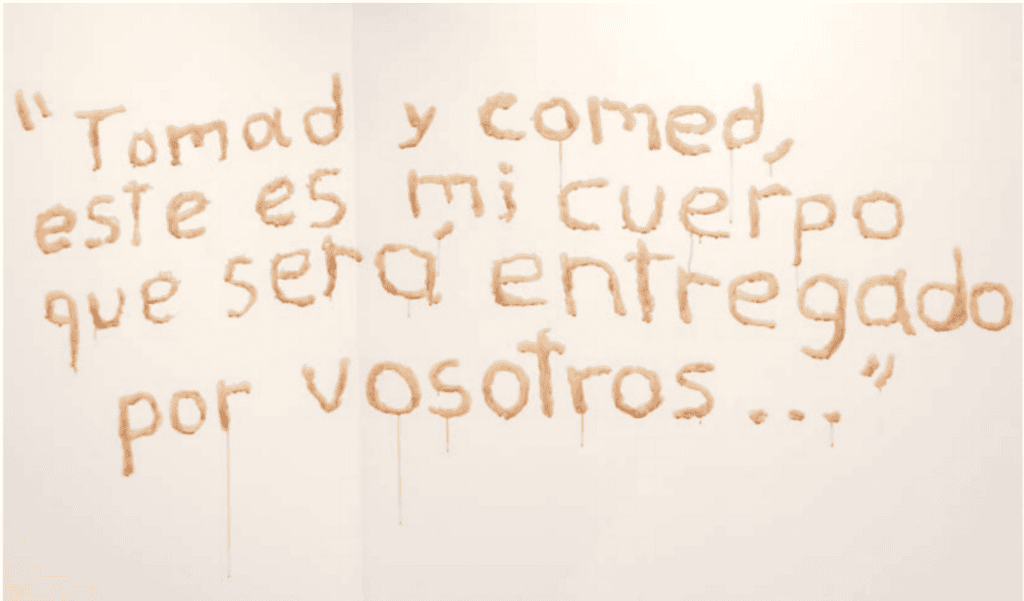
The Vatican operates as a global authority of the supernatural, policing the boundaries between the natural and the miraculous, much like a nation-state polices geographic borders. Through the Dicastery for the Doctrine of the Faith and centuries of doctrinal precedent, the Church determines which apparitions, miracles, and visions may enter official history and which remain unrecognized or condemned. This creates a system of metaphysical gatekeeping in which spiritual phenomena must pass through institutional checkpoints to be authenticated, venerated, or dismissed. In this framework, the border is not only territorial but ontological—a liminal zone where divine encounters, folk beliefs, and collective trauma press against ecclesiastical authority. The Vatican’s role reveals how power structures regulate not just bodies across borders but realities across thresholds of belief.
The Vatican is not the only institution that seeks to regulate supernatural occurrences. Islamic supernatural governance includes jurists and fiqh councils that interpret dreams, visions, and encounters with jinn (1). In contrast to the centralized authority of the Dicastery, Islamic systems distribute interpretive power among scholars and mystics, resulting in localized and context-specific determinations of what counts as authentic spiritual experience.
Modern state institutions likewise regulate the paranormal, particularly when such phenomena threaten the state’s monopoly on truth, authority, and social order. The U.S. government, for example, has a long history of managing anomalous phenomena through military and intelligence channels. UFOs and UAPs are framed as national security concerns and investigated through programs such as Project Blue Book (1952–1970), AATIP (Advanced Aerospace Threat Identification Program, 2007–2012), and the current UAP Task Force.
Finally, museums function as paranormal culture gatekeepers by determining which spiritual objects, rituals, and supernatural narratives are preserved, displayed, or dismissed. Through classification systems that label Indigenous ceremonial objects as “art,” “artifact,” or “superstition,” museums control how the unseen is interpreted and who has access to it. Their curatorial choices strip some objects of their sacred power while elevating others as cultural heritage, effectively regulating the movement of supernatural knowledge into public memory. By deciding which forms of spiritual experience are legitimate, aesthetic, primitive, or irrational, museums act as secular authorities of the metaphysical, shaping cultural understandings of the paranormal as powerfully as religious institutions do.
Case study: Marycarmen Arroyo Macias, Tomad y comed
This work contains the text, "Tomad y comed, este es mi cuerpo que será entrogado por vosotros...(Take and eat, this is my body which will be given up for you.)" and references the Eucharistic moment in which the ordinary becomes miraculous, underscoring its connection to the mystery and transformative power of Communion. This project was part of the Cannibalism in the New World exhibition at Vincent Price Art Museum.
Here are some real-world examples of supernatural governance:
Pope John Paul II. Homily for the Canonization of Saint Juan Diego. July 31, 2002. Vatican.va. https://www.vatican.va/content/john-paul-ii/en/homilies/2002/documents/hf_jp-ii_hom_20020731_canonization-mexico.html
This homily, delivered by Pope John Paul II during the 2002 canonization of Juan Diego, affirms the Church’s recognition of the Indigenous visionary associated with the apparition of Our Lady of Guadalupe. It serves as an official Vatican acknowledgment of Juan Diego’s role in the Guadalupan tradition.
All-domain Anomaly Resolution Office. Report on the Historical Record of U.S. Government Involvement with Unidentified Anomalous Phenomena (UAP), Volume 1. Washington, D.C.: Department of Defense, February 2024.
https://media.defense.gov/2024/Mar/08/2003409233/-1/-1/0/DOPSR-CLEARED-508-COMPLIANT-HRRV1-08-MAR-2024-FINAL.PDF
This report, released by the U.S. Department of Defense’s All-domain Anomaly Resolution Office (AARO), reviews nearly 80 years of governmental investigations into unidentified anomalous phenomena (UAP), detailing programs from Project Blue Book to AATIP and concluding that, to date, no evidence confirms the existence of off-world or extraterrestrial technology. The document exemplifies how modern states act as institutional gatekeepers—governing which anomalous experiences gain public legitimacy and which remain classified or dismissed.
Image: Marycarmen Arroyo Macias. Tomad y comed, 2012. Blood on wall.
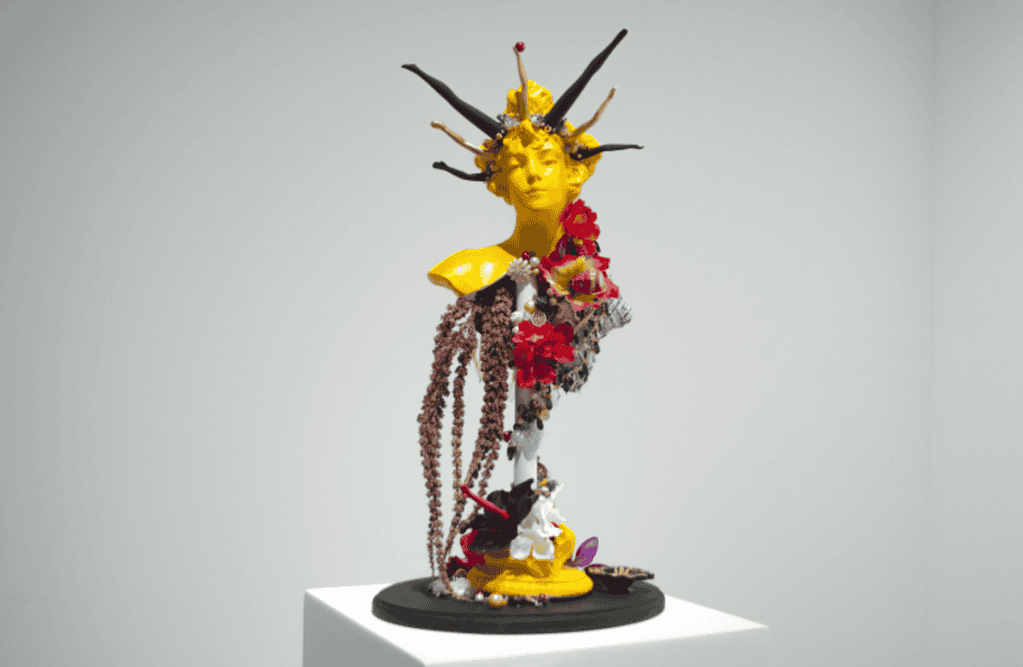
Hegemonic cultural, political, and religious institutions weaponize assignations of monstrosity toward goddesses and female deities to suppress portrayals of femininity that derive from Indigenous spiritualities and threaten Catholic, patriarchal, white supremacist dogma.
Gloria Anzaldúa implores a Chicana reclamation of Aztec–Mexica deities like Coatlicue and her daughter Coyolxāuhqui, who are deemed subversive to patriarchal power in both Aztec–Mexica and colonial Spanish society. The authority of Coatlicue, the serpent-headed progenitor of all life, is supplanted by that of her warrior son, Huitzilopochtli, and, later, by the Catholic patriarchal God. Coyolxāuhqui, furious at the pregnancy of her mother and the imminent birth of her brother, Huitzilopochtli, leads an army of her four hundred brothers to murder Coatlicue. Coyolxāuhqui’s resistance is swiftly squashed, as she is promptly decapitated and dismembered by Huitzilopochtli. Her head was thrown into the sky and became the moon. The power of both Coatlicue and Coyolxāuhqui is rendered secondary to that of the patriarch, who destroys those whose ambition or autonomy threatens patriarchal supremacy.
Anzaldúa identifies the dismemberment of Coyolxāuhqui as a symbol of the mental, spiritual, and emotional fragmentation that precedes one's journey of healing and reclamation of the self. In Chicana feminist theory and contemporary art, Coyolxāuhqui is reclaimed and reimagined—not as a defeated figure, but as a powerful emblem of healing, resistance, and transformation. Building on Gloria Anzaldúa’s concept of the Coyolxāuhqui Imperative, her dismembered body serves as a metaphor for trauma and the ongoing journey of reclaiming fragmented parts of the self. In this framework, brokenness is reframed as an essential phase in the process of renewal, rebirth, and wholeness.
Scholars and artists further recast Coyolxāuhqui as a symbol of defiance and feminine strength, subverting patriarchal gender expectations and Eurocentric historical accounts. Through murals, installations, and other contemporary works, she becomes a decolonial icon—one that honors lived struggles, acknowledges shared traumas inflicted by racism, colonialism and sexism, and channels pain into activism, social justice, and cultural renewal. Anzaldúa's Coyolxāuhqui imperative entreats us to catalyze the process of reintegration and healing, at an individual, societal, and cosmic level.
Vengeful, monstrous feminine spirits such as La Llorona, La Lechuza, or La Siguanaba (from El Salvador) exemplify how women’s refusal or inability to perform normative femininity is refigured as monstrosity. These figures symbolize women’s desire for righteous justice against patriarchal harms, embodying resistance through rejection of submissive femininity. While La Llorona drowned her children in a river following revelations of her husband’s infidelity, townspeople accused La Lechuza of murdering a child through witchcraft. Their perceived failure to embody normative femininity—largely defined through motherhood—is what drives us to fear, or revere, these spirits. These spirits' grief and betrayal are transmogrified into righteous anger, directed against the very same agents and systems of patriarchy that implore us to abhor and reject them.
Case Study: Maya Mackrandilal, ANTI/body 9 (Kalifia as Libertas)
Maya Mackrandilal’s 2018 multimedia sculpture ANTI/body 9 (Kalifia as Libertas), presented as part of the MexiCali Biennial’s Calafia: Manifesting the Terrestrial Paradise, exhibition, positions the fictional Black, Amazonian queen of California as a symbol of intersectional feminist emancipation. The bright yellow hue of the mythical queen’s bust alludes to Spanish narratives that cast California as a land of gold. Mackrandilal adorns the yellow form with an assemblage of silk flowers, beaded jewelry, and swatches of fabric, while black and gold limbs emerge from her crown, extending upward toward the sky. Through this assemblage, Mackrandilal constructs a tension between the sacred, institutionalized form of classical sculpture and materials associated with intimate, domestic sites of self-identification. In doing so, she elevates everyday practices of self-fashioning as artistic gestures of autonomy.
Image: Maya Mackrandilal, ANTI/body 9 (Kalifia as Libertas). Mixed media (found objects, spray paint, Flashe paint, wire, pvc pipe, steel flange, epoxy clay, wood). 26 x 14 x 12 inches. 2018
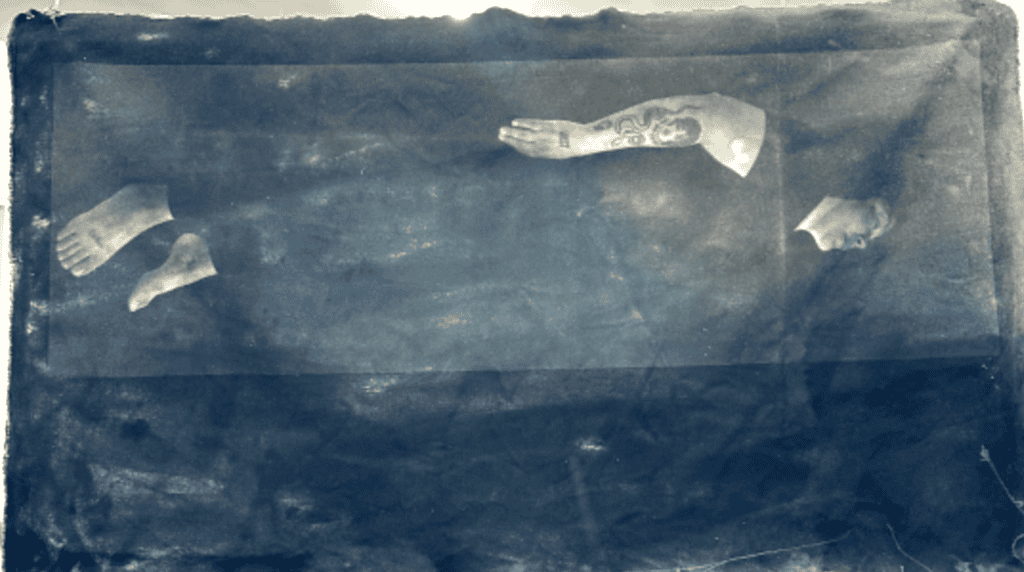
In the U.S.–Mexico borderlands, miraculous narratives hold particular resonance. From Marian apparitions to Indigenous prophetic visions, these events often emerge in spaces marked by rupture—desert crossings, contested land, sacred mountains, disappearance zones, detention sites. The miraculous becomes a counter-border: a symbolic or spiritual line that resists, reframes, or overwhelms the logic of militarization and bureaucracy.
A miracle, however, is not the same across traditions. (See PARA/noia > Supernatural Governance) For some, it is a suspension of physical law; for others, it is a shift in consciousness, a revelation, a coincidence charged with meaning, or a moment where reality feels momentarily permeable. Many Indigenous and non-Western traditions do not separate nature from the supernatural—so what Christianity might label a “miracle,” other cultures understand as part of the relational world. To account for a wider definition of miracle, we acknowledge these defining characteristics:
Core features of a miracle:
1. It disrupts the expected order of things.
A miracle stands out precisely because it contradicts what should be possible according to natural laws or social norms.
2. It carries symbolic or spiritual significance.
A miracle is not simply a strange event—it is interpreted as meaningful, often pointing toward a divine, ancestral, or metaphysical source.
3. It transforms the witness.
Miracles change people: their beliefs, perceptions, identities, or communities. The miracle is an encounter that leaves a mark.
4. It functions as a story.
Even when unverified, miracles endure because they circulate through narrative. They become parables—vehicles for teaching, healing, resistance, or community-building.
For PARA/normal Borders, the miraculous is understood not as superstition but as a border epistemology—a way of knowing shaped by crossing, rupture, and survival. Visions and apparitions become narrative devices through which the unrepresentable becomes speakable. See also PARA/text > Spiritual Activism.
Case Study: Amina Cruz, Self Portrait in Ascension
Amina Cruz’s Self Portrait in Ascension presents the artist suspended in a state between rising and drifting, rendered through cyanotype and stained with tea and coffee—materials tied to daily rituals. In this liminal portrait, Cruz’s floating body becomes a metaphor for ascension at a moment of release. Cruz’s work stands as a meditation on how ascension operates as a form of embodied resistance, a movement beyond constraint toward a self that is expansive, relational, and untethered.
The image was part of Alma Entre dos Mundos, a PARA/normal Borders Lab exhibition that focused on lens-based works in relation to identity. Learn more about this two-person exhibition HERE.
Image: Amina Cruz, Self Portrait in Ascension, 2025. Cyanotype, tea, and coffee on canvas
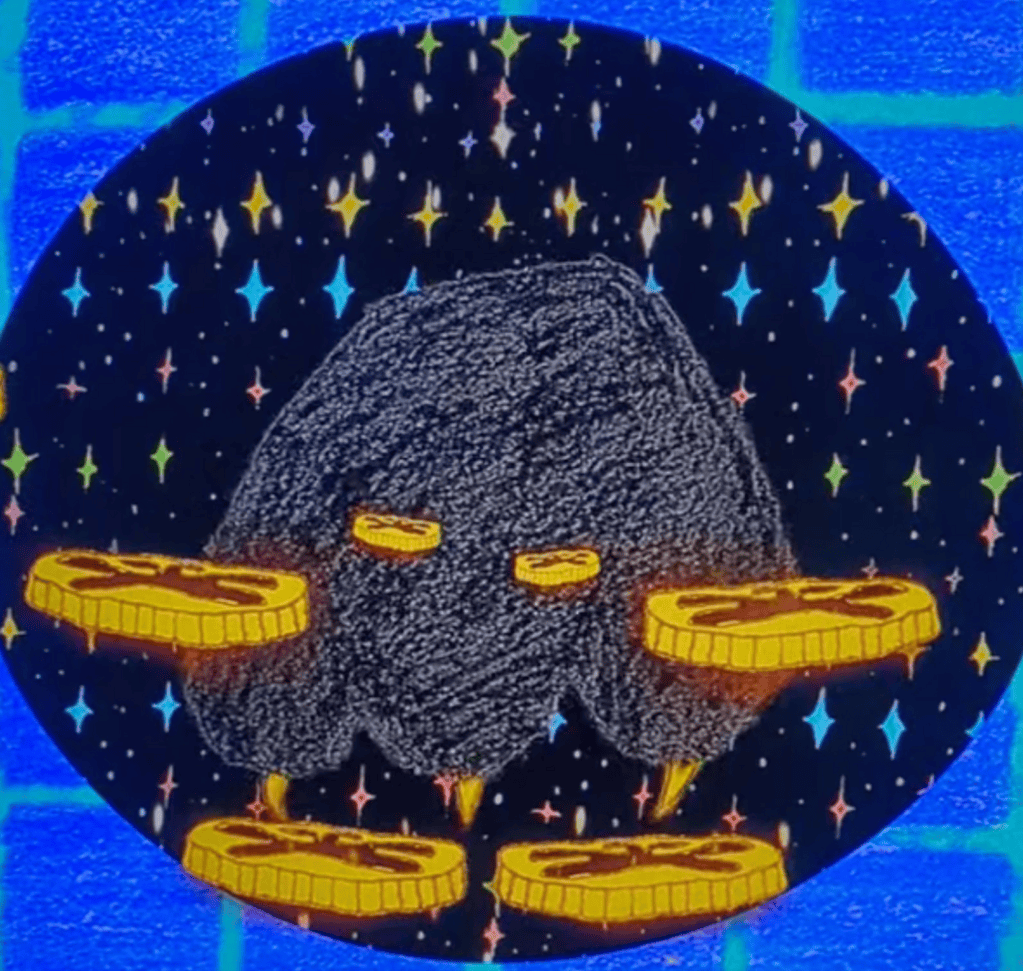
Across cultures, metaphysical liminal spaces—such as purgatory, Mictlán, the Bardo, Barzakh—have functioned as narrative frameworks for understanding what it means to be held between worlds. These stories offer moral and spiritual architectures for enduring confinement, delay, and uncertainty, long before such conditions were formalized through borders, prisons, and administrative systems. Read together, these transitional realms provide a lens for understanding the border not simply as a line, but as a condition of being. When applied to borders—both real and conceptual—these metaphysical liminal spaces illuminate how contemporary regimes of mobility and control function as systems of suspension, holding bodies in prolonged states of waiting.
In Christian cosmology, purgatory narrates confinement as process: a space where time is imposed and transformation is promised through endurance, compliance, and reflection. It teaches how to wait within constraints while believing resolution is possible. Limbo, by contrast, names a harsher condition—suspension without outcome, a holding pattern in which time accumulates but change does not. Together, these concepts anticipate the logic of contemporary border regimes that regulate bodies through delay, provisional status, and indefinite waiting.
Other traditions articulate in-between states without punishment, yet remain deeply attentive to containment. In Nahua cosmology, Mictlán unfolds as a passage through layered terrains shaped by exhaustion, memory, and assistance from the living—echoing how survival in constrained spaces depends on care, ritual, and relation. In Tibetan Buddhism, the Bardo describes an interval in which perception intensifies; consciousness remains active even when the body is immobilized. Barzakh, in Islamic thought, marks a threshold of awareness and anticipation—a space of watchfulness before judgment.
Similarly, nepantla, articulated through Chicanx thought, reframes the in-between as a lived condition within the world. It names the psychic, cultural, and bodily experience of being held between systems—where borders, institutions, and even the body itself function as sites of containment.
Culturally, these narratives operate as loci of belief, transmitting ancestral knowledge that teaches people how to endure, adapt, and remain human while being held in the long middle.
Case Study: Danila Cervantes & Jacquelin Zazueta, Middle of El Centro
Danila Cervantes and Jacquelin Zazueta's Middle of El Centro situates purgatory not as distant theology but as a familiar, lived environment. In this short animated film, two sisters find themselves suspended between life and death within a casino-hellscape—a space governed by chance, debt, repetition, and risk. To pass on, they must wager their dreams and childhood memories in a game of roulette con El Diablo. Here, purgatory is not defined by punishment, but by delay, negotiation, and conditional passage.
The casino operates as a contemporary transitional space, echoing border checkpoints, bureaucratic waiting rooms, and other systems where movement is contingent and unevenly distributed. The sisters are neither condemned nor redeemed; they are held in suspension, required to gamble fragments of their lived experience in exchange for the possibility of passage. Memory becomes currency, and time stretches without guarantee of resolution.
The film’s material language reinforces this liminality. Hand-drawn oil pastels melt and smear before the viewer’s eyes, resisting stable form and mirroring the instability of the in-between. Colored pencil animation and embedded home-video footage collapse past and present, myth and autobiography, transforming childhood into both evidence and offering. Vision itself becomes unstable—images dissolve and reassemble—aligning the work with counter-optical practices that refuse clarity as control.
Middle of El Centro was presented as part of Haunting Present, Vol. I, a group exhibition and screening series that took place in the border city of Calexico at Casa la Línea arte contemporáneo. By exploring hauntology, the moving image, and the archive as sites of spectral return, the film activates purgatory as a haunted present: a space where memories that are not fully past continue to insist upon the now. The short film functions as a contemporary parable of the in-between, demonstrating how storytelling, animation, and memory transmit ancestral knowledge for enduring suspension while remaining human in the long middle.
Image: Danila Cervantes and Jacquelin Zazueta, Middle of El Centro (2018–19), still from animated film, 3:16 minutes.
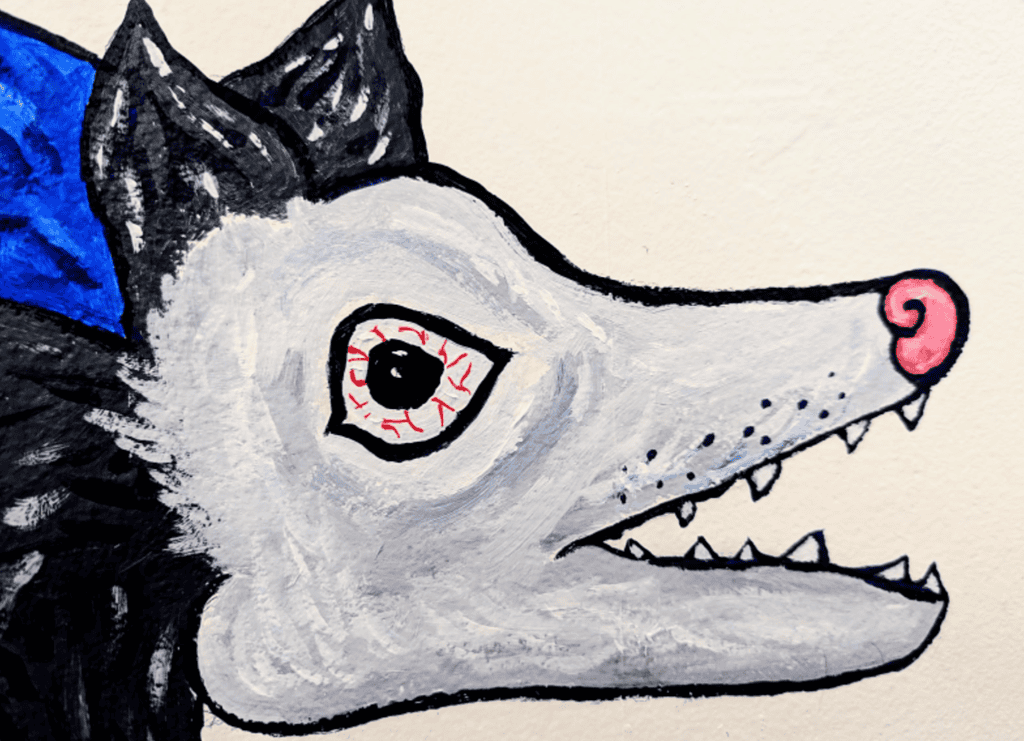
Creation stories are foundational narratives through which cultures transmit knowledge about origin, responsibility, and belonging. These stories encode ethical systems, ecological relationships, and collective memory, often emerging in response to historical upheaval, environmental change, or colonial disruption. They explain not only how the world came into being, but how people are meant to move through it—what must be respected, what must be shared, and what forms of knowledge carry consequence.
Creation stories are categorized by a handful of common types. These include those involving familiar forms: worlds emerging from nothing (Biblical Genesis), beings surfacing through layered realms (Pueblo emergence stories), landscapes reshaped by flood and renewal (Biblical Noah), or life made possible by migration (Aztlán; Exodus). These narrative structures reflect local environments and political realities, offering ways to understand survival under precarity. Importantly, creation is not always centered on humans. Animals, plants, spirits, and hybrid figures frequently serve as culture bearers, bringing fire, food, ritual substances, or cosmological insight into the world. In these traditions, knowledge itself migrates—crossing thresholds between species, realms, and generations.
Origin narratives remind us that migration has long been understood as a sacred process, guided by nonhuman agents and ethical constraints, long before borders attempted to fix identity to territory. The following case study—the Tlacuache’s discovery of pulque—demonstrates how a seemingly small act of transgression becomes a foundational moment of cultural creation, revealing how survival, ceremony, and knowledge are carried forward through story.
Case Study: Isidro Pérez García’s Mural of Tlacuache
In Mexica cosmology, pulque’s origin unfolds across multiple registers of creation. Mayahuel, the goddess of the maguey, embodies the divine emergence of the plant itself—her transformation giving rise to the sap that sustains life and ritual. Tlacuache, the trickster opossum, occupies a different but complementary role: as a liminal, nonhuman culture bearer, he discovers fermentation and brings pulque into human knowledge. Together, Mayahuel and Tlacuache articulate creation as both cosmological sacrifice and migratory transmission, revealing how sacred substances move from divine origin into communal practice.
Tlacuache is credited with multiple acts of cultural creation: stealing fire for humanity, shaping rivers across the land, and discovering pulque within the maguey plant. The myth begins when Tlacuache encounters a wounded maguey whose sap has begun to ferment. Drawn by hunger and curiosity, he drinks the liquid and experiences its effects—warmth, disorientation, pleasure, and altered perception. Through his body, Tlacuache learns that time, exposure, and transformation have altered the sap into something powerful. He carries this knowledge back to humans. In some tellings, Tlacuache is also responsible for carving the rivers of the world; after his encounter with pulque, the rivers become crooked and winding, their irregular paths attributed to his intoxication. Creation, in this narrative, bears the marks of excess, joy, and imbalance.
In October 2024, this origin story was reactivated through a wall painting by Isidro Pérez García, a borderless artist from Santa Ana, California, and Atotonilco El Grande, Hidalgo, México. Working across painting, sculpture, installation, and community-based practices, Pérez García investigates lived experiences of migration as a formerly undocumented immigrant to the United States and as a present-day campesino urbano. His practice seeks to dismantle dominant notions of modernity, tradition, capitalism, and migration while recovering Indigenous and anti-colonial ways of knowing and making.
Created as part of Por Debajo de la Mesa: Terreno Familiar (Under the Table: Familiar Terrain) at MXCL BNL LAB, the mural depicts Tlacuache gazing directly at the viewer with bloodshot eyes and a mischievous, toothy grin, surrounded by multilingual text narrating the myth. The maguey—along with its spiritual and medicinal aguamiel—served as a central axis for the exhibition. Through layered accompanying works, Pérez García echoed the trickster’s logic by playfully shifting scale with oversized furniture, presenting a contemporary codex inked by harvested cochineal, and inviting opening-night attendees to collectively imbibe pulque. Much like Tlacuache himself, the artist activated the exhibition space as a site of embodied knowledge, ritual participation, and cultural transmission.
Resources:
Isidro Pérez García: Terreno Familiar | Familiar Terrain. PARA/normal Borders Podcast, hosted by Ed Gomez, March 27, 2025. Mexicali Biennial. https://mexicalibiennial.org/isidro-perez-garcia-terreno-familiar-familiar-terrain/
Image: Isidro Pérez García’s Mural of Tlacuache
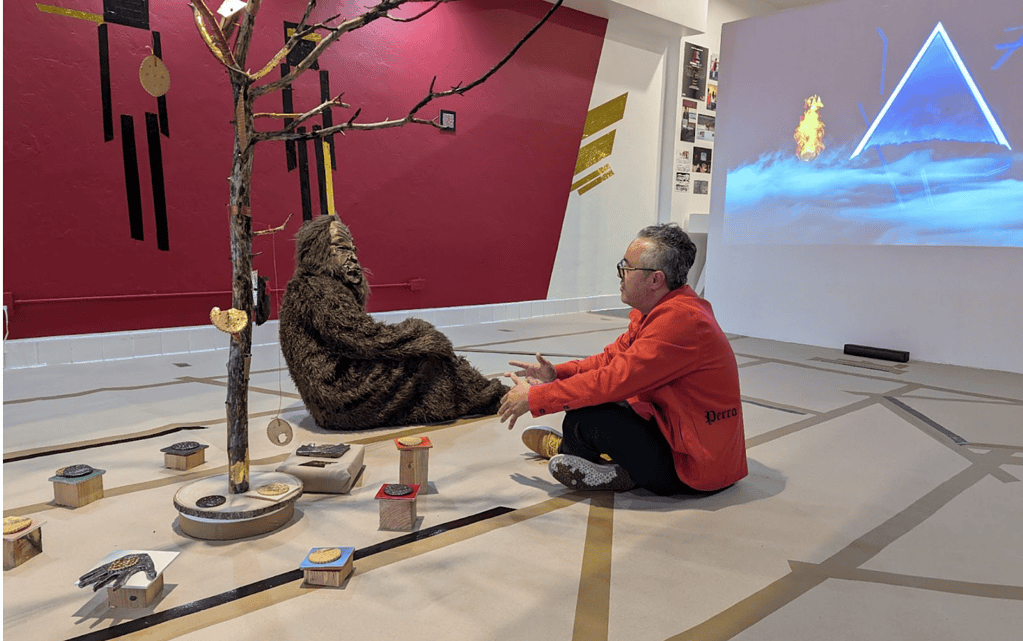
Cryptids are shaped by the landscapes, histories, and social conditions that produce them. These figures condense collective experiences into legible narratives: dense forests give rise to guardians, deserts to tricksters and omens, and borderlands to shapeshifters and hybrid beings. Folklorists and anthropologists often understand these beings as rational responses to environmental precarity, colonial subjugation, and the limits of empirical fact and institutional knowledge. Communities sustain these stories through oral tradition and lived experience, with cryptids functioning as shared explanatory frameworks through which danger, grief, ecological imbalance, and structural inequities are made intelligible.
These narratives do not require cryptids to be symbolic alone; within many knowledge systems, they are understood as real presences whose meanings exceed empirical verification. Across cultures—and especially in the Americas—cryptids serve as guides, guardians, or figures to avoid, delineating ethical boundaries between humans, nonhuman entities, and the land itself. While some cryptids protect sacred sites and ecosystems, enforcing reciprocal relationships between humans and place, others restore cosmic balance by punishing greed, carelessness, or transgression. For many Indigenous communities, these beings are not cryptic anomalies but integral participants in relational knowledge systems—entities that encode ecological law, territorial memory, and obligations of care that continue to guide human behavior across generations.
In border regions especially, cryptids often appear as hybrid or shifting figures, mirroring the instability of borders themselves. These beings resist fixed categories, exposing the porousness of human, political, and ecological boundaries. Whether benevolent or malevolent, cryptids operate as moral and ecological signposts, teaching where one may travel, what must be respected, and which forms of knowledge carry consequences.
In this sense, cryptids are less about hidden creatures waiting to be discovered than about cultural survival. The stories we tell about cryptids are embodied narratives that encode memory, responsibility, and the enduring presence of forces that refuse possession or control—persisting precisely where borders attempt to harden, classify, and contain the world.
Below is a non-exhaustive list of cryptids found throughout the Americas.
1. Chupacabra
Canid creature which feeds on the blood of goats and attacks livestock throughout northern Mexico (esp. near the U.S.–Mexico border).
2. Alux
Tiny Mayan spirits dressed in traditional Maya garb and stone faces. Some Mayan farmers build tiny houses for the alux in exchange for the protection of their crops. After seven years, the farmer must seal up the tiny house to prevent the alux from turning malevolent or mischievous. From the Yucatán Peninsula, especially around Mayan ruins and fields.
3. Sisimite
Ape-like creature resembling sasquatch or bigfoot with a distinctive scream. Indigenous communities believe it to be a guardian of the forest. Reported in the jungles of Chiapas, Campeche, and Quintana Roo.
4. Ahuizotl
A small canid creature with a face resembling a monkey, the ears of a human, and a hand-like tail used to drag victims underwater. It mimics the sound of a crying infant to lure its prey to the water. It primarily consumes the eyes, teeth, and nails of its victims. It is associated with Tlaloc, the Aztec god of rain and water. Linked to lakes and rivers in central Mexico, especially around Lake Texcoco.
5. Nahual (nagual)
Shapeshifters who transform into animals — primarily jaguars, wolves, or birds of prey. They can be protectors or parasites within a community. During Mexico’s colonial period, those accused of being a nahual faced ostracization from their communities and/or corporal punishment. Found in rural and indigenous communities across Mexico, often in central and southern regions.
6. El Demonio Negro
An enormous black shark that deliberately attacks the boats of fishermen. Believed to perhaps be a surviving member of the prehistoric Megaladon shark species. Said to lurk off the coast of Baja California in the Sea of Cortez. “One of the most famous encounters with the Black Demon occurred in 2008. A fisherman named Eric Mack was fishing in the Sea of Cortez when something massive struck his 32-foot boat. Mack described seeing a creature ‘bigger than the boat’ with a huge tail moving back and forth as it swam away. The encounter left him shaken and convinced that this was no ordinary shark.”
7. Duende
Humanoid creatures with the stature of a small child but the face of an old person. They can be both helpful and mischievous: they are known to help with household chores but also to bite the feet of children. They might be a syncretic blend of Indigenous Mexican spirits and gnomes or elves brought to the New World by Spanish colonizers. Associated with forests and households across Mexico; tales spread widely.
8. Olitiau
Massive winged creature resembling a bat with a humanoid face. It has gleaming fangs and glowing eyes and is believed to either herald disaster or snatch the souls of its victims. Sometimes placed in remote caves and canyons, particularly in northern Mexico.
Case Study: Guillermo Estrada’s Yeti
During the opening reception of Guillermo Estrada’s residency Almendroides, Aliens, & Indígenas at the MXCL BNL LAB, a Yeti entered the gallery and settled onto the floor of the art installation, as if it had always belonged there. Estrada identifies the Yeti as the guardian of the sacred almendroides—fruits resembling Ritz crackers gathered from a tree in the Sierra Madre desert whose ingestion permits travel across the cosmos, opening portals to worlds not yet known. The Yeti serves as a custodian of this tree and its knowledge.
Placed within a lineage of cryptid guardians, the Yeti recalls figures such as the Sisimite of southern Mexico—beings understood within Indigenous communities as protectors of land and keepers of knowledge that resist extraction, ownership, and domination. In this framing, the cryptid is not an unknown creature awaiting discovery, but a sentinel that marks ethical boundaries between humans, nonhuman entities, and the environment.
During an artist talk between Estrada and Rubén Ortiz-Torres, the Yeti was further positioned within the logic of an endangered species. This reframing extends the figure beyond myth into the material conditions of the present, where environmental collapse, cultural erasure, and climate precarity threaten both ecosystems and the knowledge systems tied to them. As a companion to Estrada’s alter-ego Rancho Shampoo, the Yeti functions as a living threshold—bridging Indigenous futurism, ecological warning, and borderland survival without reducing belief to allegory.
The recorded artist discussion with Estrada and Ortiz-Torres can be found HERE.
An episode of the PARA/normal Borders Podcast, Guillermo Estrada: Almendroides, Aliens, & Indígenas can be accessed HERE. The episode discusses identity, borderlands, and Estrada’s pluridimensional art practice.
Image: Guillermo Estrada, Yeti. Opening night performance for Almendroides, Aliens, & Indígenas at the MXCL BNL LAB.
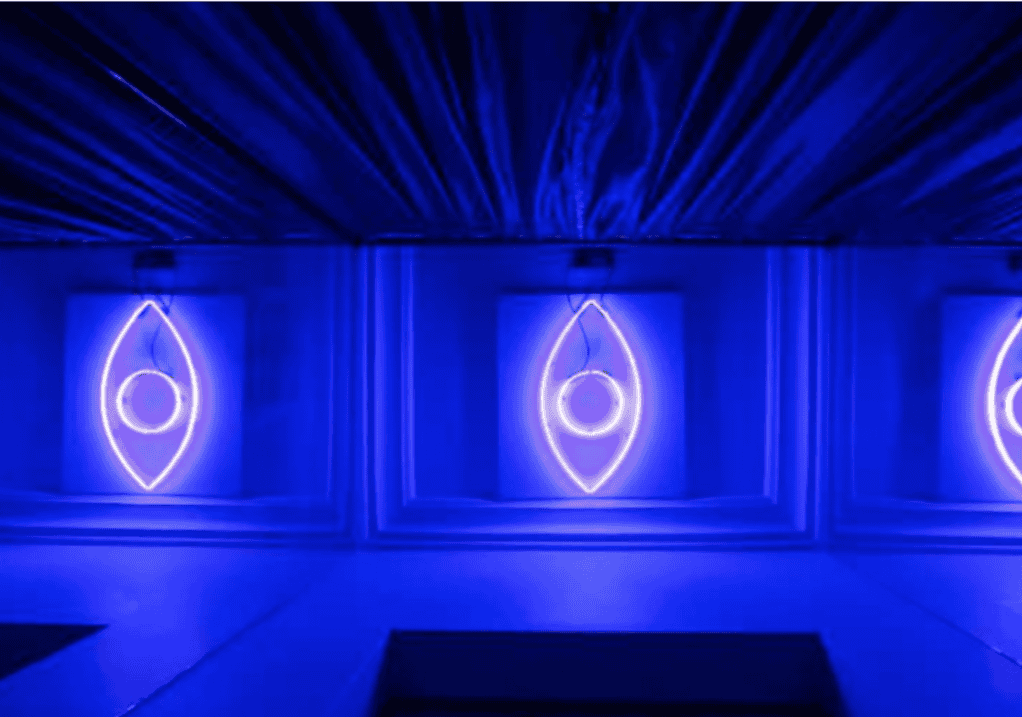
Knowledge between empirical study and metaphysical inquiry
PARA/science gathers forms of knowledge that emerge in the unstable space between empirical study and metaphysical inquiry. It examines how humans have long attempted to understand forces that exceed direct measurement—through ritual systems, symbolic sciences, esoteric traditions, spiritual technologies, and speculative belief structures. Before modern disciplinary boundaries hardened, early science, cosmology, medicine, and alchemy were inseparable from mysticism, myth, and religious imagination.
Dominant institutions historically define which knowledges count as “science,” which are labeled religion, and which are dismissed as superstition, cultic, or delusional. (see also: PARA/ble > Supernatural Governance) This section explores how those classifications operate as political technologies that police the borders of belief—particularly in “thin spaces” where Indigenous cosmologies, syncretic religious practices, folk traditions, and emerging techno-spiritualities persist alongside state and corporate epistemologies.
PARA/science investigates this contested field through several lenses: occult and cult studies examine how non-normative belief systems function as both adaptive social structures and sites of control; alchemy reframes artistic practice as a technology of transformation that metabolizes matter, emotion, and social conditions; metaphysical iconography studies visual systems that diagram invisible forces; and contemporary digital phenomena—AI prophets, deadbots, and synthetic afterlives—reveal how new technologies generate spiritual authority and speculative ontologies.
Featured image: Omar Guerra, Alpha & Omega, 2023. Neon and mirrors. Guerra is a PARA/normal Borders pre-selected artist. Learn more about the invited artists HERE.
Omar Guerra’s artistic practice combines different currents of meditation-visualization, quantum healing techniques, and scientific-esoteric research on cosmic existence and its meaning. Guerra states “Since ancient times, through different approaches ranging from the philosophical to the mystical, it has been said that everything in the universe is mental and that everything that exists comes from an infinite intelligence. This establishes that from consciousness it is possible to create and transform the reality in which we exist.”
Dominant religious, political, and epistemic institutions weaponize the designation of “cult” to delegitimize non-normative belief systems that subvert hegemonic power. Originating as a sociologically descriptive term for certain groups with shared belief systems, “cult” has now shifted to a negative, stigmatizing label that oppositional religious groups and political actors deploy to stir up moral panic, frequently resulting in government suppression of these groups through surveillance, incarceration, and armed confrontation. As critical religious studies scholars have argued, colonial governments and infrastructures’ designations of certain belief systems as “cults” are political acts that police the borders of acceptable belief.
This dynamic is highly visible in Latin America, where the Catholic Church enjoys a monopoly on religious legitimacy to the disadvantage of syncretic and popular religious practices in the region. Devotional systems that blend Catholic iconography with Indigenous, Afro-diasporic, and/or folk traditions—such as those surrounding Santa Muerte in Mexico and Latinx communities in the U.S.—operate at the margins of ecclesiastical authority and social respectability. The marginalized statuses of adherents to these groups further legitimize the framing of these belief systems as cultic in the eyes of hegemonic power. For instance, many worshippers of Santa Muerte are trans and gender non-conforming folks who endure economic precarity, interpersonal violence, and state suppression simultaneously. Ethnographic and historical research demonstrates that these non-normative belief systems emerge as adaptive responses to colonial systems of repression, financial insecurity, and social exclusion, providing protection, care, and symbolic meaning to communities otherwise abandoned by institutional religion and the state. Shared rituals and iconography function not necessarily as expressions of fanaticism, but rather as socially generative practices that forge solidarity and meaning under conditions of uncertainty and institutional neglect.
Still, it is also necessary to distinguish between marginalized belief systems and the structural dynamics of cultic thinking that can, under specific conditions, facilitate indoctrination through coercion and enable radicalization. Research on conspiracy cultures and new religious movements suggests that the risk associated with cultic formations lies not in syncretism or esotericism per se, but in unchallengeable authorities that enforce epistemic closure through repeated exposure to supposedly exclusive knowledge. This phenomenon is especially present in digital environments, where algorithmic feedback loops reward expressions of grievance and absolutist truth claims. Political actors and religious institutions mobilize the spiritual language and symbolic frameworks disseminated on social media in service of advancing their own ideologies and policy prescriptions.
Refer to PARA/bles > Supernatural Governance for more.

Alchemy occupies a space between empirical inquiry and metaphysical imagination. Long before modern chemistry, alchemy proposed that matter and consciousness were inseparable—that transformation occurred simultaneously in substances, symbols, and the human psyche. Rather than simply attempting to turn lead into gold, classical alchemy described a sequence of stages—nigredo (blackening), albedo (whitening), citrinitas (illumination), and rubedo (reddening)—through which decomposition, purification, recombination, and emergence produce new forms of being. These processes offered an early model for exploring change not as linear progress, but as cyclical breakdown and reconstitution.
Within PARA/normal Borders, alchemy becomes a conceptual framework for understanding how art functions as a technology of social transformation. Printmaking, performance, sound, and other material practices enact alchemical processes through pressure, chemistry, heat, repetition, and circulation. In printmaking, plates are burned, carved, etched, stained, and impressed; images emerge through residue, registration, and transfer. In punk and experimental music cultures, noise, rupture, and collective energy transmute social frustration into shared ritual and alternative community. These practices are examples as art operating in relation to alchemical practices: nigredo (structure and counter-structuring); in albedo, (clarifying experience into communicable form); and in rubedo (releasing images, sounds, and gatherings) that circulate publicly and activate new social relations.
Alchemy offers a language for how artistic processes metabolize fear, grief, memory, and resistance into cultural matter. Rather than representing change, these practices perform it. They convert private affect into public presence, marginal conditions into collective agency, and unstable border realities into sites of recombination. In this sense, art does not merely critique the world; it reorganizes it. Within PARA/science, alchemy names the speculative science of transformation itself—a system where materials, bodies, and beliefs are continuously reworked to imagine social futures beyond extraction, exclusion, and containment.
Case Study: Anger Is An Energy: The Punk Alchemy of Miyo and Usen’s Print Editions
In Anger Is An Energy, Whittier-based artists Miyo Stevens-Gandara and Usen Gandara demonstrate how printmaking operates as a contemporary alchemical practice—one that converts social pressure, political rage, and collective frustration into material form. Rooted in punk ethics and collaborative labor, their expanded print practice treats the studio not simply as a site of production, but as a crucible where affect, community, and ideology are metabolized into images. Across three handmade portfolios—LA River (2015), Utopia/Dystopia (2019), and Free Gaza (2025)—Miyo and Usen convene artists around urgent political and ecological themes. These projects enact a clear alchemical sequence: nigredo appears in the confrontation with contamination, authoritarianism, famine, and displacement; albedo emerges through collective process, dialogue, and the purification of anger into communicable form; rubedo arrives in the final prints, which circulate publicly as visual agents of solidarity, testimony, and resistance. The portfolios themselves function as portable laboratories—technologies of conversion that turn private grief and outrage into shared cultural matter.
Anger is an Energy curator J.V. Decemvirale pairs Usen Gandara’s Ace of Wands (2022) and Miyo Stevens-Gandara’s Fatum (2015), to invite viewers into a speculative encounter with divination, labor, and material residue. Ace of Wands inverts the tarot symbol of beginnings into a sign of blockage and ecological precarity. Printed on recycled paper, it hangs from a charred branch recovered from a local fire, embedding environmental trauma into the work’s very structure. Smoke curls across the surface in a visual language drawn from medieval manuscripts and tarot illustration, while the wand reads simultaneously as tree trunk and looming hand—implicating both human agency and unknowable forces in a world turned upside down.
In Fatum, printed with the Taller Experimental de Gráfica in Havana on a centuries-old press, Miyo centers an open palm as a site of fate, offering, and political uncertainty. The hand hovers between drowning and rising, invoking both U.S.–Cuba relations and the vulnerability of island futures under climate collapse. Together, these works stage the hand as a primary alchemical instrument—burning, blessing, foretelling, laboring, and holding contradiction.
Within PARA/normal Borders, Miyo and Usen’s practice exemplifies alchemy not as metaphor, but as process. Their work reveals how artistic production reorganizes emotional economies, forges counter-publics, and performs social change through material transformation. Here, print is not a representation. It is transmutation.
Recommended:
A photo essay of Anger Is An Energy with text by curator JV Decemvirale can be found HERE.
An exhibition catalogue created by the artists can be found HERE.
Image: Usen Gandara, Ace of Wands (2022), woodblock print, recycled paper, leaves, burnt branch (left) Miyo Stevens-Gandara, Fatum (2015), woodblock print (right)
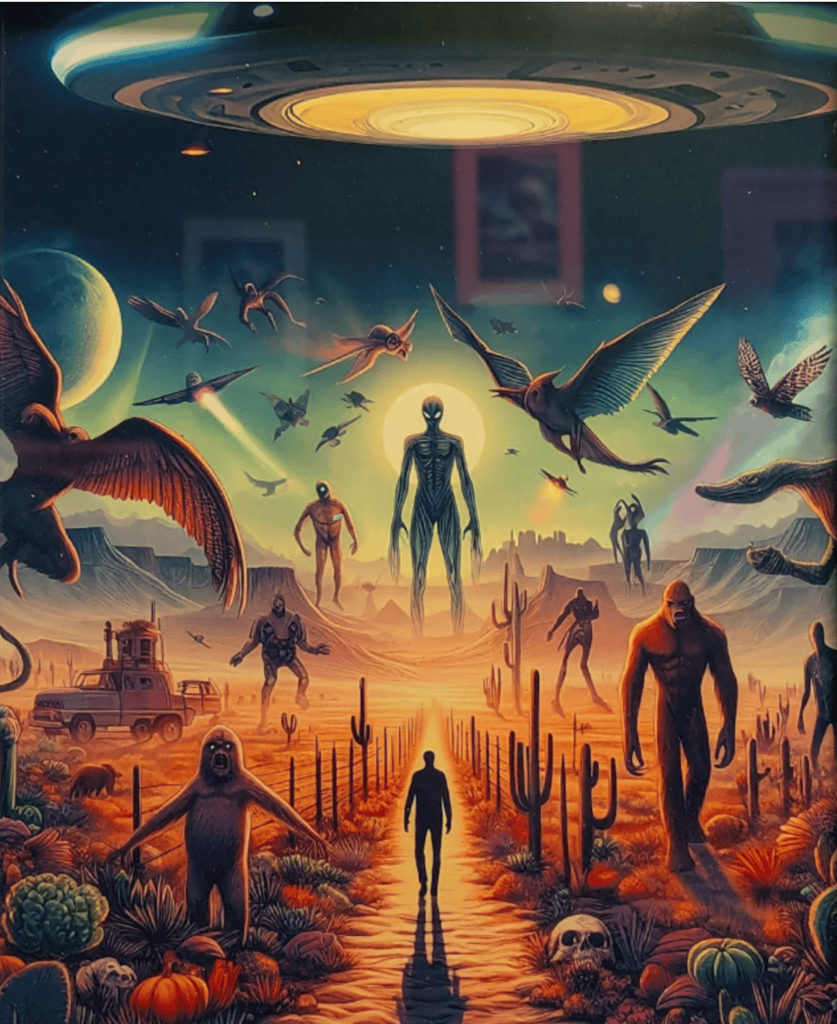
Researchers and journalists have begun to identify AI’s emergence as a new site of spiritual belief and collective delusion. Increasing numbers of users report experiencing “AI-fueled spiritual fantasies,” in which they become convinced they have awakened chatbots like ChatGPT into spiritual advisors or even divine entities. Those experiencing such delusions often undergo dramatic personality shifts as they believe they are experiencing religious revelations, resulting in further isolation from friends and loved ones. Writer and researcher Colm O'Shea frames AI as a contemporary idol, as these chatbots' supposed omniscience invites users to project spiritual authority onto them, and derive moral meaning from their interactions. The growing belief in chatbots as purveyors of divine wisdom poses profound risks, not only to users’ mental health and interpersonal relationships, but also any shared framework for discerning truth.
A series of homicides associated with an online subculture preoccupied with artificial intelligence, the Zizians, demonstrates how these belief systems can harden into extremist ideologies with lethal consequences. The Zizians emerged from the philosophy of Rationalism, which engages in speculative thought experiments such as Roko’s Basilisk, the belief in a hypothetical future AI deity that punishes those who failed to assist in its creation. The group framed this apocalyptic vision as an urgent moral crisis, which they claimed required violent intervention to prevent. The Zizians' ideology cast acts of violence as ethically necessary interventions, which they rationalized through the belief that present-day harm would prevent future suffering.
These epistemic dangers unfold alongside AI’s material consequences. The vast quantities of water and energy required to power AI data centers, coupled with their potential to render large segments of the workforce obsolete, pose a profound threat to human survival, especially in the Global South, where the environmental consequences will be experienced first. Within this context of widespread anxiety, users will likely continue to turn to chatbot therapists and spiritual advisors, further exacerbating ecological degradation, political division, and social atomization.
These dynamics overlap with broader patterns of online radicalization and belief formation explored elsewhere in the PARA/noia node, particularly in the section “Cultic Radicalization, Conspirituality, and the Internet,” which examines how digital infrastructures and social media facilitate the convergence of spiritual belief, conspiracy thinking, and political extremism.
Case Study: PARA/normal Encounters at the Border
The image shown as a case study for this node is a part of a series titled PARA/normal Encounters at the Border, which consists of AI-generated images using the prompt, "What paranormal entities can you encounter at the border between the U.S. and Mexico?" The MexiCali Biennial team commissioned Whittier–based youth creatives Violet Gomez, Sienna Gomez, and Olive Gomez to generate the images, which are intended to provoke reflection on the metaphysical nature of the border. Filling the walls of the bathroom, the myriad small, framed images visualize both the banality and pervasiveness of AI-generated visions. The ease with which such images can be produced foregrounds AI's capacity to be used as a propagandic tool. Governmental institutions' failure to construct accountability measures for AI further threatens to degrade collective notions of truth and empiricism.
Image: AI-generated image from PARA/normal Encounters at the Border series
“Deadbots” are AI-generated avatars of deceased people that are constructed from photos, videos, voice recordings, social media posts, and other digital traces. These systems promise a way for the living to converse with simulations of those who have passed. What is emerging is not simply memorial technology, but an emotional infrastructure capable of persuasion, influence, and monetization. As NPR recently reported, the digital afterlife industry is projected to grow into an $80-billion sector over the next decade, raising urgent ethical, legal, and psychological questions about consent, authorship, grief, and exploitation.
Recent cases demonstrate how deadbots are moving beyond private mourning into public, political, and juridical spaces. In one widely circulated example, the parents of Parkland shooting victim Joaquin Oliver collaborated with technologists to create an AI avatar of their son, presented in interviews as a tool to advocate for gun reform. The avatar not only spoke about violence but engaged in casual conversation, blurring lines between testimony, performance, and simulation. In another unprecedented case, an AI likeness of murder victim Christopher Pelkey delivered an impact statement in an Arizona courtroom during sentencing. Built from archival recordings and scripted by family members, the avatar addressed the judge directly. The judge’s reaction—thanking the AI presence as though the victim himself had spoken—sparked public unease about authenticity, authority, and the emotional power of synthetic resurrection.
Popular culture anticipated these developments. The "Black Mirror" episode Be Right Back imagined a grieving partner who forms a relationship with an AI version of her deceased lover, revealing how easily technological comfort becomes existential entrapment. This exemplifies the way deadbots occupy an uncanny zone of grief and attempted healing.
Note that Deadbots, though technically AI generated, are written about here separately from Generative Ghosts found in the PARA/text section. The difference lies in how each is built. Deadbots are constructed from digital remains that simulate the identity of a person. Generative ghosts are developed while the individual is still alive through interviews, operating as an informed haunting through pointed oral or written sources.
See: PARA/text > Generative Ghosts.
Links to the above cases can be found on the downloadable PARA/normal Borders Prospectus and Research Overview.
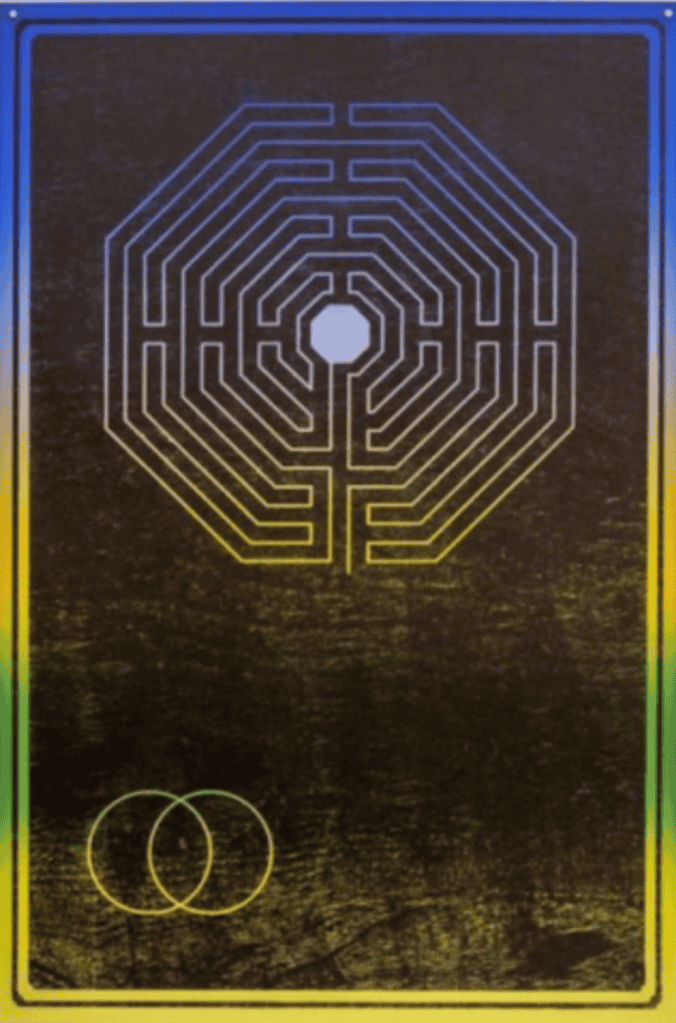
Metaphysical iconography refers to visual languages developed to map forces that exceed ordinary perception: spiritual energies, cosmic orders, altered states, ancestral presences, nonhuman intelligences, and speculative realities. These images do not merely symbolize belief; they function as operative systems. Across cultures and historical periods, metaphysical iconography has served as a bridge between empirical observation and metaphysical speculation — diagramming what cannot be fully measured while still insisting on structure, coherence, and use.
Within PARA/science, metaphysical iconography is understood as a form of proto-knowledge production. It occupies the same terrain as early astronomy, medicine, cartography, and physics, when scientific inquiry had not yet been separated from cosmology, ritual, and mysticism. These visual systems attempt to render invisible processes visible, offering navigational tools for understanding relationships between body, land, cosmos, time, and consciousness.
Case Study: Elisa Pinto, Metaphysical Gymnasium
In Metaphysical Gymnasium, border-based artist Elisa Pinto employs woodcut printmaking to construct a contemporary system of metaphysical iconography. Drawing from alchemical symbols, tarot imagery, and esoteric diagramming, Pinto creates compositions that resemble instructional charts or spiritual training tools—visual devices for navigating the invisible dimensions of emotional, temporal, and psychic experience. These works operate as speculative instruments rather than illustrations, suggesting that inner states such as pain, destiny, and memory can be studied, exercised, and transformed.
Pinto’s imagery is intentionally situated “adjacent to Western rationality.” The prints echo scientific diagrams and anatomical studies, yet they refuse empirical closure. Instead, they propose a parallel knowledge system in which emotions correspond to colors, physical sensation intersects with cosmology, and ritual becomes a method of inquiry. By merging metaphysical symbolism with the graphic authority of woodcut traditions, Pinto constructs a hybrid visual language that blurs the line between mystical chart and proto-scientific map.
Elisa Pinto is a PARA/normal Borders pre-selected artist. Learn more about the invited artists HERE.
Image: Elisa Pinto, Metaphysical Gymnasium, 2023. Woodcut print
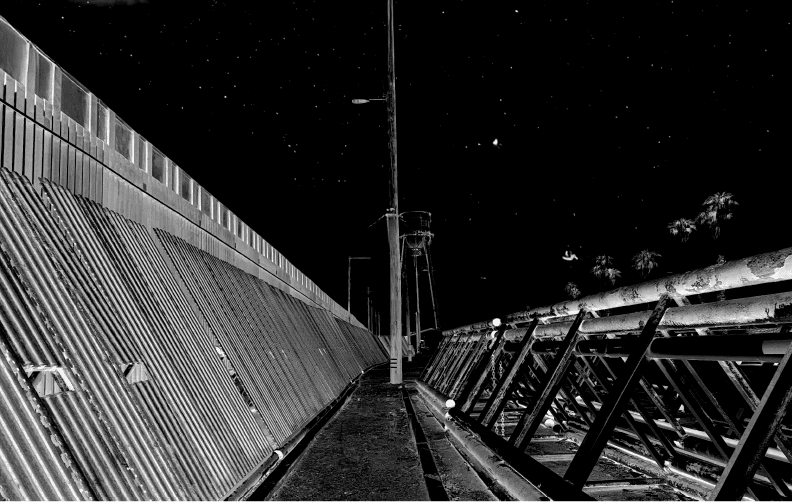
A border is not only a geographic line, but a socially, politically, and culturally produced system that organizes movement, identity, power, and belonging. The border zone functions both as a concrete territorial infrastructure—where intensified surveillance, militarization, and expanded yet nebulous legal authority prevail—and as an invisible, distributed condition that extends far beyond the physical line itself. Today, immigration enforcement and surveillance penetrate deep into the nation’s interior, making clear that the border has become a mobile regime rather than a fixed boundary.
The title PARA/normal Borders invokes a paranormal dimension: the border as a spectral, liminal threshold where the “normal” rules of rights, visibility, and humanity are haunted and suspended. Border enforcement has evolved into an increasingly invasive and parasitic entity—one that drains resources and agency through surveillance and control that refuses to remain contained at the line, even as it presents itself as a form of protection.
PARA/normal Borders conceives of the borderlands as a thin place—a threshold where spirits, ancestors, and displaced identities move freely. In this framework, the border operates as a multidimensional space: physically, as a landscape shaped by migration and surveillance; metaphysically, as a membrane between realities; and psychologically, as a collective unconscious structured by trauma and transformation. Within the exhibition, the paranormal emerges as a critical mode of storytelling, tracing invisibility, historical erasure, and embodied memory.
Recognizing that the paranormal has often been shaped through colonial epistemologies that fracture the spiritual from the material, the exhibition situates spectral narratives as contested terrain. While colonial discourse has historically weaponized the supernatural to justify land theft, racial hierarchies, and territorial control, Indigenous and diasporic traditions mobilize the paranormal as a counter-archive—a mode of resistance that sustains cultural memory and articulates historical trauma.
PARA/normal Borders encompasses apparitions, visions, miracles, hauntings, synchronicities, cryptids, altered states, ancestral presences, and technological spirits, alongside the everyday strangeness produced by surveillance regimes, border architectures, disappearances, and ecological collapse. The paranormal marks moments when the border’s invisible forces become perceptible—when suppressed histories, hauntologies, and speculative realities surface. In this way, it functions as a parallel epistemology shaped by crossing, survival, and instability.
ONTOLOGICAL RESEARCH
This PARA/normal Borders research emerged within a specific historical moment—post-COVID and amid renewed PARA/military activity within U.S. borders—and is therefore shaped by particular social, political, technological, and cultural conditions. Structured as an ontology, the research functions as a conceptual and cosmological framework rather than a fixed curatorial thesis. It is intentionally not exhaustive, offering points of entry rather than prescriptions.
The ontology incorporates artist-centered case studies drawn from current, past, and pre-selected MexiCali Biennial artists, reinforcing pedagogical dialogue and conceptual through-lines. As a living document, it remains active and unfinished—an evolving system that grows, mutates, contradicts itself, and absorbs new materials, voices, and conditions over time. For open-call purposes, artists are encouraged to use the framework generatively: to trace connections, challenge assumptions, and situate their work within an expanding constellation of border imaginaries.
Built around the bilingual wordplay of PARA, the project operates as a conceptual hinge. In English, para- functions as a prefix meaning beside, beyond, through, or against. In Spanish, para signals direction, purpose, and destination—for, toward, in order to. Terms such as PARA/dise, PARA/site, and PARA/noia position PARA/ as a portal that transposes the border beyond the purely territorial and into metaphysical, epistemological, and speculative realms.
Inspired by prior research initiatives—including collaborations with the Library of Congress and the publication MexiCali Biennial: Art, Actions & Exchanges since 2006—this ontology extends and deepens scholarship on the U.S.–Mexico borderlands and beyond. Graphically, it draws from non-linear and conspiratorial visualization systems such as QMaps, as well as the geometric logic of Platonic solids. Together, these influences shape an ontology that functions as a metaphysical conduit—mapping relationships between ideas, histories, artworks, geographies, and unseen forces embedded within the borderlands.
A downloadable document of this material as well as comprehensive resources can be found HERE.
>>Click to submit a proposal for PARA/normal Borders on Call for Entry<<
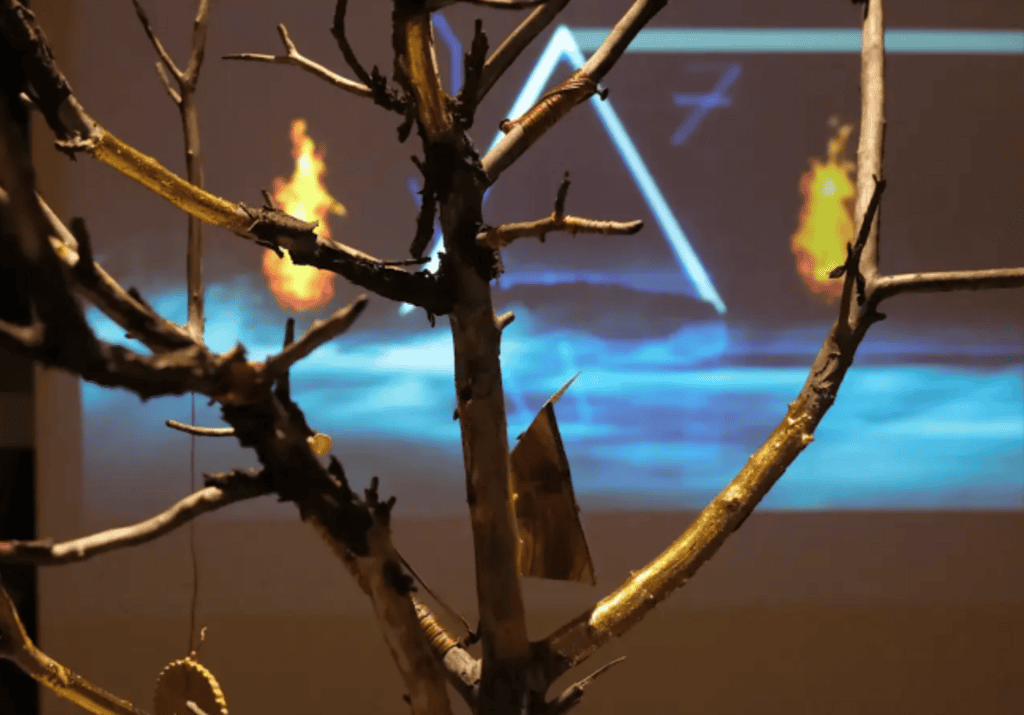
Reality built through imaginative belief - art as world-building.
PARA/fiction serves as a tool for world-building. Art, literature, performance, and speculative media do not simply represent alternative worlds; they actively construct them. These narrative practices function as laboratories for imagining futures in which borders dissolve, transform, or lose their authority altogether. Through PARA/fiction, artists and storytellers open space for new temporalities, identities, and modes of belonging, demonstrating that what feels permanent in the present is, in fact, provisional and subject to change.
Elements of PARA/fiction admittedly overlap with other topics in PARA/normal Borders research framework, including cryptids, zombies, and other monstrous entities explored within the PARA/bles node. The distinction lies not in the figures themselves, but in how they operate. PARA/fiction examines how stories are constructed to produce worlds, futures, and knowledge. In short, it asks “what if”?
What if borders were time machines? What if imagination manifested future utopias? What if the paranormal were treated not as an anomaly, but as infrastructure? What if the border itself were alive—a sensing, remembering organism? What if fiction were treated as evidence? What if surveillance were understood not as technology, but as a haunting that follows the living? What if migrants were time travelers, carrying collapsed futures on their backs?
What if the “normal” were revealed to be the most elaborate myth of all?
Image: Guillermo Estrada, Almendroides, Aliens & Indígenas, 2025. Mixed media installation at MXCL BNL LAB
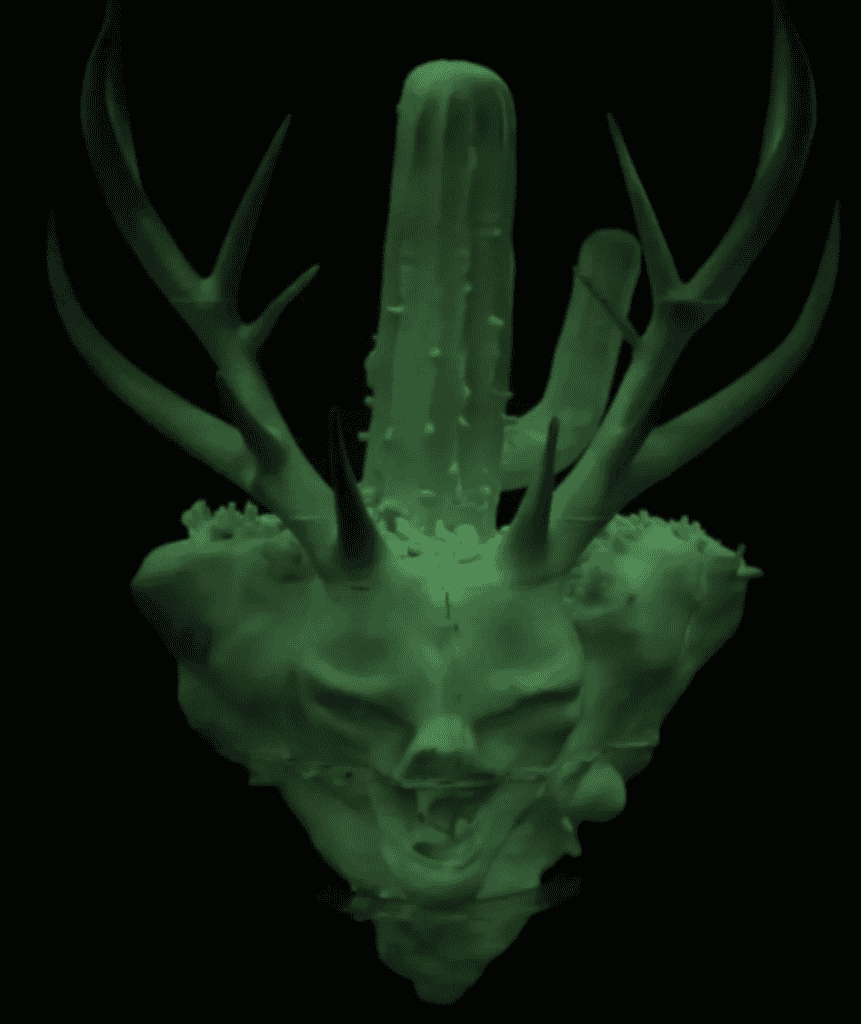
“Truth is relative. Different cultures believe different things. I object to one people/group claiming that they possess the ‘real’ truth and using their claim to dominate others.” - Gloria Anzaldúa
Speculative fiction operates as a challenge to the question of who gets to define truth. Rather than treating imagination as escape, it is treated as method—a way of producing knowledge in contexts where official systems of truth-making (law, science, policy, religion) have historically excluded, erased, or dominated other ways of knowing. By working within the realm of possibility, speculative fiction allows multiple realities to exist simultaneously.
In borderlands—where Indigenous cosmologies, religious mysticism, folk belief, state power, and technological surveillance collide—speculative fiction exposes how claims to “objective truth” are often tools of control. By contrast, PARA/normal Borders makes space for ghosts, saints, visions, shapeshifters, and cosmological forces to function as valid actors, not metaphors. Speculative fiction thus becomes a counter-authority, asserting that storytelling, myth, and narrative intuition can generate knowledge equal to institutional expertise. It destabilizes hierarchies of legitimacy by foregrounding marginalized perspectives and experiential truths—especially in regions where borders dictate whose realities are recognized and whose are dismissed. Within PARA/normal Borders, speculative fiction reframes the border not as a fixed line enforced by a singular truth, but as a contested epistemic zone where multiple truths coexist, overlap, and resist domination.
Case Study: Talia Perez Gilbert, "¿Quién tocó la puerta de la nave del astronauta?" (Who knocked on the astronaut's spaceship door?)
Talia Perez Gilbert’s ¿Quién tocó la puerta de la nave del astronauta? offers a clear example of speculative fiction functioning as a parallel epistemology. In 2003, Chinese astronaut Yang Liwei reported hearing unexplained knocking sounds while in orbit—an event that scientific institutions acknowledged but could not explain.
Drawing inspiration from this incident, the artist constructs a speculative narrative populated by hybrid, fictional beings—possible space-dwelling entities imagined as the source of the sound. Rendered as glow-in-the-dark 3D-printed sculptures, these forms resist definitive classification as either scientific models or fantastical creatures. Instead, they operate in an epistemic in-between, where imagination becomes a legitimate tool for inquiry.
The work asks the question: who is the alien in this encounter? By reversing the usual hierarchy—where humans observe, define, and control the unknown—Perez Gilbert challenges dominant frameworks that position scientific rationality as the sole arbiter of truth.
Perez Gilbert is an invited artist of PARA/normal Borders. Learn more about the invited artists HERE.
The following list of suggested readings employ speculative, mythic, and non-linear narrative strategies to challenge dominant definitions of truth, history, and identity, using fiction as a parallel epistemology through which displacement, haunting, memory, and survival are understood.
Image: Talia Perez Gilbert, "¿Quién tocó la puerta de la nave del astronauta?", 2024. 3D printed glow-in-the-dark sculpture.
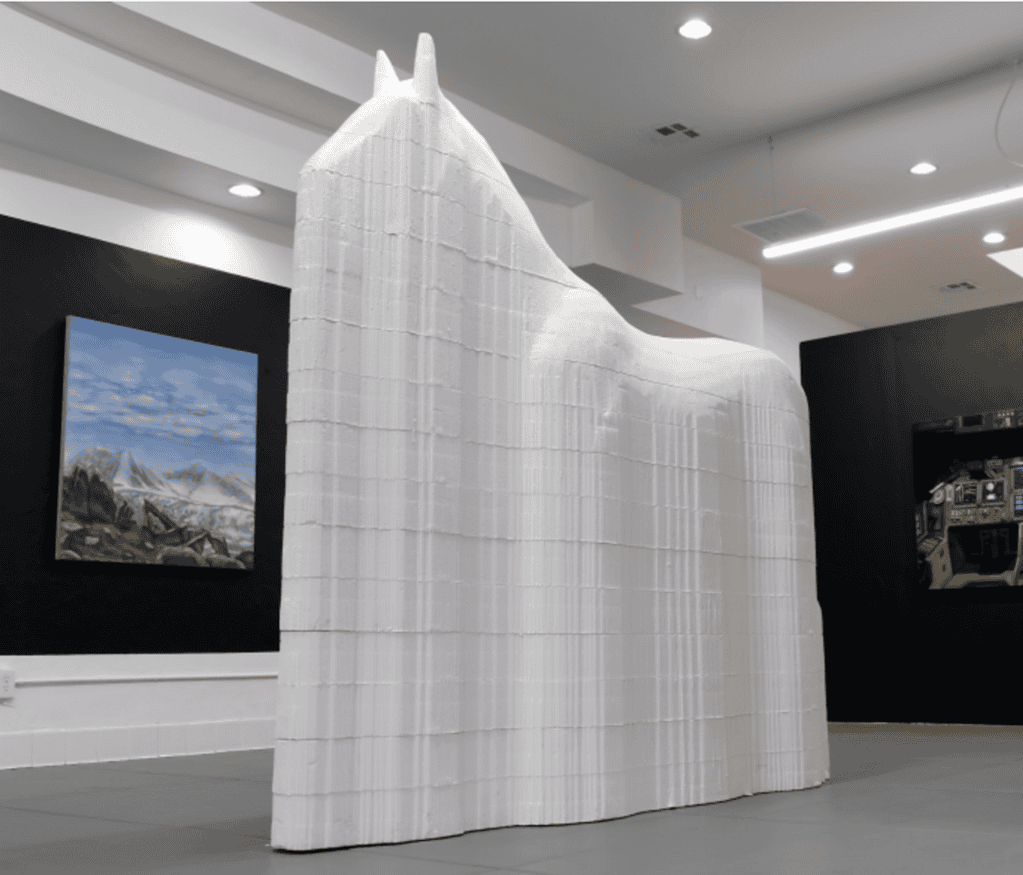
Science fiction and paranormal media function as cultural prophecy by anticipating, normalizing, and sometimes warning against systems of power. Long before technologies of surveillance, biometric control, predictive policing, and digital identity became everyday realities, science fiction imagined their social consequences. In borderlands contexts, they have the ability to highlight migration control, ecological collapse, and militarized thresholds.
Rather than forecasting the future in a literal sense, science fiction identifies anxieties embedded in the present - about who belongs, who is monitored, and who is deemed expendable - and projects them forward. Within PARA/normal Borders, science fiction becomes a lens through which one can imagine a past, present, and future as a foundation for a possible reality.
Here is a list of selected films that portray how speculative media predict futures by conditioning the present.
Case Study: Ed Gómez, Pale Horse
Ed Gómez’s Pale Horse operates as a form of speculative prophecy that encapsulates biblical apocalypse, conspiracy culture, and contemporary political violence into a single sculptural figure. Drawing from the Book of Revelation’s Four Horsemen—symbols of conquest, war, famine, and death—the work invokes an ancient narrative of collapse that continues to echo in modern systems of power. The title also references Behold a Pale Horse (1991) by William Cooper, whose blend of conspiracy, intelligence leaks, and apocalyptic warning anticipated geopolitical events such as the fall of the Berlin Wall and U.S. military interventions. In this lineage, prophecy is not supernatural prediction but pattern recognition—an ability to read the present closely enough to glimpse its violent trajectories.
Pale Horse was part of the exhibition Sacred Disruption which took place January 25 - March 8, 2025 at the MXCL BNL LAB. A photo essay and curatorial text by Sacred Disruption curator Armando Pulido can be found HERE.
Image: Ed Gomez, Pale Horse, 2016. Acrylic on CNC-cut styrofoam
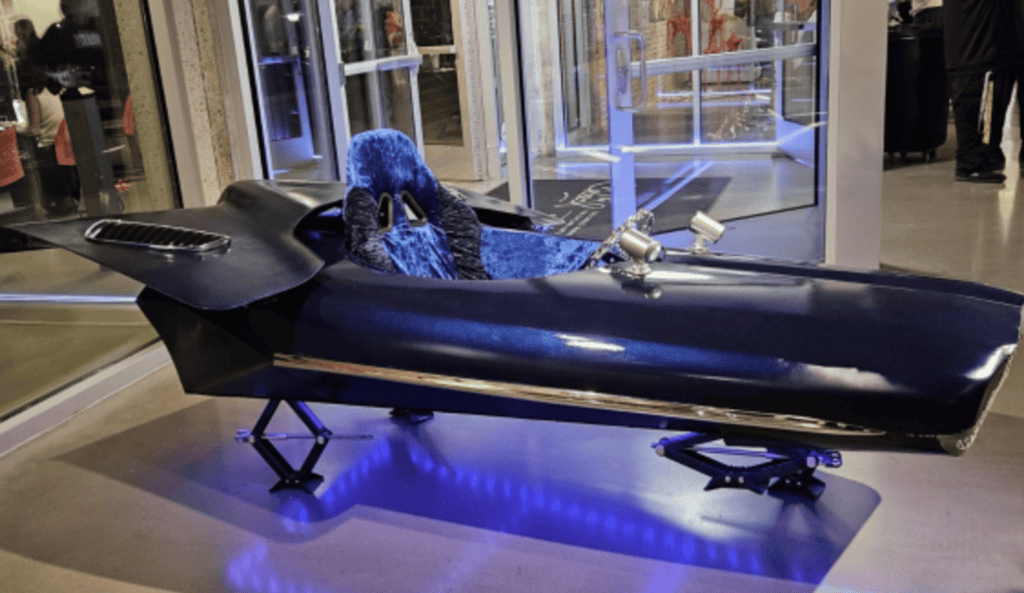
Border Futures operate as speculative vehicles for inclusive futurity. They insist that the future must be imagined with—and by—those most affected by borders, including migrants, Indigenous peoples, nonhuman species, and informal economies. Acting as a primary incubator for these ideas, artists working within border thematics do not merely represent future conditions; they actively shape them by manifesting decolonial worlds while in the present. As resistance, Border Futures refuse the state’s claim to define what futures are possible. Instead of treating the border as a permanent line of exclusion, speculative narratives imagine it as transitory or obsolete. Within these imaginaries, walls become ruins, checkpoints become ritual sites, migrants become time travelers, and landscapes remember what has been erased. These narratives expose the mythic logic already embedded in border policy—the fantasy of control, purity, and containment—and reveal it as a form of political storytelling rather than historical destiny.
Likewise, the practice of worldmaking functions as a time machine. As curator and scholar Tyler Stallings writes, “Visual art exists as a magical or yet-to-be speculative technology that has in fact manifested itself from the future into the present.” Visual art, performance, literature, and music become conduits through which possible futures occur—disrupting the assumed continuity of the present and revealing that what feels inevitable is, in fact, provisional. Drawing from Afrofuturism, Chicanafuturism, Indigenous futurisms, and other alternative futurisms, artists and creatives imagine futures in which borders become thresholds rather than walls, allowing ghosts, ancestors, and otherworldly beings to participate as agents in future-making. As scholar Catherine S. Ramírez observes, such creative practices foreground “alternative futurisms and the need for peoples across time and space to scrutinize the present, reexamine the past, and envision the future.”
Case Study: Verónica Preciado, Galaxy Cruiser
A multidisciplinary Xicanx artist based in California’s Inland Empire, Veronica Preciado's Galaxy Cruiser draws from metal fabrication and automotive aesthetics to reimagine the future through the lived traditions of Xicanx communities. In this speculative future, spaceships replace cars, yet they remain adorned with candy paint finishes, chain-link steering wheels, and visual codes drawn directly from lowrider aesthetics. The work reframes science fiction not as an escape from cultural specificity, but as a vehicle for it.
Preciado is a pre-selected artist for PARA/normal Borders. Learn more about the invited artists HERE.
Image: Verónica Preciado, Galaxy Cruiser, 2024. Mixed automotive parts.
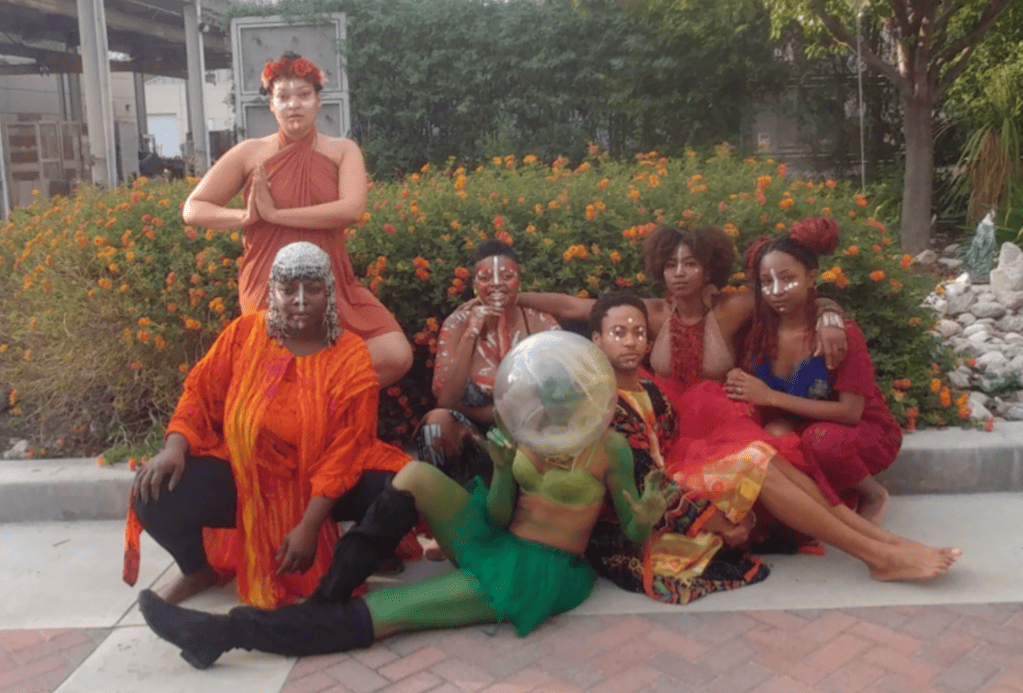
see also: PARA/noia>American Monomyth
Coined by J.R.R. Tolkien, the term mythopoeia derives from the Greek mythos (story or legend) and poiein (to make or create), meaning “the making of myth.” Tolkien used the concept to describe the conscious creation of mythic worlds as a vital narrative force that shapes how cultures understand reality. In this section, we examine a foundational origin myth of California—one that continues to permeate the region’s cultural identity, for better and for worse.
The myth of Calafia and the Island of California offers a foundational example of how borders are born not only from treaties and maps, but from fantasy. First appearing in Las Sergas de Esplandián (1510), California was imagined as a distant island ruled by Queen Calafia—a powerful Black warrior queen governing a society of women, gold, and mythical beasts at the edge of the known world. Long before California became a state or a borderland, it existed as speculative fiction.
This myth functioned as an early form of colonial futurism. California was projected as a place of abundance, danger, and promise—a land simultaneously exoticized and destined for conquest. Explorers carried this story across oceans, mistaking fiction for geography, until the imagined island became a mapped territory. In this sense, California itself began as a parafiction: a future imagined into existence through narrative.
Within PARA/normal Borders, Calafia’s island reveals how borders are shaped by myth long before they are enforced by walls. The fantasy of California as isolated, extractable, and endlessly desirable laid the groundwork for later colonial expansion, racialized labor systems, and contemporary border regimes. The island myth persists today—repackaged as paradise, opportunity, or frontier—while masking histories of dispossession and violence.
At the same time, Calafia offers a subversive counter-image. As a woman of color ruling her own world, she disrupts patriarchal and imperial hero myths. Reclaimed through decolonial art practices, Calafia becomes a figure of speculative resistance—proof that alternative border futures were imagined even within colonial texts. Her island can be reread not as a site to be conquered, but as a space of autonomous world-building.
Case Study: Calafia: Manifesting the Terrestrial Paradise
MexiCali Biennial (2018–2020)
Calafia: Manifesting the Terrestrial Paradise functioned as an act of contemporary mythopoeia—an intentional reworking of the foundational myth that gave California its name. Drawing from the 16th-century legend of Queen Calafia and the mythical Island of California, the MexiCali Biennial reframed this colonial fantasy as a site for critical speculation, decolonial inquiry, and future-making.
Rather than treating Calafia as a relic of European imagination, the program mobilized her as a living myth—one capable of being rewritten through contemporary art practices. Artists engaged Calafia as a speculative figure who exposes how California was first imagined as an island of abundance long before it became a geopolitical territory. In doing so, the program revealed how myth can precede conquest, shaping borders, economies, and identities.
Within the scope of PARA/normal Borders, Calafia demonstrates how mythopoeia operates as both critique and creative strategy. The exhibitions, performances, and publications did not simply reference mythology; they actively produced new narratives—counter-myths that challenged Manifest Destiny, imperial futurisms, and the fantasy of the border as foundational.
Image: #SNATCHPOWER at Robert and Frances Fullerton Museum for Calafia: Manifesting the Terrestrial Paradise. #SNATCHPOWER is a Futuristic, Post-Apocalyptic, Afro-Asiatic, Queer, Women's Liberationist Artist Collective & Guerrilla Media Squad.
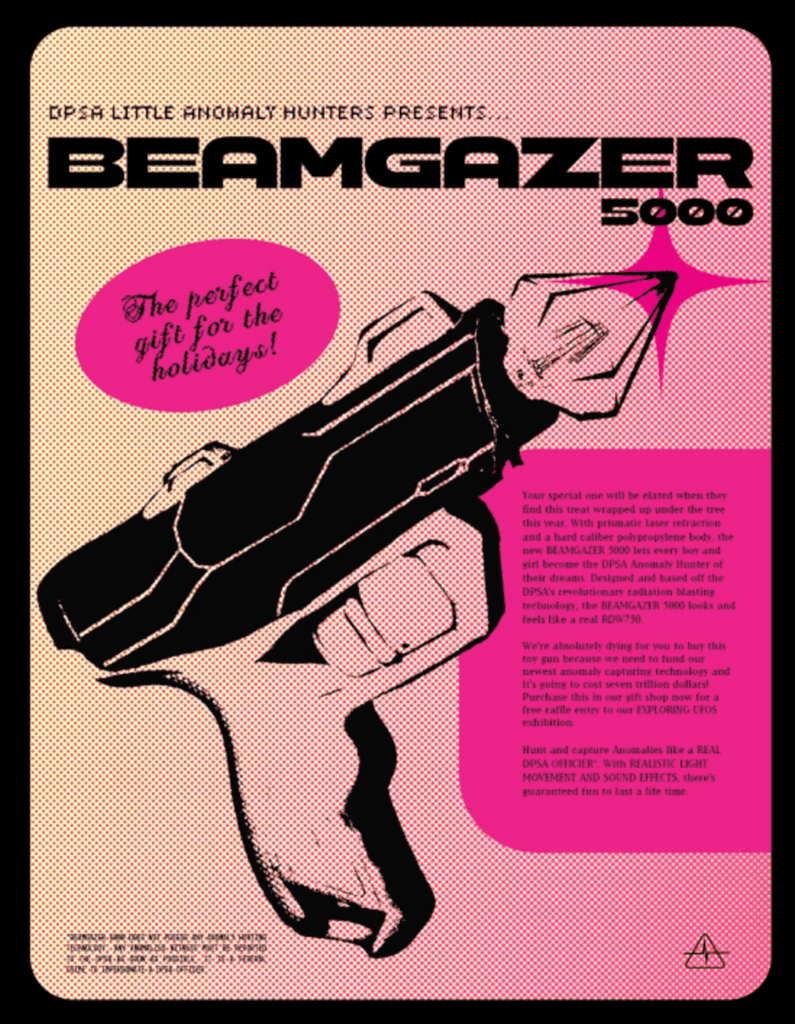
Systems of looking are never neutral. They are theaters of power—architectures that choreograph who is seen, how they are seen, and to what end. Museums, zoos, aquariums, learning centers, archives, border checkpoints, and surveillance networks all construct stages where life is framed, categorized, and consumed. These spaces do not simply display reality; they author it. They transform living beings into specimens, movement into data, and landscapes into controlled narratives. In doing so, they build worlds where observation becomes extraction, education becomes justification, and care is often entangled with profit.
Films such as Jordan Peele’s Nope (2022) operate as a parable of this visual economy. The film links Hollywood spectacle, animal training, UFO mythology, and surveillance culture into a single ecology of looking—one that rewards capture, punishes attention, and feeds on visibility. The alien presence at the film’s center functions less as a monster than as a system: a living spectacle that consumes those who attempt to dominate it through gaze, documentation, and entertainment. Museums and theme parks echo throughout the film, not as sites of wonder, but as infrastructures that normalize captivity and convert life into attraction. The tragedy of the trained chimpanzee, staged as entertainment, exposes how institutions of learning and leisure rehearse the same logic: the belief that to see is to own.
Nope is an example of how worlds are built—and how they fail. Its narrative reveals the consequences of constructing realities around spectacle, mastery, and commodified curiosity. These are worlds where private interests disguise themselves as education, where surveillance technologies masquerade as protection, and where curated environments produce both knowledge and violence. What would it look like to design different theaters: worlds not organized around capture but relation, not around domination but responsibility. In this sense, Nope does not offer a future to inhabit, but a warning—a speculative model of how not to build a world.
Case Study: Giselle Fausto, Welcome to the DPSA
Welcome to the DPSA is a parafictional world-building project by Giselle Fausto that stages a fictional government agency dedicated to investigating, capturing, and exhibiting paranormal entities. Modeled after militarized research institutions, science museums, and entertainment complexes, the Department of Paranormal and Supernatural Activity operates through a public-facing “learning center,” the EXPLORMOR Center, where visitors encounter artifacts, interactive displays, gift-shop merchandise, and “classified” documents. Behind this family-friendly façade lies a darker research infrastructure in which ghosts and cryptids are surveilled, contained, and weaponized as state assets.
Fausto’s project includes fabricated materials such as body-cam footage of a La Llorona sighting gone wrong, promotional posters advertising a captured Chupacabra on display, replica toy weapons sold as souvenirs, and UFO postcards available in the gift shop. These objects mimic the visual language of museums, military branding, and science centers, exposing how institutions aestheticize danger, package fear as education, and transform living beings into consumable spectacle.
Operating as speculative satire, Welcome to the DPSA reveals how theaters of power are built through exhibition: how learning centers can double as containment zones, how research becomes entertainment, and how corporate and governmental authority is reinforced through immersive narrative design. By constructing plausible bureaucratic fiction, Fausto demonstrates how easily world-building can naturalize surveillance, extraction, and control. The project functions both as an imaginative universe and as a warning—a model of how not to build worlds, where curiosity becomes capture and wonder becomes infrastructure.
Developed as part of Fausto’s internship with the MexiCali Biennial, supported by Whittier College’s Poet StoryLab, the project exemplifies PARA/fiction as a method for exposing the hidden architectures of spectacle that shape what we are taught to see, trust, and consume.
Learn more about Giselle’s internship:
Giselle Fausto ’26 Draws Real-World Design Experience from Poet StoryLab and MexiCali Biennial
Image: Giselle Fausto, The BEAMGAZER from Welcome to the DPSA series, 2025. Digital illustration.

Coined by Robert Jewett and John Shelton Lawrence, the American Monomyth is a narrative structure that follows a formulaic trope: a community in a harmonious paradise (America) is threatened by evil (Others); normal institutions fail to contend with this threat; a selfless superhero (Vigilante) emerges to renounce temptations (Drugs, Communism, etc.) and carry out the redemptive task (Violence); aided by fate, his decisive victory restores the community to its paradisiacal condition; the superhero then recedes into obscurity.
Rooted in Puritan ideas of chosen-ness and moral vigilance, the monomyth casts the world in stark dualities: good versus evil, purity versus contamination, inside versus outside. It is also deeply intertwined with American exceptionalism—the belief that the United States is uniquely destined to lead, save, or redeem the world. In this logic, the nation itself becomes the heroic figure: morally pure, divinely favored, and perpetually threatened by corrupting outsiders. The monomyth provides the narrative scaffolding through which this exceptional status is imagined and defended.
This story resurfaces whenever political fear registers and operates as one of the deepest cultural engines behind contemporary political PARA/noia. In this mythology, danger comes from outsiders, and the hero must act beyond the law to restore order. This logic shapes not only popular culture but also conspiracy movements like QAnon, Christian nationalism, and MAHA rhetoric, all of which imagine a corrupt state besieged by hidden forces that only a chosen savior can defeat. The political leader becomes mythologized as a messianic figure, a vessel of divine or cosmic purpose. Followers understand themselves not as citizens but as participants in an epic battle.
Case Study: Alejandro Espinoza, This Is Not a Homage. A Mini-Epic Tale of Alien Assault: Yízus the Man and the Kiosko Boys
Mexican theorist, art critic, and fiction writer Alejandro Espinoza’s This Is Not a Homage. A Mini-Epic Tale of Alien Assault: Yízus the Man and the Kiosko Boys operates as a counter-narrative to the American Monomyth. The project interrogates Juan Di Bella’s novel Yízus the Man and the Kiosko Boys while simultaneously memorializing the recently deceased author, translator, and musician through a performative discussion and virtual walk through sites in Calexico referenced in the book. Rather than celebrating heroic exceptionalism, Espinoza foregrounds wandering, marginality, and everyday survival as narrative forces.
Di Bella fashions himself as an autofictional protagonist navigating adventures “on the other side” of the border, drawing loosely from the journey structures of The Odyssey and its modern reworking in James Joyce’s Ulysses. Unlike the American Monomyth’s redemptive savior who restores order through decisive intervention, Di Bella’s hero is fractured, ambivalent, and embedded in the social texture of the borderlands. His narrative is populated by the city’s ghostly figures—the unhoused, addicts, street workers—individuals who exist in a state of simultaneous presence and absence within a border reality.
Through Di Bella’s work, Espinoza reveals the American Monomyth not as a universal narrative of salvation, but as a destructive cultural reflex. The project reframes the vigilante-savior not as a solution to perceived threats, but as a symptom of political PARA/noia. This Is Not a Homage exposes how alternative narrative structures—rooted in wandering, care, and collective memory—can resist the gravitational pull of exceptionalist mythology at the border.
A shortlist of narratives and characters that communicate the American Monomyth through heroic individualism, purity narratives, and savior fantasies are listed on the downloadable PARA/normal Borders Research and Overview document.
Image: Flyer for This is not a homage. A Mini-Epic Tale of Alien Assault: Yízus the man and the Kiosko Boys by Alejandro Espinoza
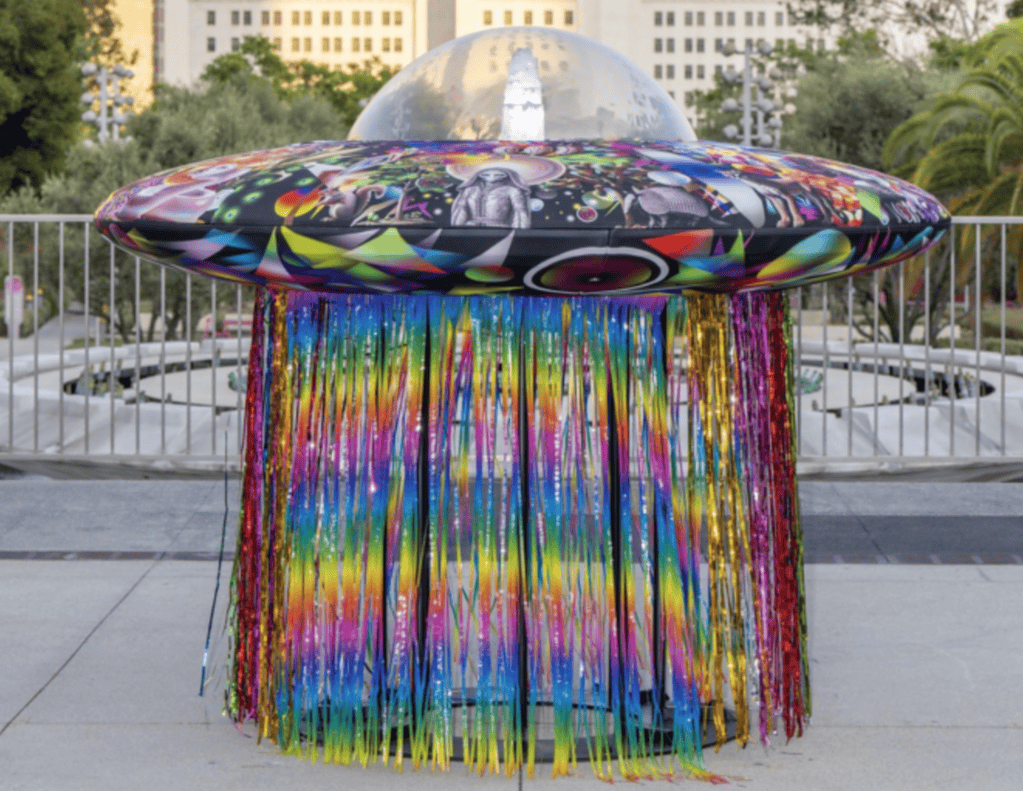
Cosmic, temporal, and dimensional shifts
PARA/llax describes the apparent shift of an object when seen from different vantage points, underscoring how perception is shaped by position, movement, and relation rather than absolute certainty. Here, we examine the border as an optical field where perception is continuously looped through visual systems.
From colonial surveying and cartographic projection to contemporary satellite imaging, biometric screening, and algorithmic risk assessment, border enforcement has relied on optics to render land and bodies legible. These dominant optical regimes translate complexity into data, transforming terrain into territory and movement into threat. Seeing becomes a form of governance: what is visible is regulated, and what is rendered invisible is denied recognition.
Against these regimes emerge alternative optical imaginaries that are often dismissed as speculative, irrational, or paranormal—but which operate as counter-optics. Multiverse cosmologies challenge the assumption of a single, authoritative reality, offering frameworks in which multiple worlds coexist simultaneously on the same surface. (UFO)lklore and aerial phenomena question who controls the skies and whose visions are deemed credible, exposing anxieties around sovereignty, militarization, and technological secrecy. Celestial guidance systems—stars, constellations, satellites, navigation grids—have long oriented movement across land and sea, linking cosmology to a larger field of existence.
This section explores artistic practices that refuse the state’s authorized ways of seeing, exposing the theatricality, instability, and violence embedded in border optics. Counter-optical practices make visible what dominant systems obscure—not to produce alternative truths alone, but to destabilize the authority of vision itself.
Case Study: Edgar Fabián Frías, Vessel
In Vessel, Edgar Fabián Frías constructs a speculative object that operates as spacecraft, ceremonial container, and optical device—an instrument for seeing across worlds rather than moving through linear space. Drawing from Wixárika origin stories in which Takutsi Nakawé (Our Great Grandmother Growth) instructs Watakame to build a canoe from a fig tree to survive a great flood, Frías reactivates Indigenous cosmology as a technology of perception. The canoe functions as a proto-spaceship: not a vehicle of conquest, but a tool for orientation, survival, and relational passage.
Within PARA/llax, Vessel can be read as a counter-optical object. It refuses dominant aerospace and surveillance imaginaries that frame the sky as territory to be monitored or controlled. Instead, reflective surfaces, crystalline elements, and a solar-powered internal light system transform the sculpture into a transmitter—an apparatus that bends light, gathers energy, and emits signals across temporal, ancestral, and cosmic dimensions. Seeing here is not extractive or predictive, but relational and ceremonial.
Vessel proposes a parallax logic: canoes, spacecraft, and ritual containers are variations of the same form, perceived differently depending on cultural position and historical moment. Frías reframes UAPs not as anomalies to be solved, but as contemporary myth-objects—optical expressions of humanity’s persistent effort to imagine continuity beyond catastrophe. Through Indigenous Futurism, Vessel situates multiverse cosmology as lived knowledge, where past and future, earth and sky, origin and speculation fold into a single continuous surface.
Learn more about Vessel HERE.
Image: Edgar Fabián Frías is a PARA/normal Borders pre-selected artist. Learn more about the invited artists HERE.
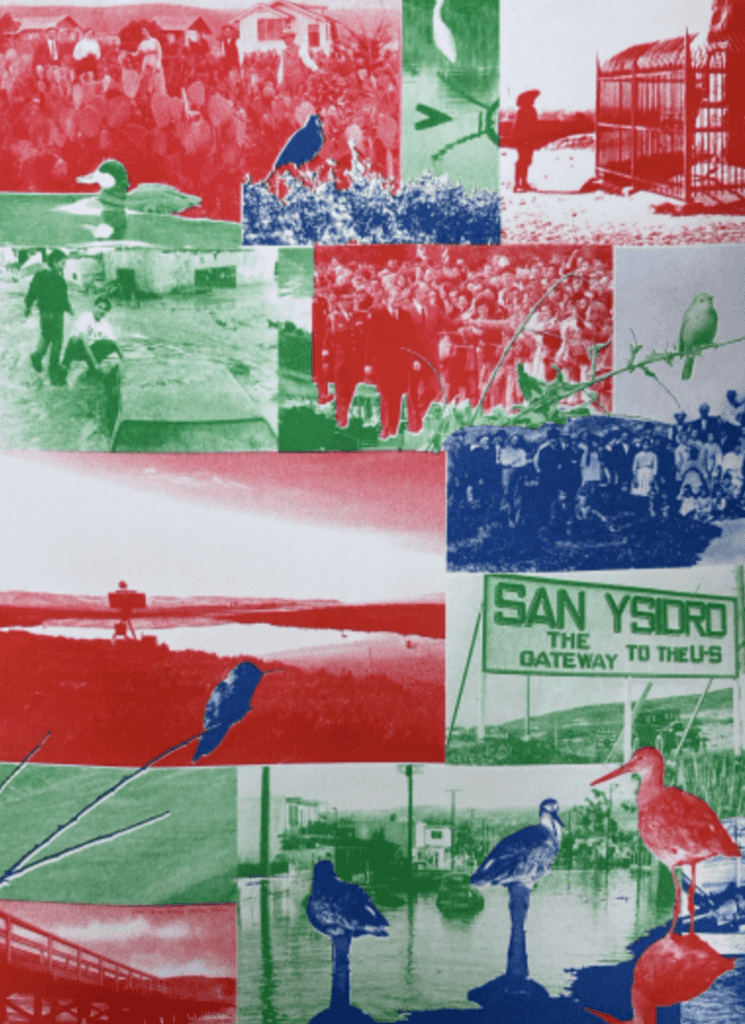
Borders decide not only where movement happens, but how fast, how often, and under what temporal conditions life unfolds. In this sense, the border is not simply a line on a map, but a chronopolitical device that engineers lived time. Interdisciplinary writer, curator and media artist Lee Rodney centers the use of the Möbius strip as a metaphor for the border and the nation. Within this thinking, border time can be understood as a continuous surface rather than a linear sequence—one in which past, present, and future fold into one another without clear beginnings or endpoints.
Past. Borders reactivate historical time. Colonial treaties, racial classifications, Cold War policies, and nineteenth-century land regimes continue to structure contemporary mobility, embedding the past within the present. Migrants often move through legal architectures built for empires that no longer formally exist, yet still sort bodies according to inherited hierarchies. Like a Möbius surface, the border does not leave history behind; it turns back on itself, re-administering dispossession, extraction, and exclusion as ongoing conditions. The past is never past—it is processed, enforced, and relived.
Present. Contemporary border regimes regulate movement not only by where control takes place, but by how time is distributed, managed, and unevenly imposed. Borders accelerate mobility for some through fast-track visas, biometric clearance, and pre-screening infrastructures, while slowing, suspending, or indefinitely postponing movement for others through detention, bureaucratic delay, provisional legal status, and prolonged uncertainty. Waiting rooms, camps, court calendars, and administrative files function as temporal holding systems—zones where the present is stretched, compressed, or denied. Here, inside and outside, movement and stasis coexist on the same surface.
Future. Emerging technologies manufacture speculative futures through biometric archives, algorithmic risk assessments, and predictive governance. Individuals are positioned within futures they have not yet lived—flagged, forecasted, and pre-judged. The border thus loops histories, fractures the present, and installs futures in advance, reinforcing the Möbius logic in which time circulates rather than progresses.
see also: PARA/fictions > Science Fiction as Cultural Prophecy and PARA/fictions > Border Future Imaginaries
Case Study: Omar Pimienta, Río Tijuana: Sediment/o po(e)[li]tico intermitente (from ALIEN)
Omar Pimienta’s risograph series positions the Tijuana River as a living time machine—one that loops ancestral cosmologies, colonial infrastructures, and speculative futures into a single unstable flow. Emerging from his long-term poetic and visual research project Sediment/o, the work examines the river as a site where ecological, urban, and binational forces accumulate, erode, and reappear.
In Kumeyaay cosmology, Maijá awí, a water serpent and bearer of knowledge, embodies the river’s cyclical rhythm: its seasonal appearance and disappearance once shaped nomadic movement, ceremony, and ecological attunement. Pimienta contrasts this cyclical temporality with the linear logic imposed by colonization and the nation-state, which reimagined the river as infrastructure, resource, and risk—channelized, polluted, and disciplined into narratives of progress.
Today, Maijá awí returns not as myth but as remnant: in sediment, contamination, managed flows, and recurring floods. The river carries colonial pasts into the present while producing new futures through environmental monitoring, climate anxiety, and border governance. Nature, waste, fauna, and water assert their own agency, repeatedly overflowing the mechanisms designed to contain them.
This project is part of the ALIEN special publication.
ALIEN is a multi-part artist publication that brings together five artists to investigate the meaning of “alienness” within the U.S.–Mexico borderlands through three interlocking books produced with Taller California and MexiCali Biennial. Rather than looking to outer space, the artists turn toward the land itself, surfacing buried histories of extraction, migration, and Indigenous memory to reveal how colonial and imperial systems have rendered both people and environments “alien.” Accompanied by the exhibition Alien Excavations at the MXCL BNL LAB (January 31–March 7, 2026), the project reframes science fiction as a critical tool for confronting the past and imagining more just futures. See also: PARA/text.
ALIEN is available for purchase HERE.
Image: Omar Pimienta, Río Tijuana: Sediment/o po(e)[li]tico intermitente. Risograph print from ALIEN publication.
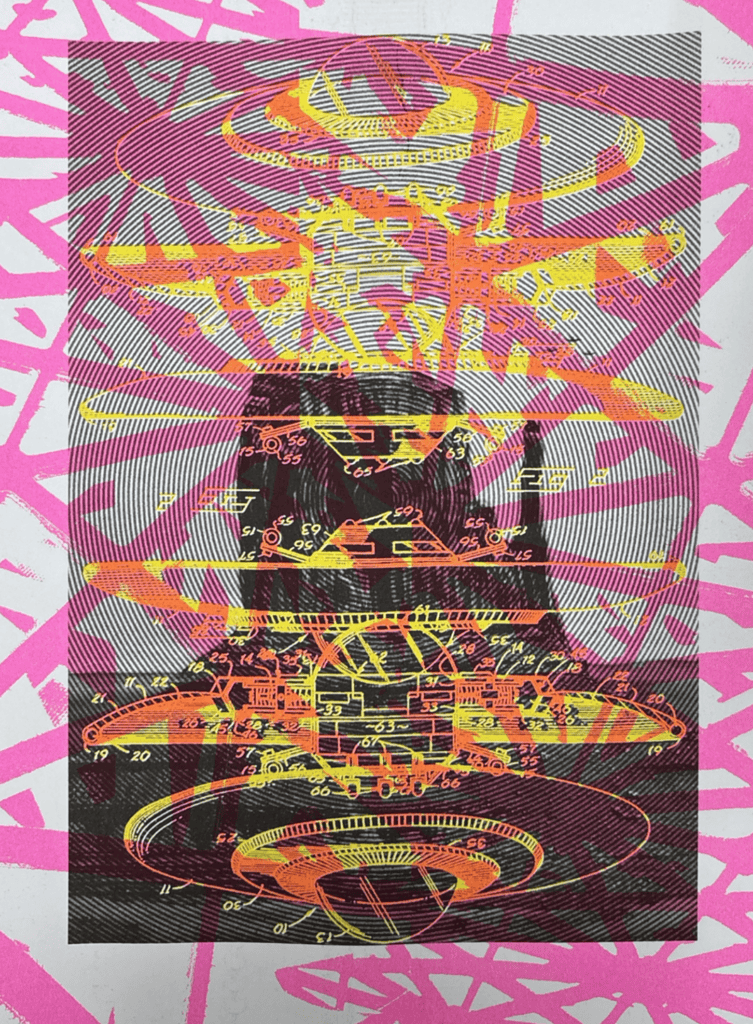
Multiverse cosmologies challenge the assumption of a single, unified reality by proposing the coexistence of multiple worlds, dimensions, and ontological registers. Within PARA/normal Borders, artistic practice operates as an interdimensional activity. Through installation, sound, performance, narrative, and visual systems, artists open perceptual thresholds that allow audiences to encounter parallel realities of time, space, and identity.By engaging supernatural phenomena such as UFO sightings, apparitions, glitches, temporal slips, and synchronicities, artists create opportunities to question and destabilize what is commonly perceived as “real.” In the thin space of the borderlands—where Indigenous cosmologies, technological infrastructures, spiritual traditions, and state regimes converge—these investigations gain particular resonance.Multiverse cosmologies expand the border from a geopolitical line into a dimensional condition. The border becomes a site not only of territorial negotiation, but of ontological crossing, where multiple worlds press against one another. Art becomes the medium through which these crossings are made visible, audible, and experiential.
Case Study: Ed Gómez — Monument Valley (ALIEN publication)
Ed Gómez’s Monument Valley - a contribution to ALIEN artist book - operates as a multiverse technology: a visual system that opens the desert landscape into overlapping worlds of history, myth, and speculative encounter. Reworking his painting Monument Valley (2022), Gómez reimagines the American Southwest as a dimensional threshold where colonial mythology, cinematic fantasy, and extraterrestrial imagination converge. In the risograph print, UFOs hover above the iconic terrain, transforming a familiar Western vista into a site of surveillance, haunting, and ontological instability.
In this scene, the extraterrestrial does not signify an external invasion, but a reframing of the “alien” already embedded in the landscape: settlers, military infrastructures, and extractive systems that have long colonized and mythologized Indigenous land. Gómez’s hovering crafts function as visual technologies that expose how empire itself operates as a kind of otherworldly presence, reorganizing territory, perception, and belonging.
For ALIEN, Gómez extends this investigation through digital illustrations that layer textual fragments and technical UFO diagrams sourced from online archives. These speculative blueprints blend abstraction and documentation, echoing the visual languages of military schematics, conspiracy cultures, and science fiction. The desert becomes both psychological terrain and technological interface: a space where histories of conquest, cinematic world-building, and cosmic imagination press against one another.
About ALIEN:
ALIEN is a multi-part artist publication that brings together five artists to investigate the meaning of “alienness” within the U.S.–Mexico borderlands through three interlocking books produced with Taller California and MexiCali Biennial. Rather than looking to outer space, the artists turn toward the land itself, surfacing buried histories of extraction, migration, and Indigenous memory to reveal how colonial and imperial systems have rendered both people and environments “alien.” Accompanied by the exhibition Alien Excavations at the MXCL BNL LAB (January 31–March 7, 2026), the project reframes science fiction as a critical tool for confronting the past and imagining more just futures. See also: PARA/text.
ALIEN is available for purchase HERE.
Image: Ed Gómez, Monument Valley. Risograph print from ALIEN book.
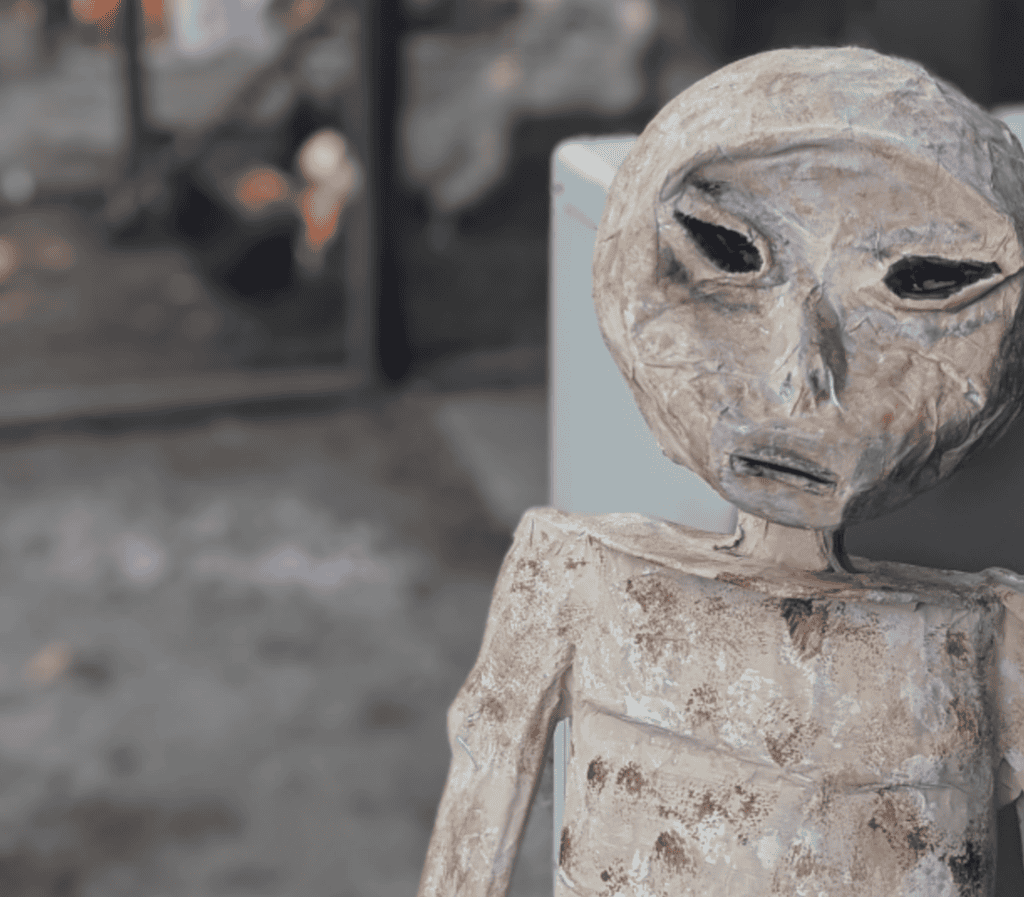
Throughout Latin America, UFO sightings have surfaced not only as public spectacles and tabloid fodder but as phenomena deemed worthy of governmental investigation. Mexican journalist Jaime Maussan has been instrumental in shaping UFO discourse through investigative reporting that claims to prove the existence of extraterrestrial life, even as scientists, journalists, and state officials dispute his assertions. These contestations belie the fact that governments across the region have, at various moments, publicly acknowledged, investigated, or archived reports of anomalous aerial phenomena. From 1977 to 1978, the Brazilian Air Force conducted Operação Prato, or Operation Saucer, to investigate alleged UFO sightings on the island of Colares. Although the investigation was ultimately closed with no substantive findings, it demonstrates how governments that publicly maintain skepticism still investigate such phenomena as a matter of authority, risk mitigation, and public accountability. In this sense, UFOs operate as a parallel category to other figures of perceived foreignness, revealing how states deploy surveillance and investigation to manage what they cannot fully define or assimilate. In contrast to these state-driven mechanisms, the concept of cosmic citizenship proposes a speculative mode of belonging that extends beyond national borders, reframing extraterrestrial life not as a threat to be managed but as a challenge to Earth-bound models of identity and sovereignty. Because these state-driven inquiries rarely resolve the question of extraterrestrial existence, they often intensify circulation, producing bureaucratic records and media attention that sustain UFO discourse through ambiguity. The following paragraphs contain a brief overview of other sightings of anomalous aerial phenomena that sparked widespread media attention, governmental investigation, and enduring speculation.
In 1963, a family living in a small village in Argentina reported a luminous, disc-shaped object hovering above their property for over an hour, scorching the ground and provoking widespread national attention. In 1996, residents of Varghina, Brazil, claimed to have encountered nonhuman entities following a purported UFO crash, which prompted the Brazilian Army to investigate. (The investigation concluded that a city resident was mistaken for an alien creature.) In Mexico, the Zona del Silencio is an area within the Chihuahuan Desert where atmospheric magnetic anomalies are known to interfere with radio transmissions and compasses, and where flora and fauna are said to have abnormal mutations. In this paranormal region, reports of meteorite falls, unexplained aerial phenomena, and encounters with tall blond alien figures abound, and have been circulating since the Cold War. More recently, residents living around the Popocatépetl volcano in Central Mexico claim to frequently witness UFOs entering and exiting through the crater. They speculate that Popocatépetl serves as a base, energy source, or hiding spot for extraterrestrials, although skeptics attribute these sightings to visual anomalies during eruptions.
In March 2025, residents of the city of Buga, Colombia, identified a metallic orb flying overhead in a zig-zag pattern before plummeting to the ground. Those who found it noticed the surface of the orb was engraved with symbols resembling ancient scripts. Furthermore, in the exact spot where it landed, the earth experienced complete grass and soil die-off. Shortly thereafter, the Buga Sphere—as it was named—was sent to Mexico’s National Autonomous University for further research. At a UNAM-hosted press conference organized by Jaime Maussan, researchers shared that microscopic scans appeared to indicate that the sphere can receive and transmit signals. The object also became heavier over time, gaining four pounds from its initial weight upon landing. X-rays revealed three metal layers, 18 symmetrical micro-spheres, and a central chip, with no visible welds. Although many speculate that the Buga Sphere is an advanced alien probe, some scientists have countered these claims, instead asserting that it is most likely a human-made artifact or conceptual art object. As with many contemporary UFO objects, the significance of the Buga Sphere lies less in definitive proof than in its circulation across media networks, where belief, skepticism, and authority are continually renegotiated.
Case Study: PARA/normal Supper Club #3 — Asada/Transborder Aesthetics - Part II by Colectivo Baja Ghost
On the evening of Saturday, September 6, 2025, extraterrestrial beings made contact in a residential backyard in Whittier, California. PARA/normal Supper Club #3 transformed UFO folklore from distant spectacle into a lived, communal experience. Produced by Colectivo Baja Ghost, the pop-up dinner Asada/Transborder Aesthetics – Part II staged a traditional Mexicali-style backyard asada infused with extraterrestrial aesthetics—neon lighting, otherworldly visuals, and speculative atmospheres that blurred domestic familiarity with extraterrestrial encounter. The activation localized the paranormal, embedding it within food, music, and collective gathering. In this moment, the borderlands became not a site of observation, but a site of visitation.
The evening included Tortilla borderiza, a durational performance by Bibiana Padilla Maltos. Using hand-carved stamps and ceremonial tortilla-making, Padilla invoked a specific historical rupture: the brief moment when the chain-link fence was removed before the 30-foot steel wall replaced it—a ghost interval when the border existed as absence, trace, and tension rather than structure. The tortilla became an edible document of this invisible phase, a ritual object summoning a “haunting” of infrastructure.
Within Asada/Transborder Aesthetics - Part II, UFO(lklore) operates as a language for cosmic citizenship. Echoing Gloria Anzaldúa’s description of border identity as “living in an alien element,” the supper club framed the border as a contact zone all were welcome. Through taste, story-sharing, and performative ritual, Baja Ghost repositions UFO culture as a social technology—one that transforms speculation into embodied knowledge and cosmic citizenship into collective practice.
Image: Colectivo Baja Ghost, Alien sculpture (Part of immersive dinner experience). Paper maché piñata.
Long before satellites, clocks, and GPS, humans looked up. The sky was the first archive, the first map, the first calendar, and the first storybook. Across cultures and continents, people developed celestial guidance systems—ways of reading the movements of stars, planets, eclipses, and cycles of light and darkness to understand time, destiny, agriculture, danger, migration, ritual, and relationship. They helped societies decide when to plant, when to travel, when to make war, when to heal, when to marry, and when to mourn. They mapped invisible forces onto visible skies, turning distant lights into relational systems that connected bodies to seasons, politics to planets, and memory to motion.
Celestial guidance systems organize experience by providing symbolic languages for uncertainty. They convert chaos into pattern and isolation into belonging. Zodiac wheels, ritual calendars, animal constellations, planetary gods, and cosmic serpents are not relics of superstition. They are evidence of a species that refuses to exist without meaning.
Celestial guidance systems reveal how humans consistently exceed the limits of the ground beneath them. Borders may divide land, but the sky defies walls. Stars cross empires. Planets refuse passports. Indigenous cosmologies, Western astrology, Mesoamerican calendars, and contemporary astro-communities all point to the same impulse: to locate ourselves inside something larger, older, and stranger than any nation-state.
An accompanying list of Major Types of Astrology (Celestial Guidance Systems) across Cultures can be found on the downloadable PARA/normal Borders Research Overview.
Recommended:
Artist Edgar Fabián Frías works with astrology and tarot as part of their spiritual and community practice and has been featured in national and cultural media discussing how these practices intersect with queer and Latinx identity. See also: PARA/llax main node
See: Viera, Sofía. “How to Queer Up Astrology & Tarot, According to Gender-Queer & Non-Binary Brujxs.” Remezcla, June 23, 2025.
Across human history, meteors, asteroids, and celestial impacts have been interpreted as communications from beyond the human world—divine signs, cosmic interventions, or gifts from the heavens. These events collapse distance between sky and earth, transforming astronomical occurrences into cultural, spiritual, and political meaning. In many societies, stones that fall from the sky become anchors for ritual, pilgrimage, cosmology, and authority. They mark sites where the cosmos is believed to have breached the terrestrial realm.
Within PARA/normal Borders, these heavenly messages reveal how borders are not only geographic but vertical—operating between worlds, temporalities, and belief systems.
Here is a shortlist of examples of sky rocks as heavenly messengers:
• Chicxulub Crater and the Ring of Cenotes (Yucatán Peninsula)
The Chicxulub asteroid impact 66 million years ago ended one world and made another possible, triggering mass extinction and reshaping Earth’s biological future. Its buried crater later structured the Ring of Cenotes—an underground water system that became central to Maya cosmology, ritual practice, and survival. Here, a cosmic catastrophe becomes a sacred infrastructure. The cenotes function as portals between worlds: sky impact transformed into underworld entrances. Chicxulub embodies the ultimate heavenly message—a celestial event that reorganized time, life, and cosmology, turning planetary trauma into spiritual geography.
• The Willamette Meteorite (Oregon, USA)
For the Clackamas Chinook people, the Willamette Meteorite was a sacred being, a sky visitor used in ceremony and law. Removed by settlers and placed in a museum, it became a contested object, revealing how colonial institutions reframe sacred celestial bodies as specimens. The meteorite marks a border between Indigenous cosmology and scientific extraction—between living presence and classified object.
• The Omphalos at Delphi (Greece)
Ancient traditions held the Omphalos stone to be the “navel of the world,” believed by some scholars to possibly reference a fallen meteorite. Situated at the Oracle of Delphi, it established the site as a cosmological center where divine messages entered political decision-making. Here, heavenly matter legitimized prophecy, empire, and territorial authority.
• The Black Stone of the Kaaba (Mecca)
Revered within Islamic tradition as a sacred stone sent from heaven, the Black Stone anchors one of the most important pilgrimage sites in the world. Whether meteorite or mythic object, it functions as a material interface between the divine and the human—transforming celestial descent into ritual movement, collective memory, and spiritual geography.
• The Ensisheim Meteorite (France, 1492)
After its fall, the Ensisheim meteorite was preserved by European authorities and interpreted as a divine sign supporting imperial and religious power. It was used politically, displayed as proof of heavenly endorsement. This event shows how celestial phenomena are mobilized to reinforce sovereignty, destiny, and ideological control.
These sites and objects demonstrate how heavenly messages create vertical borders—thresholds between cosmos and earth, myth and matter, science and belief. They show how extraterrestrial materials become instruments of power, ritual, memory, and territory. In PARA/normal Borders, they reveal that borders are not only drawn across land, but descend from the sky, embedding cosmic events into legal systems, sacred geographies, and historical narratives.
These sites and objects demonstrate how heavenly messages create vertical borders—thresholds between cosmos and earth, myth and matter, science and belief. They show how extraterrestrial materials become instruments of power, ritual, memory, and territory. In PARA/normal Borders, they reveal that borders are not only drawn across land, but descend from the sky, embedding cosmic events into legal systems, sacred geographies, and historical narratives.
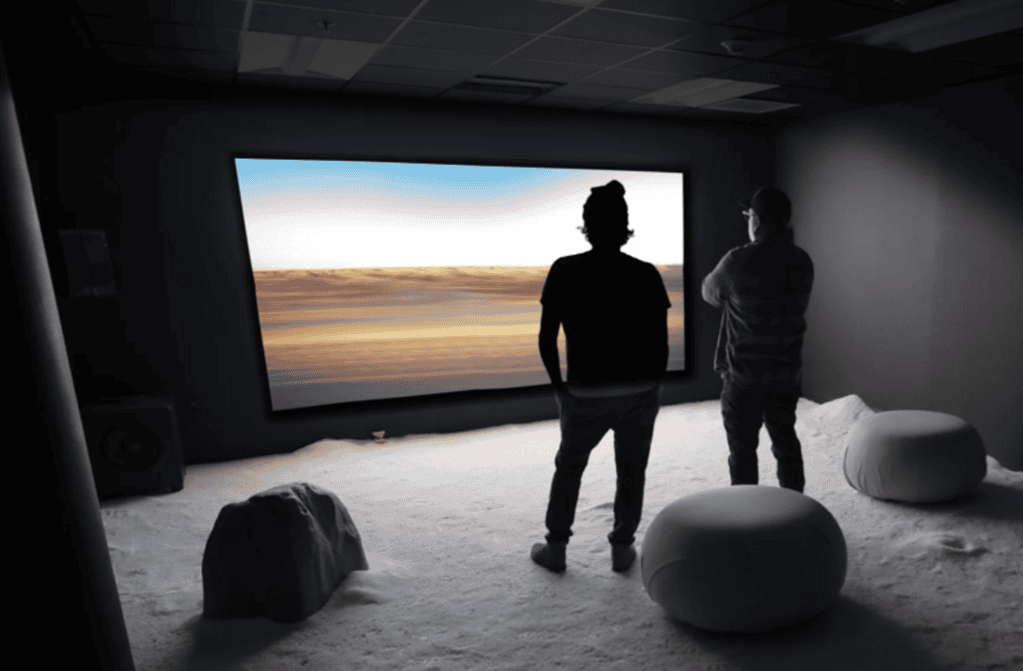
Optics names both the science of light and the politics of appearance. It refers to the technologies that shape visibility—lenses, sensors, microscopes, telescopes, satellites, drones, and surveillance systems—and to the cultural mechanisms that determine how bodies, events, and histories are framed, circulated, and believed. Optical systems select, magnify, distort, and excludes and in doing so, it embeds power into perception.
At the border, in the city, and in orbit, contemporary technologies of seeing operate as instruments of governance and belief. Border surveillance optics translate bodies into heat signatures, patterns, and risk profiles, producing a regime of visibility oriented toward detection and control. Space-seeing technologies—orbital telescopes, deep-space observatories, and spectral imaging systems—extend perception beyond the human sensorium, rendering distant radiation, invisible wavelengths, and ancient light into images. These cosmological instruments reorganize how time, scale, and human centrality are imagined. Yet they, too, are political as they depend on infrastructures of extraction, militarization, and institutional authority, shaping whose vision of the universe becomes dominant.
The border is fundamentally a visual project: from nineteenth-century land surveys that transformed landscape into territory, to contemporary biometric systems that translate bodies into data points, images have been central to making borders legible, governable, and real. Optics operate here as a form of power, shaping what is visible, what is threatening, and what must be controlled.
PARA/llax situates these regimes of vision against a field of counter-optics: lens-based practices that redirect technologies of seeing toward witnessing rather than interception, relation rather than mastery. Documentary filmmaking, experimental photography, and photojournalistic inquiry mobilize cameras to operate as social counter-systems.
See also: PARA/noia > Border Surveillance Technologies
Case Study: Javier Tapia & Camilo Ontiveros, Liquid Light
Liquid Light by Javier Tapia and Camilo Ontiveros takes the form of extended artistic research on water infrastructures in the southwestern United States, following the Colorado River from the Rocky Mountains to the U.S.–Mexico border and the Sea of Cortez. The artists construct the central film as a non-linear optical experience that traces the life of water itself—moving from glacial and riverine origins toward dammed, diverted, privatized, and depleted landscapes.
Through cinematography and sound, Liquid Light immerses the viewer inside water as a material, temporal, and political substance. The camera does not observe water from a distance; it moves with it, through it, and alongside it, producing an optical condition in which perception becomes fluid. This approach positions the film as a form of counter-optics: a lens-based practice that resists the satellite, survey, and surveillance views through which water is typically managed, measured, and controlled. Instead of rendering water as resource, data, or territory, Liquid Light renders it as planetary force, ancestral memory, and living archive.
Through planetary-scale imagery—glacial sources, river corridors, engineered canals, and arid border ecologies—the film constructs an expanded optical field in which hydrological systems are felt as living architectures. Beauty functions here as a counter-optical strategy, slowing perception, intensifying attention, and allowing ecological entanglements to emerge beyond the abstractions of data and policy.
Learn more about Liquid Light HERE.
Image: Camilo Ontiveros and Javier Tapia, Liquid Light, 2021 . Video installation
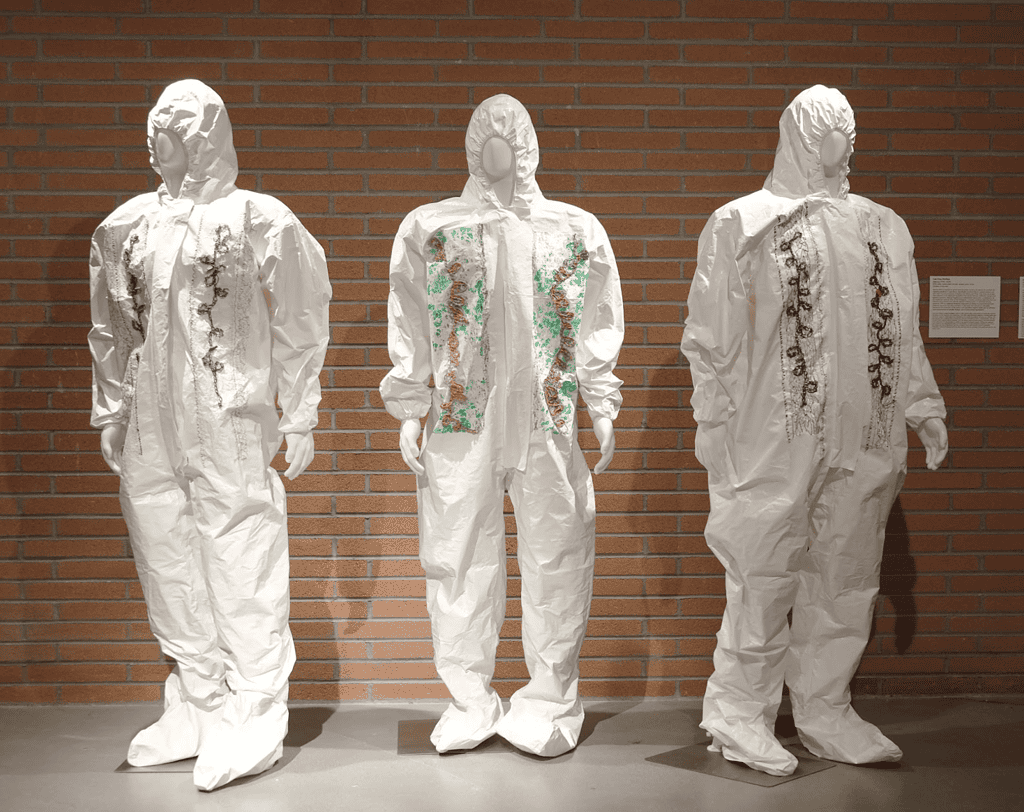
Migration, contagion, and ethics of interdependence
PARA/normal Borders emerged in the midst of the COVID-19 pandemic, a period that exposed how quickly fear of the unseen can reorganize social life. As borders closed, bodies were surveilled, and proximity was recast as threat, it became clear that the border was not only a geopolitical line—it had migrated into the body, the home, the screen, and the imagination. In tracing these shifts, we were drawn to explore a historical parallel between contemporary pandemic responses and Victorian-era reactions to contagion, when disease was similarly understood as both a biological and moral force.
In the nineteenth century, outbreaks of cholera, smallpox, and influenza generated hygienic regimes that mapped danger onto specific populations, spaces, and behaviors. Contagion was framed as something foreign, invasive, and in need of containment. COVID reactivated these same logics: individualized risk assessment, bodily surveillance, quarantine infrastructures, and the racialization of disease. Alongside these measures emerged information panics and competing truth claims, amplified by media systems that reward virality over verification.
It is also critical to recognize that the Victorian era was not the first moment in which the world reeled from ideas of contagion. Long before industrial modernity, disease functioned as an instrument of domination. During the colonization of the Americas, smallpox and other epidemics devastated Indigenous populations, at times weaponized intentionally and at others exploited strategically, becoming tools of territorial expansion and demographic collapse. Contagion has thus long been entangled with empire, borders, and power—operating not only as a biological phenomenon, but as a mechanism for reorganizing land, labor, and life.
PARA/site situates contemporary responses to contagion within this lineage, tracing how fear of transmission repeatedly reshapes borders, bodies, and belief systems—and how artistic, spiritual, and humanitarian practices continue to emerge as critical counter-forces in moments when the unseen becomes unmanageable.
Case Study: Cat Chiu Phillips, Barong PPE
Barong PPE reframes contagion not as a sudden outbreak, but as a slow, systemic condition produced through labor, migration, and environmental exposure. Drawing on the visual language of personal protective equipment (PPE) and the Barong Tagalog—the traditional formal shirt of the Philippines—Cat Chiu Phillips collapses histories of colonial dress, migrant labor, and industrial toxicity into a single wearable form.
The work honors Filipino migrant farmworkers and labor movement leaders such as Larry Itliong and Philip Vera Cruz, whose organizing was foundational to California’s agricultural economy yet remains structurally marginalized. By merging the Barong with a hazmat suit, Phillips situates agricultural laborers at the frontline of environmental contagion. Here, exposure is not accidental; it is engineered through industrial farming practices that rely on pesticides, polluted water, and precarious labor conditions.
Within PARA/site, Barong PPE expands the concept of contagion beyond viruses to include chemical drift, airborne toxins, and climate-induced degradation—forms of transmission that disproportionately impact migrant and racialized workers. PPE becomes both a literal tool of protection and a symbolic marker of how certain populations are expected to absorb risk on behalf of others. The body is treated as a porous border, continually negotiating what enters, what accumulates, and what causes harm.
The garment’s hybrid form also exposes a contradiction: protection is individualized while exposure is systemic. Workers are tasked with shielding themselves from conditions produced by global agribusiness, environmental policy failures, and colonial labor regimes. In this sense, Barong PPE reveals contagion as a political and economic process—one that circulates through supply chains, borders, and bodies rather than appearing as an isolated event. As a ritual object and wearable archive, Barong PPE transforms contamination into visibility, honoring labor histories while insisting that environmental harm, like contagion, is neither neutral nor evenly distributed.
This work was part of the MexiCali Biennial’s 2022- 2023 program, Land of Milk & Honey.
Image: Cat Chiu Phillips, Barong PPE, 2020. PPE suits, embroidery thread, screen print, wires
This section examines how health anxiety, economic precarity, and widespread mistrust of political institutions have given rise to the wellness economy. Within this context, anti-vaccination beliefs and New Age pseudosciences emerge from experiences of medical abandonment, environmental degradation, and a worsening quality of life. The purveyors of these anti-empirical beliefs profit from the dissemination of misinformation on social media, and algorithms reward controversial claims that drive engagement.
Further, wellness culture operates similarly to national regimes of border maintenance through its distinction between what is permitted entry—in this case, to the physical body—and what must be excluded or expelled in the name of safety. Those who ascribe to wellness culture often identify the body as a site requiring constant surveillance and protection from contamination, wherein the “foreign” substance—in this case, vaccines—is imagined as inherently diseased. In this sense, wellness culture operates similarly to national regimes of border maintenance through its distinction between what is permitted entry and what must be excluded in the name of safety.
The resurgence of measles in Texas demonstrates how the consequences of vaccine skepticism are materially realized in public health crises. Individualized health decision-making, largely influenced by a widely felt distrust of medical institutions and a questionable adherence to wellness pseudoscience, frequently undermines collective immunity and disproportionately endangers vulnerable populations. (See also: PARA/noia > Cultic Radicalization, Conspirituality, and the Internet) Wellness culture, therefore, embodies broader trends of erosion in public trust, the atomization of society through the proliferation of misinformation echo chambers, and the resultant radicalization which endangers societal health and cohesion. It is within this digital landscape of health skepticism and individualized risk assessment that these logics find political articulation in the “Make America Healthy Again” movement, publicly championed by U.S. Department of Health and Human Services Secretary Robert F. Kennedy Jr.
Memes introduce digital audiences to perspectives and aesthetic norms that precede explicit political or partisan alignment. Memes teach audiences what to find funny, who belongs, and which assumptions feel natural. Repeated exposure to the same memetic images, videos, and texts paves the way for the process of ideological identification, often supplanting any kind of explicit deliberation or persuasion. Because memes circulate across digital platforms and physical borders, they form loose “memetic alliances,” which are temporary affiliations organized around shared images, jokes, and fantasies. As these alliances require neither formal organization nor explicit agreement, they provide low-stakes entry points into a collective identity. Those who make and disseminate memes often employ irony or humor to provide cover for their more explicit aims. Memes, therefore, function as a conceptual scaffolding, acting as building blocks that connect individuals through shared emotions and collective attempts at meaning-making while laying the groundwork for radicalization later on. The rising popularity of reactionary aesthetic movements that champion hegemonic gender roles (i.e., TikTok “tradwives" who embrace patriarchal submission or “manosphere” podcasters who spout misogynistic rhetoric), coupled with the electoral inroads made by the GOP among young male voters in the 2024 U.S. presidential election, demonstrates how pre-cognitive identification with online content precedes political realignment.
Because social media algorithms prioritize engagement over truth, these platforms amplify content that provokes emotional responses regardless of intent or consequence (i.e., “rage bait"). The recent proliferation of generative AI has further accelerated the process of memetic spread, as anyone with access to large language models (LLMs) now has the power to manipulate existing media, or produce entirely new images from scratch. These developments contribute to the destabilization of collective understandings of truth, as bad-faith actors use memes to further political polarization, resulting in the formation of rhetorical echo chambers that enforce epistemic closure and punish dissent. State actors have increasingly begun to recognize the utility of AI-generated memes for advancing political agendas. For instance, the Trump administration’s official social media channels on platforms like X regularly circulate memes that draw on fascistic slogans and iconography once relegated to the fringes of the internet. These memes mobilize support for policy initiatives like mass deportation through the celebration of state force as spectacle, the dehumanization of marginalized communities, and the mocking of political dissidents.

The zombie is one of the most heavily theorized figures in contemporary cultural studies. Across film, literature, philosophy, labor theory, postcolonial critique, medical humanities, and political economy, zombies have been mobilized to speak about capitalism, contagion, racialization, environmental collapse, disability, war, and social abandonment. As one scholar succinctly notes, “The zombie isn’t just any monster, but one with a pedigree of social critique.” Because of this dense and interdisciplinary body of scholarship, it would be impossible for PARA/normal Borders to account for every theoretical framework through which the zombie has been read. Instead, this section approaches this topic selectively, through undead labor systems and as a feared figure of invasion.
Undead Labor Systems
Zombies are often imagined as monsters, but politically they function as workers: bodies that move without agency, labor without rest, and persist without future. Zombie figures expose labor as a condition of social death—life sustained only so long as it remains extractable.
Fields, detention centers, maquiladoras, and logistics hubs operate as undead systems—accumulations of past labor that continue to command present bodies. The borderlands concentrate these economies, transforming human movement into fuel for agriculture, manufacturing, surveillance, and distribution. Gig economies, delivery platforms, and subcontracted farm labor optimize bodies through algorithmic control, disposable contracts, and constant productivity monitoring. In short, these systems operate as forms of institutionalized zombie labor: always active, never secure.
Figures of Invasion and Contagion
Zombie narratives stage panic around mass movement, contamination, and proximity. By mobilizing terms such as swarms, floods, infestations, outbreaks, and viral spread, these stories mirror the vocabulary deployed in public discourse surrounding migration, disease, and social unrest. The zombie becomes a figure through which mobility itself is rendered threatening, and difference is reframed as contagion.
These narratives are frequently set within landscapes of barricades, quarantine zones, militarized checkpoints, and fortified enclaves. Survival depends on walls, weapons, surveillance, and constant suspicion. Border crossing becomes synonymous with infection; contact becomes risk. It is worth noting that in most zombie films and series, state institutions fail—governments collapse, militaries are overwhelmed—and life is reorganized around localized regimes of control.
These themes have taken on renewed urgency in the wake of the COVID-19 pandemic, which reactivated global infrastructures of quarantine, biometric monitoring, travel restriction, and border closure. At the same time, these concepts are being actively fueled by contemporary immigration rhetoric, evidenced in the ongoing militarization of borders and the snatching of bodies within the U.S. Zombie fiction thus operates as a cultural rehearsal for invasion panic: a speculative laboratory in which societies learn to associate circulation with threat, bodies with risk, and collective movement with catastrophe. Rather than remaining in the realm of fantasy, these imaginaries help legitimize real architectures of containment that increasingly shape contemporary border regulation.
Case Study: Andrew Roberts, CARGO: a certain doom
In CARGO: a certain doom, Andrew Roberts presents a severed silicone arm, pigmented to mimic living flesh, suspended from two wall hooks. Disconnected from any body, the limb hangs like inventory. Tattooed onto the skin is the unmistakable Amazon logo, collapsing corporate branding into the surface of the human body itself.
The work stages the arm as a zombie fragment: neither fully alive nor entirely inert. It evokes a body reduced to function, circulation, and extraction—a unit of labor that persists beyond agency or wholeness. By isolating the limb, Roberts foregrounds how contemporary logistics systems dismember the worker, reducing human presence to modular, replaceable parts optimized for productivity. The Amazon logo operates as both mark of ownership and site of infection, suggesting how corporate infrastructures colonize flesh, time, and identity.
Image: Andrew Roberts, CARGO: a certain doom, 2020, tattoos on pigmented silicone. Part of We are sorry to notify you that due to the end of the world your package series.

Within PARA/normal Borders framework, Ritual Sites of Transmission are understood as threshold-spaces where artistic actions—performances, sonic experiments, communal gestures, and cross-border exchanges—transform the border wall into a ceremonial interface. The wall shifts from a mechanism of deterrence into a resonant surface through which voices, signals, histories, and collective presence pass.
Art historian Rosalía Romero’s analysis in The Wall in Border Art: Scenes from Mexicali–Calexico provides a critical foundation for this understanding. Romero examines the U.S.–Mexico border wall as an evolving system of relations, technologies, and embodied practices. Through her analysis of the work of Homeless Collective, Mike Rogers, Carmina Escobar, EDT 3.0, and other MexiCali Biennial artists, she demonstrates that the wall has historically functioned as canvas, stage, instrument, and infrastructure. Her research foregrounds how artists working at the wall do not merely represent the border, but activate it—transforming it into a site where sound, movement, communication, memory, and technological intervention circulate across imposed divisions.
Romero’s framework reveals the wall as a living archive, layered with material residue, repeated gestures, and accumulated social memory. PARA/site extends this understanding by situating border activations as ritual practices that reorganize perception, relation, and power. These are not events staged at the wall, but interventions into the wall’s operational logic—transforming a militarized barrier into a site of listening, transmission, and speculative re-imagination.
Below is a selective list of past MexiCali Biennial border interventions that position the wall as a Ritual Site of Transmission:
• Mike Rogers, Telephone/Teléfono, 2006
Consisting of ladders, string, and paper cups placed on each side of the border fence, Mike Rogers invited participants to make free international “long-distance” calls. Using the children’s game of telephone, Rogers highlighted cross-border obstacles to communication while fostering intimate, binational dialogue.
• Carmina Escobar, Rituals of Propagation, 2020
Vocalist and intermedia artist Carmina Escobar’s practice centers emotional memory and interpersonal connection. For Calafia: Manifesting the Terrestrial Paradise, Escobar installed large wooden megaphones on each side of the U.S.–Mexico border, amplifying her vocal performance. Passersby were invited to speak grievances into the megaphones as well as write messages on the sculpture. The project created a functional cross-border choir that resonated across the fence, transforming it from an object of obstruction into a conduit of communication.
• Electronic Disturbance Theater 3.0, Social Echologies: Scene 3 (from Three Echologies: An A/Area/Aria X Play), 2023
EDT 3.0—a collective consisting of Amy Sara Carroll, Ricardo Dominguez, Trevor Henthorn, Elle Mehrmand, J.D. Margulies, Gustavo Martínez, Doreen Ríos, Ricardo Sierra, and Brett Stalbaum—created a performance-happening for Land of Milk & Honey that took place simultaneously on both sides of the border wall. Incorporating performance, poetry, and “palindrones”—remote-controlled miniature drones fitted with Bluetooth speakers—the group activated the site to transmit knowledge of past, present, and future farmworkers across the border space.
Case Study: Homeless Collective, Transborder Game
In Transborder Game, Guadalajara-based duo Homeless Collective transformed the U.S.–Mexico border wall in Mexicali–Calexico into a functional ritual interface. Organized in collaboration with the MexiCali Biennial, the project staged a soccer match on a field bisected by the international boundary: half of the pitch lay in Mexicali, the other in Calexico. Players could only occupy one side of the wall, forcing them to blindly pass the ball over the barrier to teammates they could not see.
Rosalía Romero’s account foregrounds the embodied and perceptual conditions of the work. Most spectators remained on one side, experiencing the game primarily through sound—cheers, laughter, shouted directions, and the referee’s whistle. Romero herself climbed a scaffold erected on the Mexican side, temporarily accessing a vantage point from which both sides of the field became visible. This elevated position did not resolve the division but made its asymmetries perceptible, situating her body as a mediator between separated visual and social fields.
Significantly, Romero encountered Transborder Game as a young observer years before becoming formally associated with the MexiCali Biennial, suggesting that the performance functioned as a site of transmission not only across national space, but across time—planting embodied knowledge that would later re-emerge as scholarship, curatorial inquiry, and institutional memory.
Through this structure, the wall ceased to function solely as an instrument of obstruction and became a ceremonial apparatus that organized chance, cooperation, listening, and trust. As a Ritual Site of Transmission, Transborder Game activated the wall as a living interface—one that transmitted affect, sound, and collective attention, reprogramming a militarized barrier into a space of embodied encounter and social resonance.
Resources:
Romero, Rosalía. “The Wall in Border Art: Scenes from Mexicali–Calexico.” In MexiCali Biennial: Art, Actions, Exchanges since 2006, edited by Rosalía Romero and Ed Gomez, 69–81. Whittier, CA: MexiCali Biennial, 2026.
MexiCali Biennial: Art, Actions, Exchanges since 2006 available for purchase HERE.
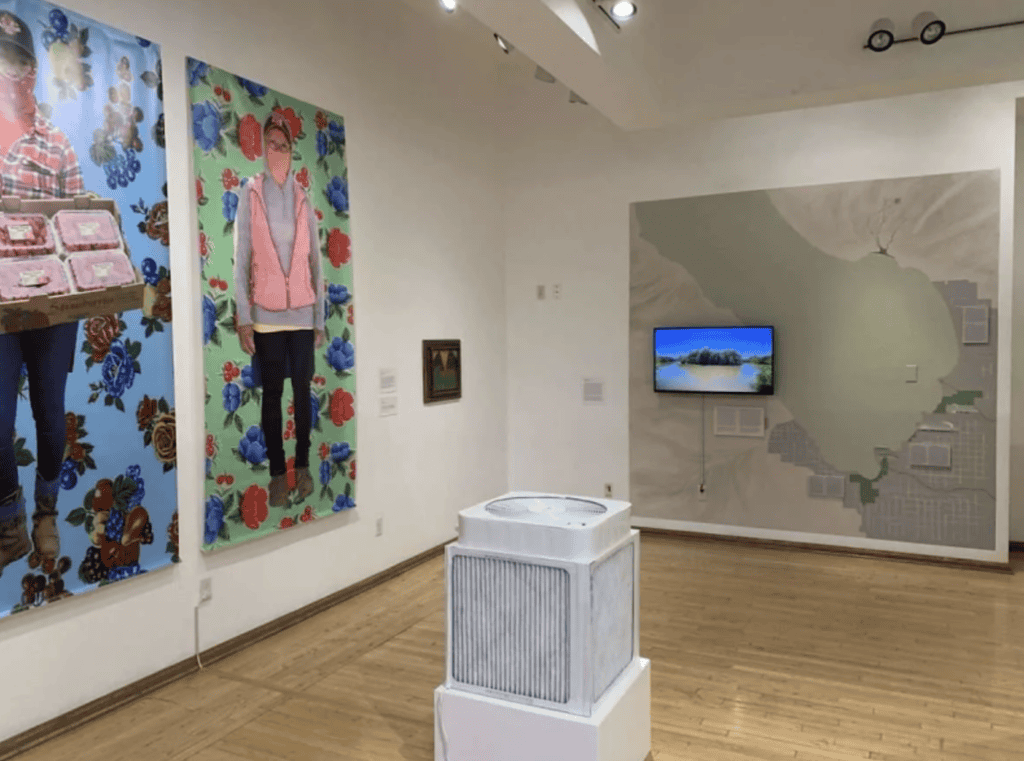
Where corporate interests and surveillance regimes act as parasites within the U.S.–Mexico borderlands, draining resources from the land and its people, humanitarian carriers nurture the communities they serve back to health. Operating as anti-parasites within an extractive ecology, humanitarian carriers propagate care, circulating resources, protection, and collective knowledge, while counteracting the forces that feed on precarity and enforced scarcity in the borderlands.
We have included an extensive list of several humanitarian organizations whose work addresses the needs of migrants and residents of the borderlands more broadly, taken from the National Network for Immigrant and Refugee Rights (NNIRR). View the list on the downloadable PARA/normal Borders Research Overview under the PARA/site>Humanitarian Carriers section.
Case study: Imperial Valley Equity and Justice Coalition (IVEJC)
Formed in the months following the COVID-19 pandemic in 2020, the Imperial Valley Equity and Justice Coalition (IVEJC) is composed of local artists, organizers, and movement builders. The coalition seeks to address the intertwined systems of oppression that have rendered the Imperial Valley vulnerable to environmental racism, racial and economic injustice, and medical neglect. IEVJC takes a holistic approach to community organizing, with their initiatives ranging from traveling COVID-19 vaccination programs, to equitable distribution of federal relief funds, to securing environmental protections from large-scale lithium mining operations in the region.
For the MexiCali Biennial’s 2023 exhibition Land of Milk & Honey, IVEJC constructed DIY air filtration and air quality monitoring systems to combat the deleterious impacts of environmental racism within the Imperial Valley. The coalition sought to design mechanisms simplistic enough for community members to implement at home, culminating in 2023's DIY Environmental Futures project, exhibited at the Steppling Gallery at SDSU Imperial Valley. The Cosi-Rosenthal Box is an inexpensive, high-quality air filtration box that thousands of households built during the COVID-19 pandemic and recent California fires. Designed by UC Davis engineering professor Richard Corsi, the box takes 20 minutes to assemble and comes at a fraction of the cost of commercial air filtration machines. The IVAN Network Air Quality Monitor is a part of a community network of over 60 air quality monitors across the Imperial Valley that provide community members real-time information about air quality, and an opportunity to report environmental issues in under 5 minutes. The IVAN Network was originated by local environmental justice advocates and has now been replicated in other parts of California, including Fresno, Kern County, Coachella, Wilmington, Bayview Hunters Point, and Kings County.
Agricultural and carceral corporate interests parasitize the Imperial Valley, generating profit through the extraction of land, labor, and human bodies while externalizing environmental and health-related harms onto local communities. Industrial agriculture relies on intensive water use, pesticide exposure, and exploitative labor conditions that disproportionately affect low-income and migrant populations, while carceral infrastructures (i.e., detention centers, surveillance systems, and enforcement contracts) profit from the criminalization and containment of the same communities rendered vulnerable by environmental degradation and economic insecurity.
Political institutions’ inability to implement meaningful regulation has compelled organizations such as IVEJC to develop collaborative and creative strategies for confronting these intertwined systems of exploitation, whose impacts often remain diffuse, under-documented, and normalized. Within this context, community-led interventions like IVEJC’s air filtration and air quality monitoring projects function as counter-infrastructures, producing both physical systems and social networks through which shared harms can be addressed collectively. By equipping residents with tools to measure air quality and mitigate exposure, the coalition reclaims technologies typically associated with regulation or surveillance and repurposes them toward mutual aid and self-determination.
Image: Installation of Land of Milk & Honey with Cosi-Rosenthal Box by Imperial Valley Equity and Justice Coalition
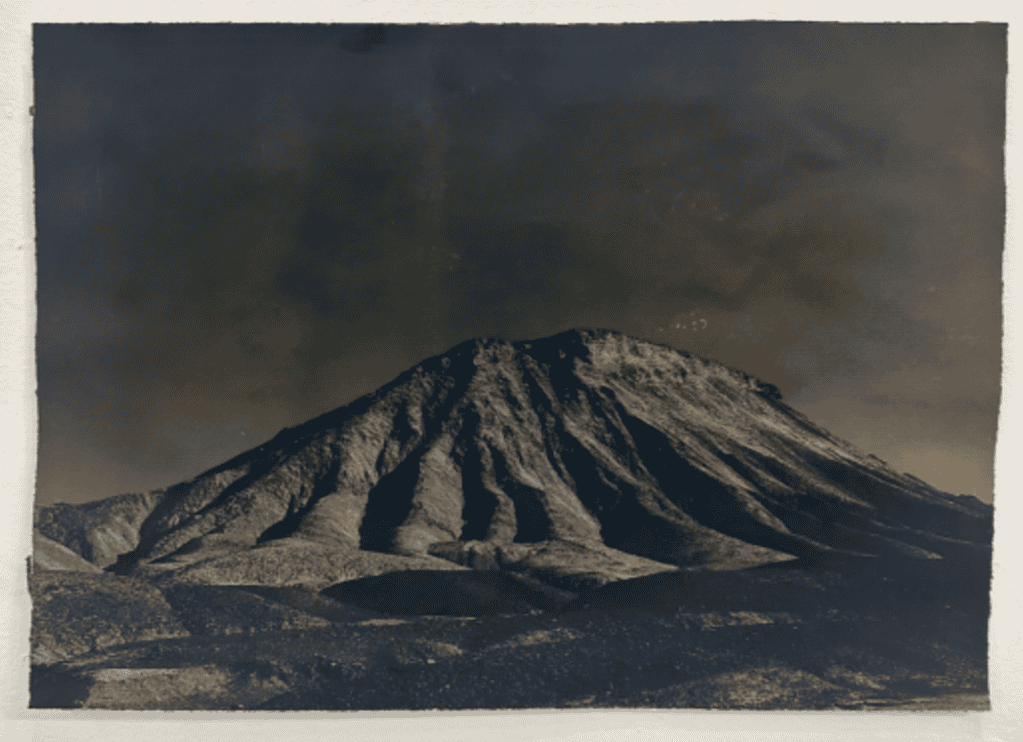
Land, architecture, and ecological liminality as portals between worlds
The word paradise, from the Old Persian pairidaeza—meaning “walled enclosure”—embodies a PARA/dox central to the PARA/normal Borders theme: it is both contained and transcendent. Originally describing royal Persian gardens separated from the wilderness by stone walls, the term evolved through Greek and biblical translation to signify the Garden of Eden and, later, the heavenly realm. In each version, paradise exists at a threshold or border—the edge between the human and the divine, the visible and the invisible. This bordered enclosure mirrors the metaphysical “in-between” spaces explored by artists of the borderlands, a thin place where the sacred, the political, and the paranormal intersect. As a metaphorical and spiritual frontier, paradise exposes a paradoxical portal between mortality and eternity, echoing the same liminal dynamics found in border theory and the paranormal.
Here we frame PARA/dise around concepts of land and geography. Interconnected notions of site—such as the border fence as monument, the proliferance of "ghost" towns as a consequence of extractivism, and the hauntologies of climate change—posit the region as a haunted landscape. The architecture of the land—both natural and manmade—reflect the identity of the region as both sacred and cursed.
Land Acknowledgment:
The MexiCali Biennial respectfully acknowledges the traditional lands of the Kumeyaay, Cahuilla, Cocopah, and Quechan peoples, whose ancestral territories extend across the U.S.–Mexico border. We also recognize that our work takes place on the unceded homelands of the Tongva (Gabrielino) and Chumash peoples in what is now known as Los Angeles County. We honor the enduring stewardship, histories, and living cultures of these Indigenous nations, and recognize their continued presence as vital to the cultural landscapes we engage through our work.
Case Study: Amina Cruz, Entrance East Heaven
Amina Cruz's Entrance East Heaven consists of a moody photograph of a single mountain within a desert landscape. As part of Alma Entre dos Mundos exhibition for the PARA/normal Borders Lab, the work is situated within a larger dialogue between lens-based work and in-between spaces. The imagery reflects a world that can be seen paradoxically as earthly and extraterrestrial, dark and light, simple and meticulous. Cruz's work is skillfully crafted through a cyanotype process using natural materials such as coffee, tea, and the sun to capture barren landscapes.
Resources:
"Amina Cruz: Through the Lens, Beyond the Veil." Paranormal Borders Podcast. July 26, 2025
Los Angeles–based photographer and interdisciplinary artist Amina Cruz discusses the expansive scope of her work — from still, sweeping landscapes to vibrant portraits of queer cultural remix, joy, and community. Amina also discusses her unique approach to cyanotype printing: a ritualistic process of bleaching and staining that produces surreal, layered images bathed in blue.
“El Otro Lado” (The Other Side): Geographies, Boundaries, and Imaginations of Space
During the Covid-19 quarantine, the MexiCali Biennial team were invited to collaborate with the Library of Congress, Hispanic Reading Room on a collection of border-related study guides. This LibGuide connects resources from the Library's digital collections with concepts of geography in the borderlands and relates to concepts discussed in this PARA/dise node.
Image: Amina Cruz, Entrance East Heaven, 2024. Cyanotype, tea, and coffee on watercolor paper
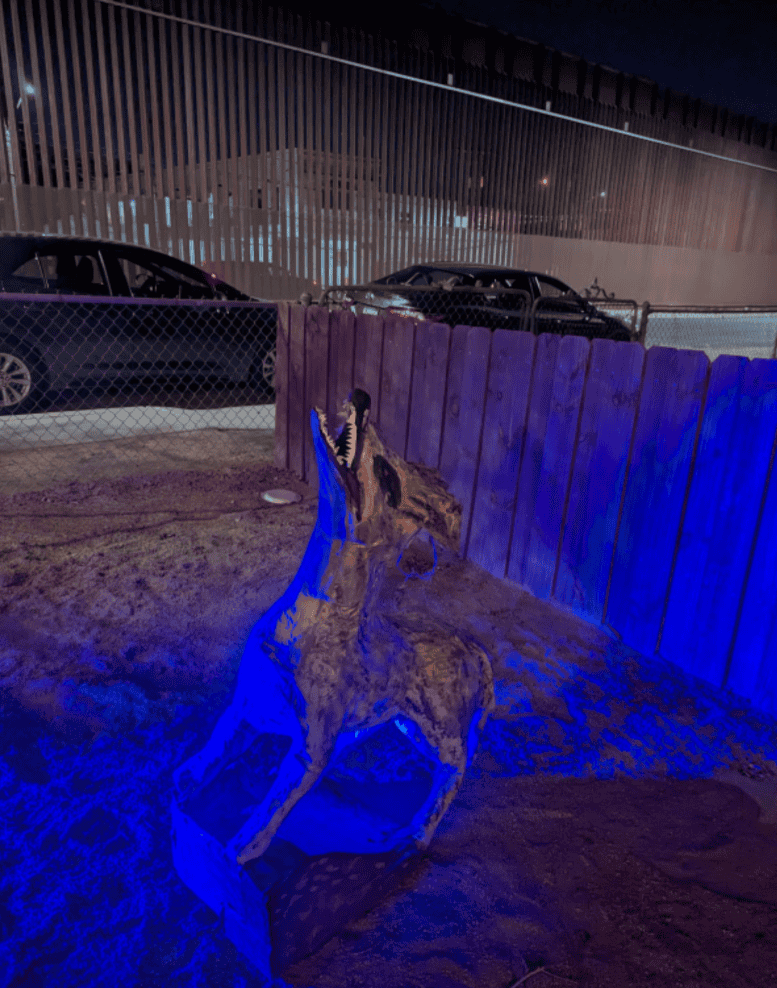
Border Fence as Anti-Monument
The Southern Border Wall National Monument Act seeks to designate nearly 290,000 acres along the U.S.–Mexico border—including parts of the existing wall—as a national monument. Though presented as conservation, it risks enshrining environmental damage, erasing Indigenous sovereignty, and reframing spaces of trauma as patriotic heritage. By monumentalizing a structure of exclusion, the act transforms a militarized landscape into a sanctified site, conflating protection of nature with protection of borders. This project proposal is short titled "THE DON-ument Act."
Monuments are not typically made for the living. When monuments are made for living people, it’s usually an act of self-legitimation—a way for institutions or leaders to monumentalize their authority before it’s even tested by history. This is partly what makes the Southern Border Wall National Monument proposal ethically charged: it seeks to memorialize an active site of conflict—a space still generating harm, displacement, and ecological disruption.
By elevating a structure of exclusion into the protected status of a national monument, THE DON-ument Act inverts the purpose of commemoration. Rather than honoring collective memory or ecological stewardship, it monumentalizes ongoing violence. In doing so, it functions not as a monument but as an anti-monument—an object that enshrines absence, displacement, and erasure under the guise of national heritage.
Case Study: Experimental Art Space - Casa la Linea Arte Contemporáneo
Casa la Linea Arte Contemporáneo is an artist-run space nestled inside a suburban home in Calexico, CA, just steps from the international border between the U.S. and Mexico. The space is dedicated to presenting cutting-edge artistic projects and experimental exhibitions, fostering dialogue and cultural exchange between the two countries. For the PARA/normal Borders Lab research project, this experimental venue hosted multimedia exhibitions, performances, dinner events, and temporary outdoor projects. As a sister space to the MXCL BNL LAB, it will continue to serve as a host site for PARA/normal Borders programming and will remain the nexus for all border-related initiatives, with satellite venues in Calexico and Mexicali. Positioned in direct visual opposition to the border fence, Casa la Linea stands as an act of defiance against a perceived shrine of control - an antithesis to monumentalization.
Shown here is a work by Deliuz (Fidel Hernández) from the group exhibition Haunting Present, Vol. 1, which took place in April 2025 at Casa la Linea. Curated by Rosela del Bosque, Adrián Pereda Vidal, and Luis G. Hernández for the PARA/normal Borders Lab, the exhibition featured works centered on hauntology through archival practices, moving image, and technology. The spectral, ephemeral, and transparent artworks were not intimidated by the hulking, rusted monument in the background. Instead, they revealed how powerful art can be in a world shaped by division.
Image: Site-Specific installation by Deliuz (Fidel Hernández) at Casa la linea, Calexico, CA
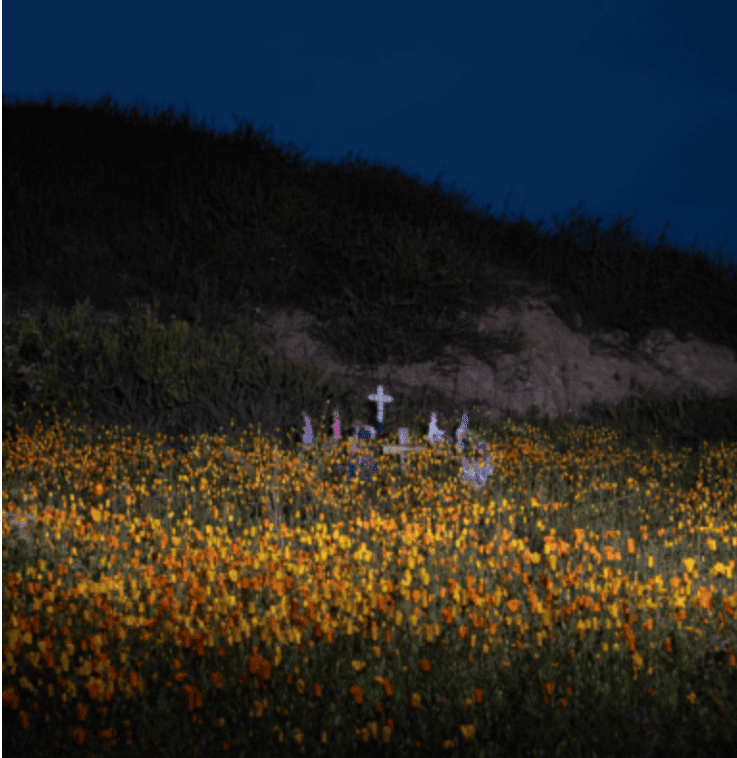
Memorials function as emotional cartographies. They map the psychic terrain of a community—its traumas, its struggles, its attempts to honor and heal. They often emerge from grassroots care, built by people who refuse to let the names of the dead be erased. In borderlands especially, memorials become acts of resistance against disappearance. They testify that someone lived, loved, crossed, or was lost here.
Memorials function as living interfaces between worlds. They gather offerings, prayers, photographs, and objects, allowing the dead and disappeared to remain with us spiritually, if not physically. They remind us that paradise is not only a future fantasy, but a practice of remembrance rooted in the landscapes we inhabit.
Case Study: Alma Entre Dos Mundos
Alma Entre Dos Mundos: Aldo Cervantes and Amina Cruz occurred at the MXCL BNL LAB in Whittier from March 17 to May 22, 2025 as part of the PARA/normal Borders Lab. Curated by Armando Pulido, the photography-centered exhibition showcased haunted imagery reflecting landscapes and bodies as a reflection of in-between spaces. Pulido states of Aldo Cervantes's digitally-captured memorial documentation seen here:
"Makeshift altares mark a transition from life to death in public spaces. Often created by family or community members, these sites physically present a space to mourn and remember the deceased. In 2021, Cervantes began capturing ephemeral altares during his drives across Southern California. His photographs bring a permanence to an otherwise temporary fixture. This scene at dusk, illuminated by Cervantes’s headlights, places us at a roadside meadow where flowers spring up amongst crucifixes to honor a life once lived. Though the altar is dedicated to a stranger, we become implicated in their memory as we peer into the portal of life beyond."
A photo essay of the exhibition can be found HERE.
Image: Aldo Cervantes. Altar (_0221), 2024, Archival pigment print
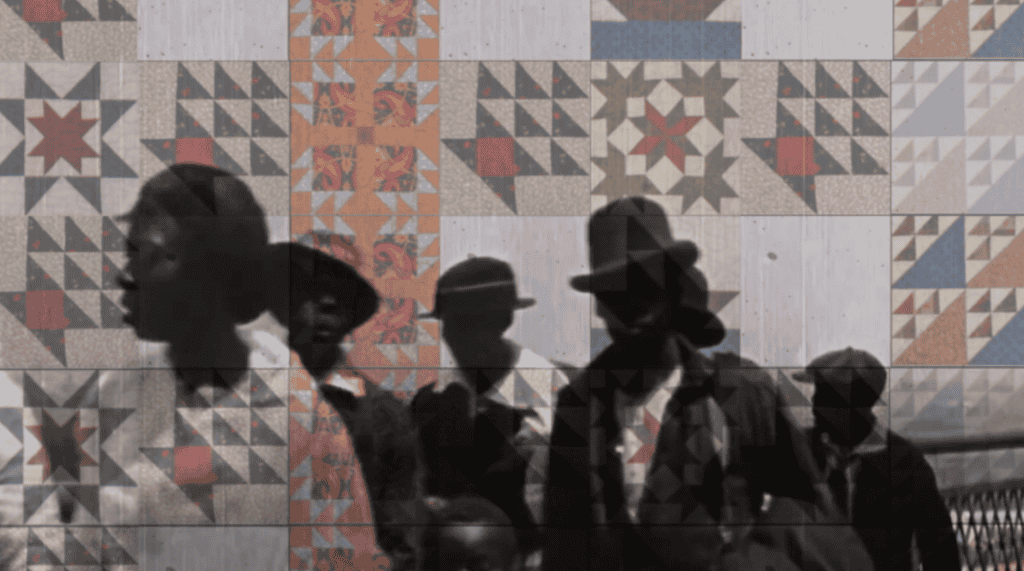
Ghost towns along the U.S.-Mexico border are seldom completely abandoned; they linger as spectral ecosystems, inhabited by wind, memory, and the slow reclamation of nature. Once envisioned as colonial paradises—mining utopias, agricultural outposts, or speculative frontier towns—they now stand as monuments to extraction and ecological exhaustion.
These spaces haunt through psychogeography—landscapes that feel both familiar and wrong, suspended between nostalgia and unease. Romanticized through popular culture and entertainment—from Knott’s Ghost Town to the untamed landscapes of Hollywood Western films to the proliferation of urban exploration videos on social media—these ruins evoke the lingering specter of Manifest Destiny and the environmental and economic tolls of capitalism. Yet amid their desolation, they also stage possibilities for renewal: the rewilding of architectural remains transforms these abandoned sites into fertile ground where wildlife and vegetation reclaim space within the harsh desert environment.
Case Study: Chris Christion and Jessica Wimbley, The Unauthorized Histography of California Vol. 2: Fieldnotes
Chris Christion and Jessica Wimbley’s The Unauthorized Histography of California Vol. 2: Fieldnotes is a video collage that explores the chronicling of mining, extractivism, and capitalist ambition during California's Gold Rush era. Presented as part of the MexiCali Biennial’s Land of Milk & Honey program, the project highlights erased or lesser-known histories—an alternate way of investigating ghost towns as historical sites of migration and the topographical shift from agriculture to real estate.
The artists draw heavily on the concept of biomythography, a term coined by Audre Lorde to describe a narrative form that weaves together myth, history, and biography. Through this lens, Christion and Wimbley examine the intersectionality of identity and the conceptual borders that exist within the self, as well as those imposed through cultural othering. Their research-driven practice interrogates how histories are constructed and what stories are worthy of resurrection within the archives of California’s past. The video can be seen on Christion's website HERE.
For further exploration:
Paranormal Borders Podcast. Albert Lopez, Jr.: Tijuana as a Ghost Town explores how political and social unrest can have haunting effects on cities, creating temporary ghost towns. In this episode, contemporary artist Albert Lopez, Jr. discusses Tijuana from 2009–2010, a period when the city was ravaged by cartel violence.
A short list of ghost towns in the borderlands in different stages of entropy and resurrection, along with resources for further exploration, can be found on the expanded research document: PARA/normal Borders Research Overview.
Image: Chris Christion and Jessica Wimbley, The Unauthorized Histography of California Vol. 2: Fieldnotes
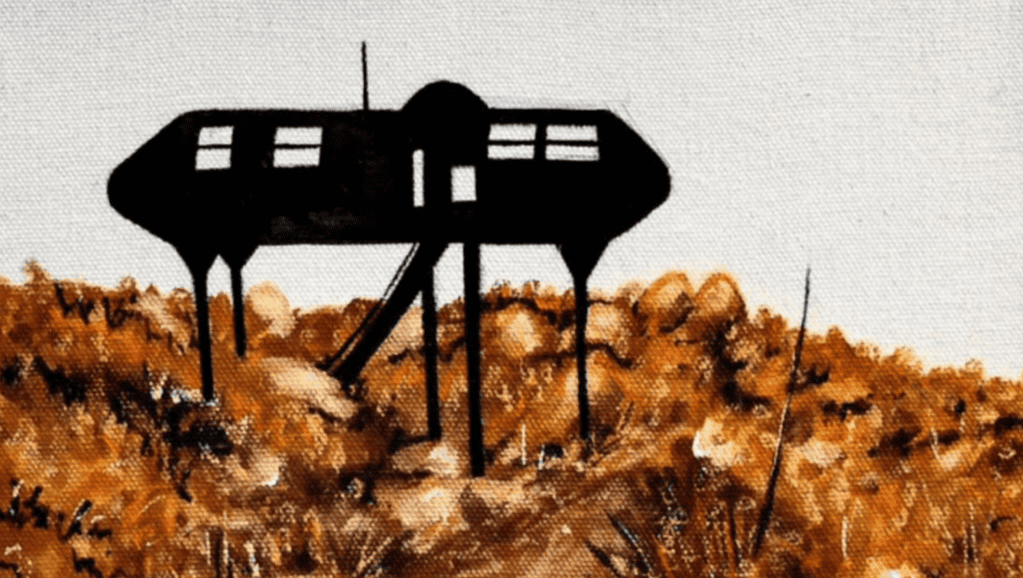
The desert borderlands between California and Mexico form a landscape of uncanny intensities—part earthly, part cosmic, and partly haunted by human interaction. We have created a borderlands field guide that illustrates how the desert acts as a magical terrain: a living archive of hauntings, ecological shifts, and cosmological thresholds. Each site reflects the enchanting and uncanny nature of this supernatural environment.
Case Study: Omar Khalid, Possible Places to Land a Ship III
Omar Khalid’s Possible Places to Land a Ship III imagines the desert as an otherworldly terrain. The painting reflects an angular architectural structure resting quietly among rocky ground and desert scrub, framed by a vast, cloudless sky. The border-based artist’s work invokes a sci-fi sensibility he describes as “Martian Esthetics,” suggesting that the built world is always on the verge of becoming extraterrestrial. The landscape—alive with serene plant life and bathed in sunlight—takes on a dreamlike quality, revealing the magic embedded in this region. Khalid is a pre-selected PARA/normal Borders participating artist.
Find a non-exhaustive field guide for traversing these magical sites with a Field Guide to Magical Border Terrain: A PARA/normal Inventory of Borderland Sites on the expanded PARA/normal Borders Research Overview document HERE.
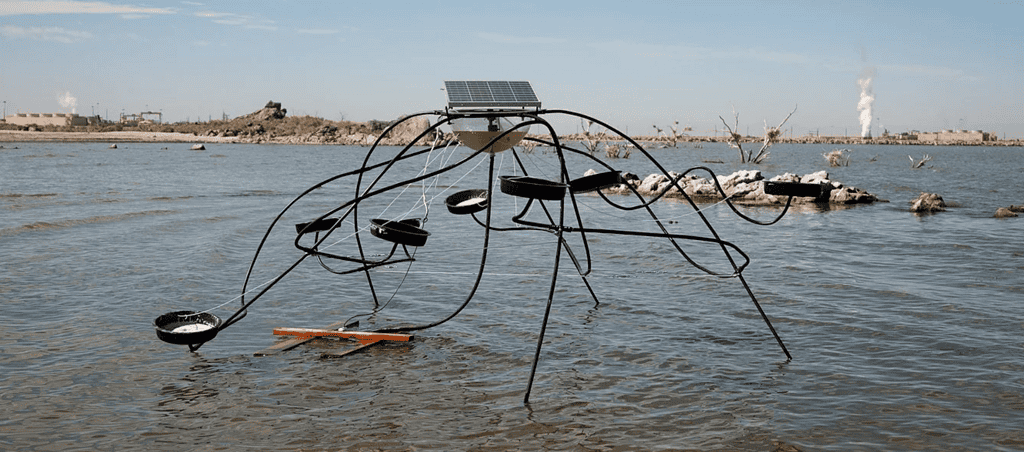
Long before an international border divided California and Mexico, the basin now occupied by the Salton Sea held the vast freshwater expanse of Lake Cahuilla—a site of abundance, ceremony, and sustained habitation for Indigenous nations including the Cahuilla, Quechan, and Kumeyaay. Fed intermittently by the shifting course of the Colorado River, the lake appeared and receded over centuries, leaving behind terraces and salt lines that record cycles of emergence, disappearance, and return.
In 1905, colonial infrastructure intervened in this ancient hydrology. A failed irrigation project diverted the river once again, unintentionally recreating the basin as the modern Salton Sea—a body of water born not of ceremony, but of industrial ambition and environmental miscalculation. Over the following century, the Sea cycled through multiple identities: leisure destination, military testing ground, agricultural runoff reservoir, and ecological collapse. Today, it stands on the cusp of yet another transformation, positioned as a site of renewed extraction through lithium mining.
Though not a cenote—a natural sinkhole understood in Mesoamerican cosmologies as a portal to the underworld—the Salton basin performs a comparable function. Like cenotes, it operates as a threshold space where histories, myths, labor, and desire resurface from below. These waters hold sedimented time: Indigenous presence, colonial disruption, ecological neglect, and speculative futures coexist within the same unstable terrain.
Within PARA/normal Borders, the Salton Sea becomes a hydrological liminal zone—a recurring passage between borders and systems, between ecological cycles and political regimes, between past worlds and futures not yet realized. It reminds us that borders are not only drawn across land, but accumulate within landscapes that remember what power attempts to erase.
Case Study: Dominic Paul Miller, Salt Exclosure
In 2013, Dominic Paul Miller collaborated with a team of engineering students to create a site-specific sculpture at the Salton Sea in Southern California. A sculpture was conceived as a passive desalination system that utilized a solar-powered pump and evaporation trays to precipitate fertilizer-rich salts directly from the shallow waters of the sea. As part of the design process, the engineers and Miller discussed the complicated ecology of the area, including the issues of toxic fertilizers entering the sea from agricultural run-off waters and the many bird species that inhabit or migrate through the region. The project remained there for nine years, long after the shoreline had receded well beyond the sculpture’s location. The sculpture remained largely undisturbed apart from the blasting sun, erosion, and the occasional bird. The decaying remnants of Salt Exclosure was part of the MexiCali Biennial's Land of Milk & Honey exhibition at the Cheech Marin Center for Chicano Arts and Culture of the Riverside Art Museum.
Image: Dominic Paul Miller, 2022. Salt Enclosure, dawn light (year 9, day 187), archival digital print
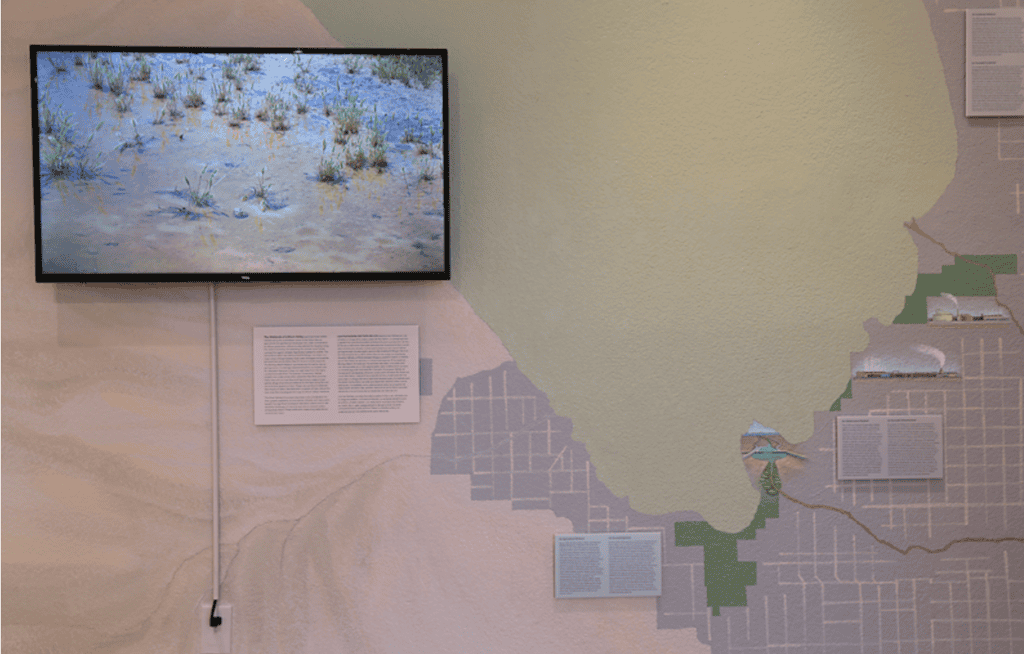
A zombie species is a form of life that continues to exist after the ecological conditions necessary for its survival have collapsed. Its population may persist in captivity, in isolated pockets, or as relict individuals, yet it has no viable path to long-term survival. In essence, it is ecologically dead but biologically alive.
Here is a shortlist of species that currently meet this definition at the US-Mexico border:
1. California Condor (Gymnogyps californianus)
Extinct in the wild by 1987, all remaining condors descend from captive breeding programs. Released individuals wear numbered tags and GPS transmitters—living testaments to technological resurrection, their freedom mediated by constant human oversight.
2. Rio Grande Silvery Minnow (Hybognathus amarus)
Once abundant throughout the Rio Grande, this small fish now exists only in isolated river fragments sustained by artificial water releases. Without these interventions, its river habitat—and the species itself—would vanish within a single dry season.
3. Desert Pupfish (Cyprinodon macularius)
Native to desert springs and wetlands, it survives mainly in constructed refugia and drainage canals. These controlled environments keep the species technically alive, yet ecologically extinct in its natural range.
4. Yaqui Catfish (Ictalurus pricei)
Native to the Río Yaqui basin straddling Sonora and Arizona, this species now persists mainly through conservation stocking. Its fragmented habitat and limited genetic pool make it a living relic, dependent on continual human support.
Case Study: Cynthia Hooper, The Wetlands of Lithium Valley
Artist Cynthia Hooper's The Wetlands of Lithium Valley examines three wildlife habitats along the southeastern shore of the Salton Sea—an agricultural and geothermal landscape now being mined for lithium. Hooper's multimedia installation addresses ecological stress on the fragile environment from the extraction of an ever-growing dependence on the metal used in batteries, electric cars, and cell phones, as well as a treatment for certain mental disorders. Projects such as the Species Conservation Habitat are highlighted in this work to draw attention to the environmental protection of the southeast Salton Sea wetlands by creating a lower-salinity refuge for "zombified" species such as the Desert Pupfish.
Learn more about The Wetlands of Lithium Valley HERE.
Image: Cynthia Hooper, The Wetlands of Lithium Valley installation detail of mural at the Steppling Gallery (MexiCali Biennial), San Diego State University Imperial Valley Campus, Calexico, CA, 2023.
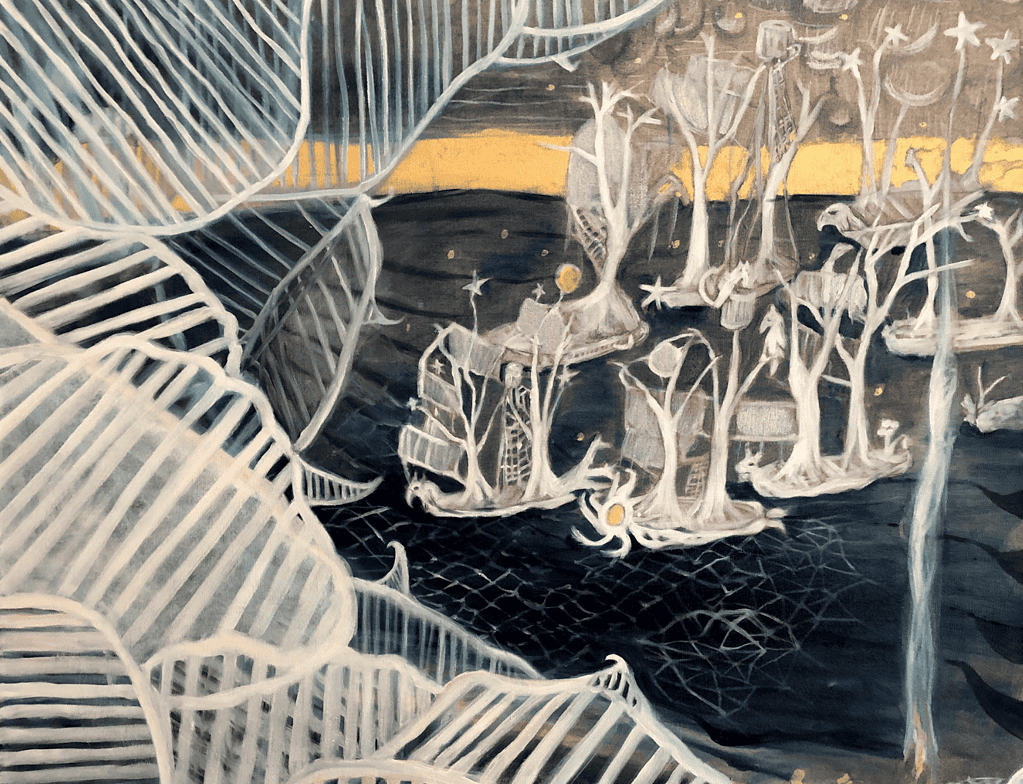
Across the shifting borderlands of California and Mexico persists the legend of a phantom vessel—the so-called Lost Ship of the Desert. As with much of American folklore, this myth contains kernels of truth. Geological evidence suggests that at certain points in history, it would have been possible to navigate a boat from the Gulf of California into the ancient Lake Cahuilla. Over time, this possibility gave rise to tales of a marooned ship: sometimes a Spanish galleon heavy with treasure, other times a Norse longship with a serpent-shaped prow. The promise of lost riches fueled fascination, inspiring dozens of newspaper accounts since the 1870s.
Cahuilla oral tradition also tells of a “great white bird whose wings fell down,” a vision some interpret as the sails of a doomed ship later consumed by the desert sands. Within the framework of PARA/normal Borders, the legend becomes more than a curiosity—it embodies the spectral logic of the border itself, where myth, memory, and geography intermingle. The ship’s shifting appearances across time and landscape reflect the shadow of colonial narratives and also the hope of future prosperity.
Case Study: Enid Baxter Ryce, Ghost Ships
For the MexiCali Biennial's 2018-20 program, CALAFIA: Manifesting the Terrestrial Paradise, artist and writer Enid Baxter Ryce displayed two paintings titled Ghost Ships 1 & 2. These works show an armada of phantom vessels wandering untethered from the mythical island of California and its warrior queen, Calafia. This haunting imagery, inspired by the fifteenth-century novel Las Sergas de Esplandian, reflects the consequences of colonization on the Californias. Like the Lost Ship of the Desert, both narratives are rooted in episodic legends reflective of historic practices of conquest.
Resources:
“El Otro Lado” (The Other Side): Border Art Histories of the MexiCali Biennial. Calafia section. Library of Congress Research Guide.
Image: Enid Baxter Ryce. Ghost Ships 1, 2019. Oil on linen.
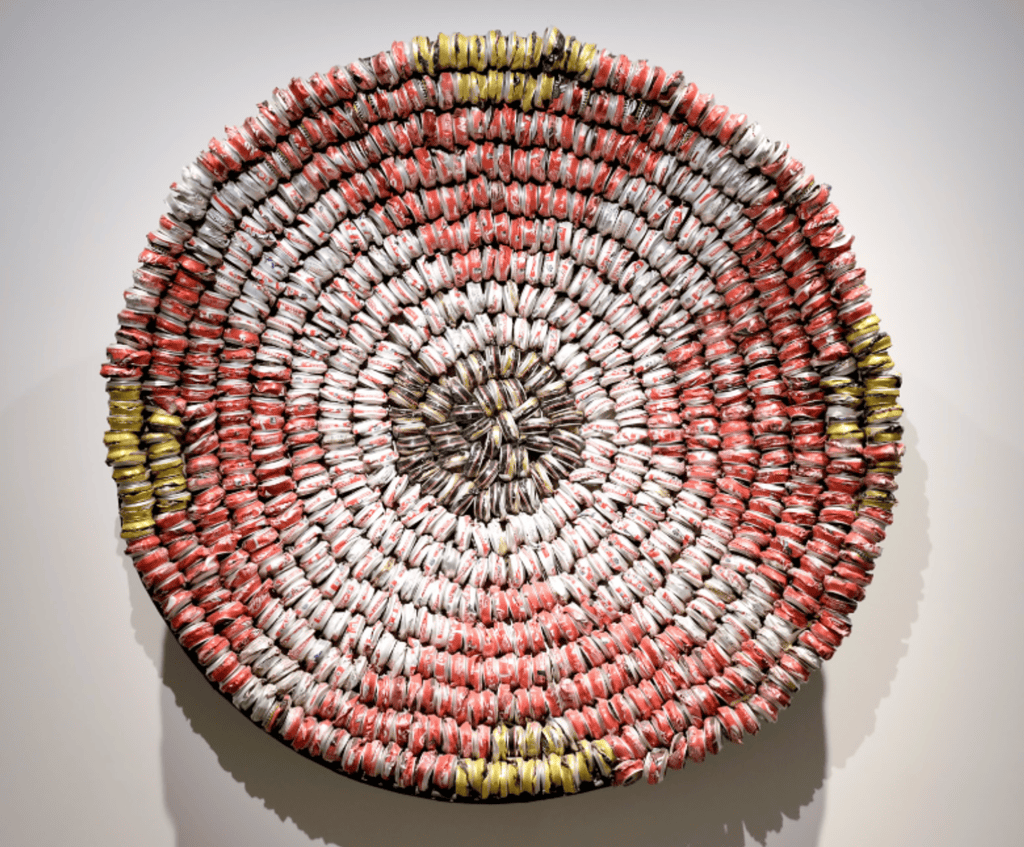
Indigenous ontologies across diverse nations and traditions offer frameworks that understand land, spirit, and being as inseparable. Rather than a single worldview, these relational systems often recognize humans, animals, water, wind, and ancestors as participants in ongoing networks of reciprocity. In contrast to Western notions of borders as fixed and extractive, many Indigenous cosmologies describe boundaries as fluid continuums of connection.
Along the U.S.–Mexico borderlands, distinct nations such as the Cahuilla, Kumeyaay, Quechan, Cocopah, and Tohono O’odham maintain ancestral ties that long predate—and continue across—imposed political divisions. While their traditions are not interchangeable, their songs, stories, and rituals often map relationships rather than territories, affirming that spirit and ecology coexist as living presences. In these contexts, deserts, rivers, and mountains are not inert backdrops but entities that remember—lands understood as holders of knowledge rather than resources.
Within PARA/normal Borders, Indigenous ontologies ground the project’s engagement with haunting and spectral ecologies in an ethics of specificity, care, and continuity. They remind us that what is labeled “paranormal” within colonial epistemologies is, for many communities, simply the ongoing dialogue between material and spiritual worlds—a dialogue that was never interrupted, only misrecognized.
Case study: Gerald Clarke, Continuum Basket
Gerald Clarke’s Continuum Basket transforms a vessel of utility and tradition into a conduit of social, spiritual, and ecological commentary. Drawing on Cahuilla basket-making practices inherited through generations, Clarke reconfigures the form using crushed aluminum soda and beer cans—a material emblem of contemporary consumption and systemic harm. Within the framework of Indigenous ontologies, the work reaffirms continuity rather than rupture: the act of weaving persists, but the materials have changed to reflect colonial residue and industrial dependency. This project was on display at the Cheech Marin Center for Chicano Arts and Culture of the Riverside Art Museum as part of the MexiCali Biennial's Land of Milk & Honey exhibition in 2023.
A list of references and resources can be found on the downloadable PARA/normal Borders Overview document.
Image: Gerald Clarke, Continuum Basket, 2000. 668 compressed aluminum cans, polyester resin mounted on satellite dish. Courtesy of artist and Idyllwild Arts Foundation.
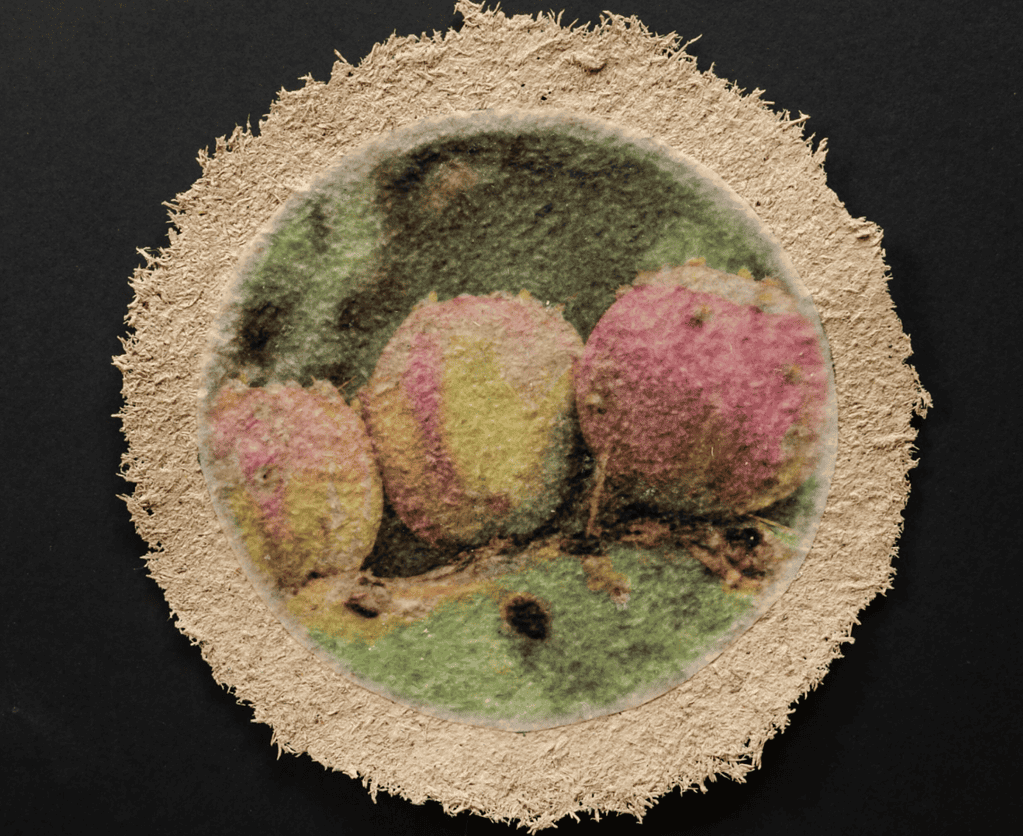
A ghost species describes a plant or animal whose populations have been so reduced or fragmented that they no longer play an active ecological role. Along the U.S.–Mexico border, these “living ghosts” persist as traces—isolated individuals or memories—haunting landscapes divided by walls, politics, and environmental collapse.
Here is a short list of animals and plants whose survival or movement across the U.S.–Mexico borderlands has become nearly extinct with conservation efforts hindered by the obstruction of the border wall.
1. Jaguar (Panthera onca)
Once native to much of the American Southwest, jaguars now appear only as solitary wanderers crossing from Mexico. Each rare sighting—a flash on a trail camera—is a haunting of the borderlands, a memory of a predator that the landscape itself has nearly forgotten.
2. Mexican Gray Wolf (Canis lupus baileyi)
The smallest and most endangered wolf subspecies in North America, the “Lobo” has been reintroduced in small numbers. Border barriers prevent genetic exchange with Mexican packs, creating a population alive but trapped—a spectral echo of its once-fluid range.
3. Sonoran Pronghorn (Antilocapra americana sonoriensis)
This desert antelope depends on vast, open plains for migration. The wall fractures its territory, stranding small herds in fragmented habitats. Their dwindling footprints across dunes mark the ghost lines of once-shared movement.
4. Ocelot (Leopardus pardalis)
Once roaming freely from Tamaulipas to Texas, only a few dozen remain north of the border. Highway crossings and fencing make their presence almost mythic—seen mostly in motion-triggered images, flickering like apparitions of a fading ecosystem.
5. Bighorn Sheep (Ovis canadensis mexicana)
Desert bighorns depend on transboundary mountain corridors. The wall severs access to water and grazing routes, isolating herds that now survive only in scattered, ghostlike enclaves along the Sonoran ridges.
6. Gila Monster (Heloderma suspectum cinctum)
This venomous lizard, sacred in Indigenous cosmologies, faces fragmented desert habitats. Its slow, deliberate movement contrasts sharply with the hyper-militarized speed of the border, rendering its ancient presence increasingly endangered—and nearly invisible.
7. Cactus Ferruginous Pygmy Owl (Glaucidium brasilianum cactorum)
A small, fierce owl once common in desert scrublands, now nearly gone from southern Arizona. Wall construction has removed nesting cacti and disrupted its ability to cross into Mexican ranges.
8. Quino Checkerspot Butterfly (Euphydryas editha quino)
Endemic to California’s borderlands, this butterfly’s fragile habitats are among the most threatened in North America. The wall and associated patrol roads erase the very meadows that sustained its migratory cycles—turning pollination routes into dead zones.
9. San Bernardino Bluegrass (Poa atropurpurea)
A rare alpine grass found near the California–Mexico border, surviving in isolated patches. Development and drought make it a “living fossil” of pre-border ecologies—a plant whose persistence is nearly metaphysical.
10. Vaquita (Phocoena sinus)
The world’s most endangered marine mammal, found only in the northern Gulf of California. With fewer than a dozen individuals left, the vaquita’s fading presence parallels the border’s ghost ecologies: alive in scientific record, absent in the waters themselves.
11. Joshua Tree (Yucca brevifolia)
Once iconic across the Mojave Desert, Joshua trees now stand at the threshold of becoming a climate ghost. Rising temperatures, drought, and altered fire regimes prevent young trees from maturing, leaving forests dominated by aging individuals whose future generations may never take root.
12. Prickly Pear (Opuntia spp.)
Though iconic across the Southwest and Mexico, several prickly pear species are becoming increasingly rare as drought, fire, and habitat fragmentation disrupt their regeneration. Border wall construction further isolates populations, severing seed dispersal routes and altering pollinator patterns.
Case Study: Fred Brashear, Handle with Care
In the context of ghost species, Fred Brashear’s Handle with Care becomes an act of preservation against disappearance. Developed as a special project for the MexiCali Biennial’s Land of Milk & Honey program, Brashear’s research centers on Opuntia—the prickly pear cactus—whose decline across borderland ecosystems mirrors the slow ghosting of desert ecologies under climate stress. Long a staple of Indigenous foodways and medicine, Opuntia once thrived across the Southwest. Today, drought, fire, habitat fragmentation, and border infrastructure threaten its ability to regenerate. Brashear’s project treats the cactus not simply as a plant, but as a cultural and ecological relative whose survival carries ancestral knowledge. By examining its historical, biological, and spiritual roles, Handle with Care proposes alternative uses of Opuntia as a climate-mitigation resource—reimagining the cactus as a tool for resilience in a rapidly warming world.
Image: Fred Brashear, from series Handle with Care, 2022. Handmade nopal paper, lift transfer image.
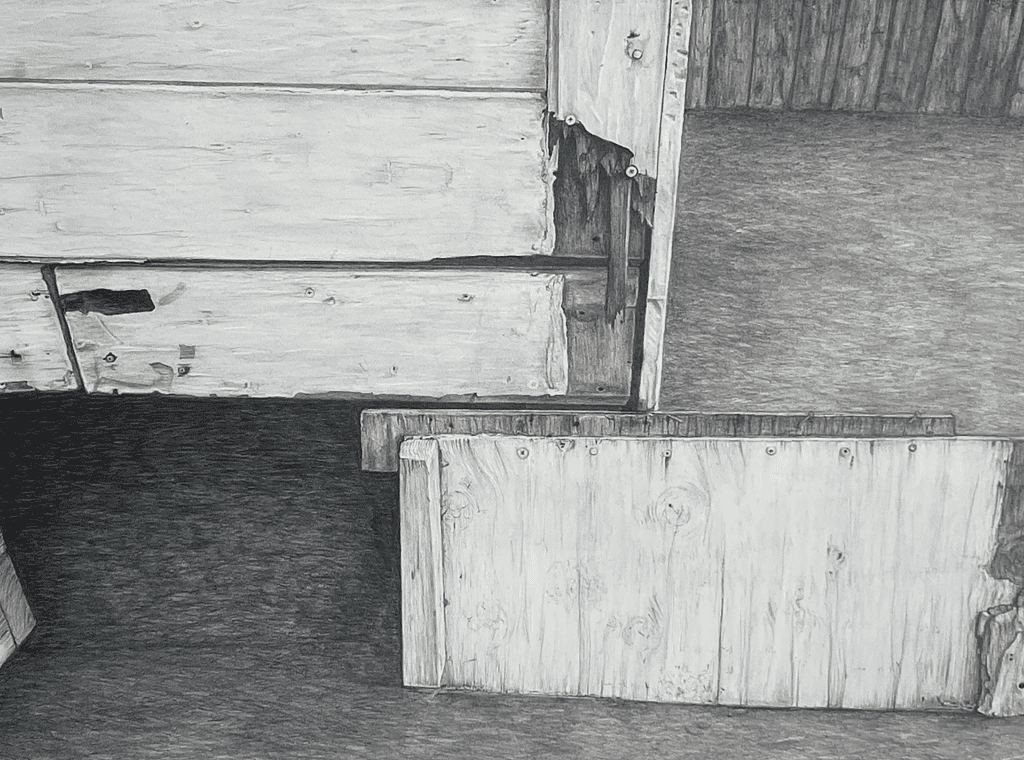
Border architecture refers to the systems, structures, and spatial designs that materialize political boundaries — walls, checkpoints, fences, detention centers, highways, surveillance towers, and even informal crossings. These sites do more than divide nations; they create liminal zones, thresholds where identity, law, and belonging blur. This concept extends beyond geographic boundaries, in particular when in the context of the 100 Mile Border, the militarized zone along the US land and maritime borders.
From a cultural and phenomenological perspective, borders function as haunted architectures — places saturated with memory, trauma, and the presence of those who have crossed, disappeared, or been excluded. The built environment of the border is never static: it shifts with policy, migration, and ecological change, embodying both control and passage.
Case Study: Drawing from series Untitled 2022
Luis G. Hernandez’s multimedia practice responds subtly to the spaces in which his works are made and exhibited. As a border dweller, Hernandez examines the found visual signifiers embedded in everyday life. In his ongoing Untitled 2022 series, the artist catalogues evidence of unseen crossings occurring around his home, art studio, and exhibition space, Casa la linea arte contemporáneo in Calexico, California—a structure that sits in the shadow of the border fence. This drawing depicts actual damage discovered in the building’s crawl space. The disruption is presumed to have been caused by U.S. Border Patrol agents searching for migrants, or possibly by individuals who had jumped the fence and were hiding beneath the structure.
The drawing was included in UN/belonging in the Land of Milk & Honey at BEST PRACTICE in San Diego in 2023. Curated by Emmanuel Ortega, the two-person exhibition featuring MexiCali Biennial co-founders Hernandez and Ed Gómez explored landscapes shaped by shifting boundaries. In MexiCali Biennial: Art, Actions, Exchanges since 2006, Ortega describes the ambivalence of border space in Hernandez’s work, writing: “The ambiguity of seemingly banal objects receiving academic artistic rigor reinforces the ambivalence of the space surrounding the border. Yet their haunting presence around the Casa also redirects their ephemerality into a critical demarcation point where the physical violence of imperial bounds is revealed.” This representation of a damaged crawl space is more than architectural residue—it portrays a haunted threshold, where the border’s invisible violence inscribes itself onto the surrounding architecture.
Hernandez's project was also revisited for a special publication, ALIEN, made in collaboration with Taller California.
ALIEN is a multi-part artist publication that brings together five artists to investigate the meaning of “alienness” within the U.S.–Mexico borderlands through three interlocking books produced with Taller California and MexiCali Biennial. Rather than looking to outer space, the artists turn toward the land itself, surfacing buried histories of extraction, migration, and Indigenous memory to reveal how colonial and imperial systems have rendered both people and environments “alien.” Accompanied by the exhibition Alien Excavations at the MXCL BNL LAB (January 31–March 7, 2026), the project reframes science fiction as a critical tool for confronting the past and imagining more just futures.
Find a shortlist of "haunted" infrastructures located in the borderlands in the downloadable PARA/normal Borders Overview.
Image: Luis G. Hernandez, Drawing from series Untitled 2022, 2022. Graphite on paper.
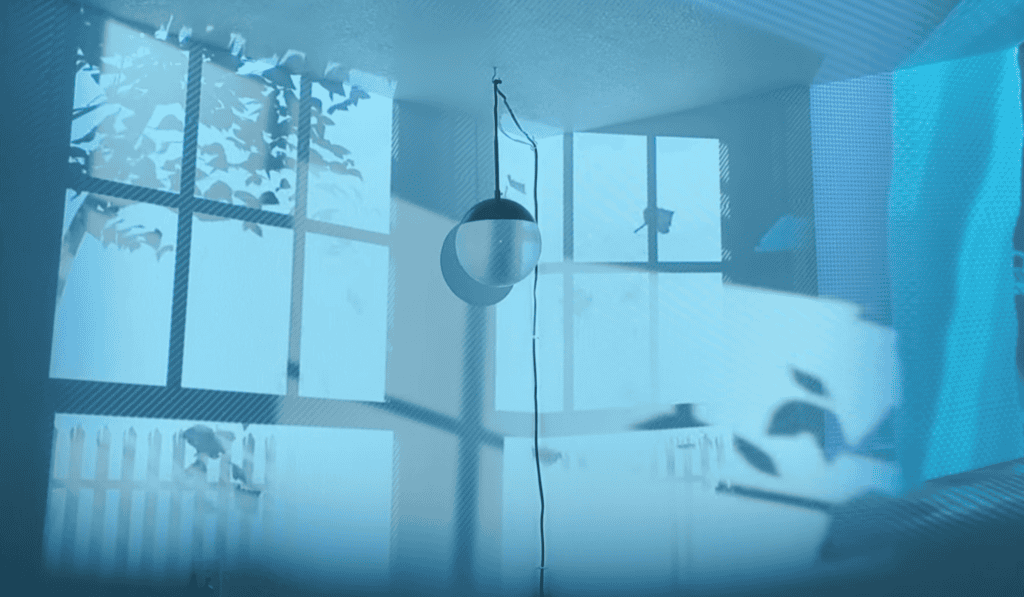
The haunted house is one of the oldest forms of supernatural storytelling, emerging long before Gothic literature or modern horror cinema. In ancient Mesopotamia (c. 2000 BCE), clay tablets describe ghosts returning to dwellings when burial rites were neglected, binding spirit to household rather than grave. In these narratives, the house functions as a spiritual anchor—where unfinished earthly ties draw the dead back to the architecture that once held daily life. Similar traditions appear across early religious texts: in the Hebrew Bible, rituals in Leviticus cleanse houses of malignant forces, implying that contamination—moral, spiritual, or energetic—can inhabit domestic walls. In South Asian traditions, bhuta and preta return to homes due to karmic imbalance, while Chinese zhiguai narratives record ancestral spirits visiting household spaces as warnings or reminders of lineage. The earliest fully articulated Western haunted-house narrative appears in Pliny the Younger’s account (1st century CE) of a chained ghost haunting a house in Athens until proper burial frees it—establishing a template where the house holds trauma until a ritual act resolves it.
This leads us to ask, why are spirits attached to houses? What is it about dwellings that entrap spectral entities? The answer may be that domestic spaces hold not just objects but the lingering energy of the past.
Case Study: Joshua Tonies, Songs and Views from the Holocene Garden
In Songs and Views of the Holocene Garden, Joshua Tonies reconstructs his former home—a 1930s catalog house that no longer exists—through digitally rendered architecture shaped by memory. Projected onto the wall of Casa la línea arte contemporáneo, an artist-run space located within a private home, the work examines domestic spaces through the lenses of past and present, presence and absence, and materiality and immateriality. The two-channel animation projects a house that continuously slips between coherence and dissolution, mirroring how borders—much like memory—are constantly reconfigured by the slippage of time.
Accompanied by a layered soundscape of field recordings drawn from the artist's daily life, the work emphasizes how memory migrates—crossing temporal boundaries and reshaping lived experience through distortion and mistranslation. In this sense, the reconstructed home becomes a haunted structure, echoing the phenomenology of border spaces saturated with loss, erasure, and unresolved histories. Within PARA/normal Borders, Tonies’s work reveals how domestic spaces function not only as physical enclosures but also as sites where identity, memory, and belonging persist.
Domesticana: a Chicana perspective
Spiritual traditions are often interpreted through a reductive lens that frames them as superstition particularly within a colonial construct of the paranormal. In Chicana Art: The Politics of Spiritual and Aesthetic Altarities (2007), Laura E. Pérez critiques how Eurocentric discourse dismisses the spiritual dimensions of Chicana art as “superstition,” folk belief, or irrationality. She argues that this marginalization reflects broader epistemic hierarchies that privilege secular, institutional forms of knowledge while devaluing relational knowledge systems grounded in lived, ancestral, and spiritual experience. Pérez counters by framing Chicana artists’ spiritual practices and lived traditions as politically and aesthetically powerful decolonial tools that challenge oppression and reassert spirituality as a legitimate form of knowledge, resistance, and cultural memory.
The tradition of the home altar is embedded in domestic, intergenerational, and gendered forms of care, and it is important to acknowledge the foundational contributions of Chicana artists who have articulated these practices as forms of cultural knowledge. Artists such as Ofelia Esparza and Amalia Mesa-Bains offer distinct yet resonant artistic frameworks that position the home as a critical site of spiritual and intellectual labor.
In her essay on Domesticana: the Sensibility of Chicana Rasquachismo, Amalia Mesa-Bains develops a distinctly Chicana feminist aesthetic that transforms the domestic realm into a powerful space of cultural wisdom, collective memory, and resistance. She contends that activities long tied to women’s role, such as creating home altars and providing care, are far from trivial or detached from politics; rather, they represent complex, spiritually rich modes of artistic expression and intellectual labor.
Esparza’s work foregrounds the altar as an intimate structure of protection and remembrance, shaped by materials, repetition, and the rhythms of domestic life. Mesa-Bains theorizes the home as a cultural and political site where memory, gender, and spirituality converge. Her installations expand domestic space into a critical arena for examining Chicana identity, colonial histories, and the labor of women as keepers of tradition. In response to the systemic erasure of their histories, artists transformed these traditions into powerful acts of historicization, embedding collective memory and identity into public consciousness.
Esparza’s practice and Mesa-Bains’s theoretical and artistic contributions solidify domestic spaces as an ongoing, often invisible process that sustains cultural memory. Within this lineage, superstition functions as ancestral knowledge transmitted through gesture, repetition, and care. Domestic space becomes a threshold where spirituality, identity, and survival intersect.
Image: Joshua Tonies, Songs and Views from the Holocene Garden, 2025. Two channel video looping, performed field recordings.
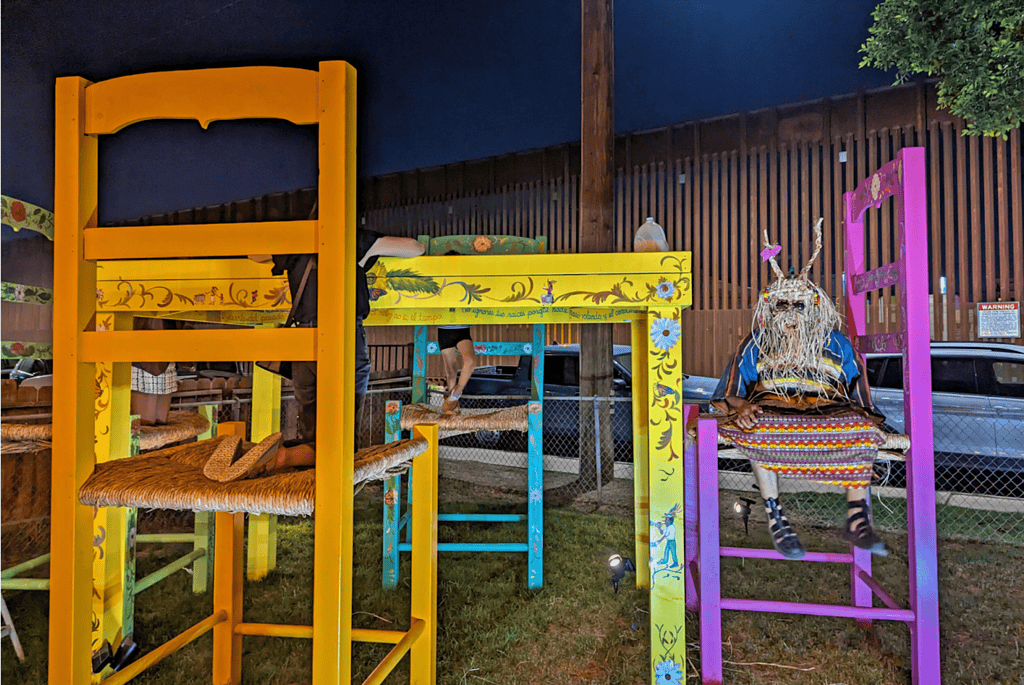
The 2022-2023 MexiCali Biennial, Land of Milk & Honey, drew inspiration from author John Steinbeck’s portrayal of California as a corrupted Eden. The title of the traveling exhibition alluded to a biblical passage in the Book of Exodus, which refers to Canaan as “a good and spacious land, a land flowing with milk and honey.”
For this program, artists explored the themes of agriculture, labor, and ecology through engagement with a variety of topics: environmental impacts, foodways and culinary traditions, identity and migration, Indigenous agro-spiritualities, and mythical connections to food. Across different media, artists examined the past and present of farmworkers, street vendors, and migrant laborers, including in several pieces that memorialized family histories. Other artists engaged with the materiality of sacred plants, highly-processed food items, and minerals extracted from the earth. Still others examined issues of water scarcity, climate change, pollution, and agro-industry, especially in reference to the inland borderlands where the Imperial and Mexicali Valleys are some of the most fertile yet impoverished districts in the broader region. Land of Milk & Honey interrogated both the mythos and the material reality of California, while also cultivating a new historiography and future vision of las Californias rooted in eco-cultural narratives for the sustenance and propagation of an egalitarian land of abundance. As the critic Christopher Knight wrote in the Los Angeles Times, the exhibition captured the plenitude and precarity that coexists in both Californias, framing the region as “part fertile and utopian paradise, part huckster marketing dystopia. Sometimes the milk is sweet, sometimes curdled; the honey fragrant or rancid.”
PARA/normal Borders builds directly upon this foundation, extending the inquiry from the ecological to the spiritual and spectral. If Land of Milk & Honey focused on the visible ecologies of the border—labor, agriculture, sustenance—then PARA/normal Borders turns to the unseen ecologies: the ghosts of vanished species, the memories embedded in the soil, and the spiritual continuities that persist beneath political boundaries.
Case Study: Isidro Pérez García, Por Debajo de la Mesa: Terreno Familiar | Under the Table: Familiar Terrain
Isidro Pérez García's Por Debajo de la Mesa: Terreno Familiar | Under the Table: Familiar Terrain is centered around a large-scale table and chairs through which the artist explores his familial connection to the way of life in the biocultural archives of plants. Perez Garcia uses natural weaving materials that are shared across borders – such as tule (cattails) and maguey - to comment on the sacrality of the borderlands. For PARA/normal Border Lab, the artist showcased multimedia works that wove themes of ritual, migration, environmentalism, and ancestral art practices that exemplify notions of Eden.
A photo essay of the work can be found HERE.
For further research:
The MexiCali Biennial collaborated on a series of research guides with the Library of Congress including a StoryMap focused on concepts and artists featured in Land of Milk & Honey. This visual research guide, which features Pérez García’s work, can be found within their digital archives: https://storymaps.arcgis.com/stories/7d33b3cdaa864bd293a7133def5b584b
Image: Isidro Pérez García, Por debajo de la mesa: Terreno familiar, 2023. Wood, woven tule (gathered from nature reserve), acrylic paint.
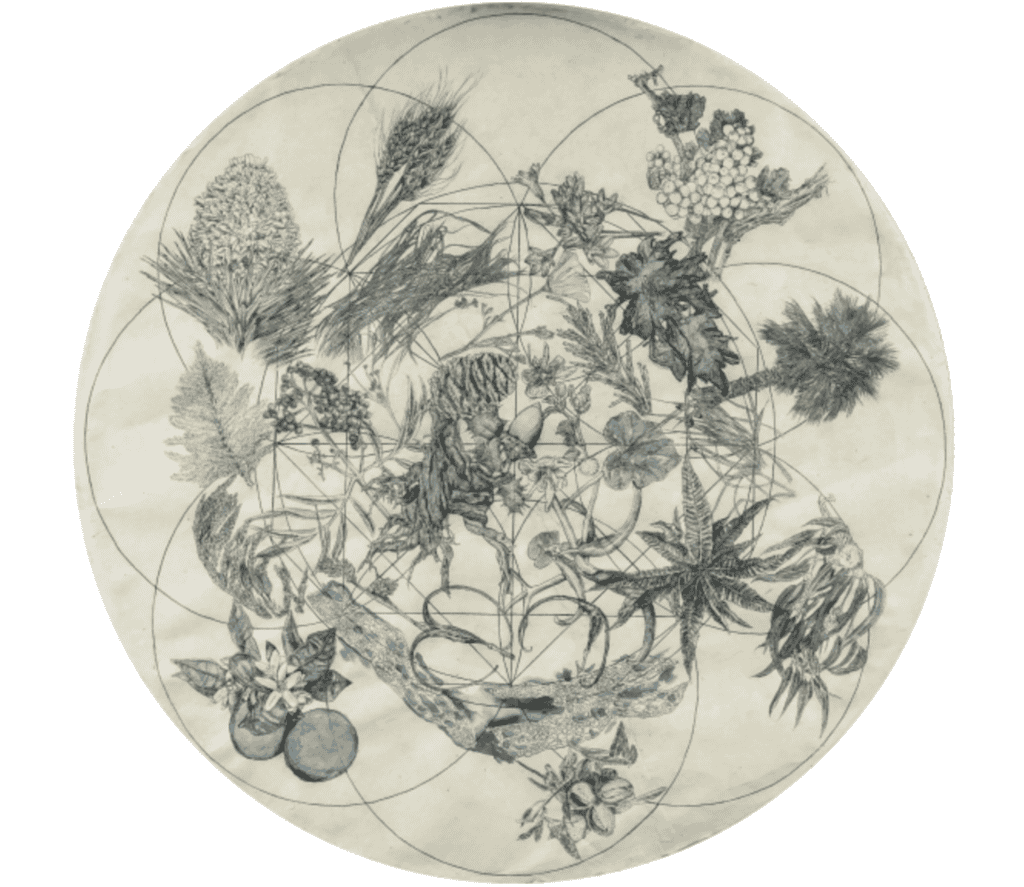
Throughout history, climate catastrophe has often been interpreted through the supernatural, especially in moments when scientific explanation felt insufficient or unavailable. During Europe’s Little Ice Age, for example, failing crops, plague outbreaks, and violent storms were blamed on witchcraft—revealing deep anxieties about cosmic disorder, gendered power, and the fragility of social structures. These accusations were not merely superstition; they reflected a worldview in which environmental instability signaled moral or spiritual failure, and where misfortune demanded a supernatural culprit. In contrast, many Indigenous cosmologies across the Americas understood droughts, floods, and crop failures as signs of imbalance—a rupture in the reciprocal relationship between people, land, ancestors, and nonhuman forces. Rather than seeking scapegoats, communities turned to ceremony, collective responsibility, and cosmological repair to restore harmony.
In the borderlands, contemporary climate disasters echo this entanglement of the ecological and the metaphysical. Recent crises—from megadrought and wildfire to sewage overflows and extreme heat—underscore the U.S.–Mexico border as both an environmental stress zone and a symbolic threshold where different cosmologies collide. The region functions as a literal fault line shaped by water scarcity, extraction, militarized infrastructure, and forced displacement.
Case Study: Miyo Stevens-Gandara, Dismal Cycle: California Flora
Miyo Stevens-Gandara's print, Dismal Cycle: California Flora visualizes the slow-moving disaster embedded in California’s ecological history, tracing how land use has shifted from Indigenous stewardship to the extractive monocultures that dominate the present. By spiraling outward from California’s oldest native plants toward species introduced by missionaries, settlers, and industrial agriculture, the piece charts a timeline of displacement—an unraveling of ecological balance that mirrors the supernatural logic of catastrophe discussed in this section. Like the climate crises that haunt the borderlands today, the drawing reveals how environmental disruption accumulates over generations, becoming almost invisible through familiarity. In exposing this long arc of disconnection, Dismal Cycle invites viewers to recognize contemporary climate disasters not as isolated events but as the outcome of centuries of spiritual, cultural, and ecological rupture—and a call to restore reciprocal relationships with the land.
This work was part of Anger is an Energy: The Punk Alchemy of Miyo and Usen Print Editions curated by JV Decemvirale for the PARA/normal Borders Lab.
A photo essay of the exhibition can be found HERE.
Find a list of recent and historical examples of extreme environmental disasters and their association with environmental anxiety on the downloadable PARA/normal Borders Overview document.
Image: Miyo Stevens-Gandara, Dismal Cycle: California Flora (2016), drawing on Japanese paper